
Autumn is, in my humble opinion, one of the best seasons to travel around Europe. The crowds are smaller, the prices are lower, and the summer heat is long gone. If you’re looking for inspiration on where to go, these are my ten favorite European cities to visit in autumn.
This page contains affiliate links. If you buy through these links, I may receive a small commission, at no additional cost to you. I only recommend products or services I have tried and/or find useful and reliable.

My two favorite seasons to travel around Europe are spring and autumn. I really don’t enjoy traveling in summer, and while winter is okay, I’m not a fan of the cold, so I try to escape to warm places as often as possible. But the shoulder seasons are my favorite! There are fewer crowds, the weather is often pleasant, and it’s also typically cheaper!
Fall travel is particularly beautiful because of the foliage. I love seeing the leaves change to vibrant autumn colors! So whenever I can, I travel around Europe between late September and early November to enjoy the spectacle of the fall tapestry covering the landscapes. In this article, I’ll cover ten of my favorite European cities to visit in autumn. While I do include fall foliage spots, that’s not necessarily the reason for every city I include here.
Now, this is in no way an exhaustive list. There are so many beautiful European cities to visit in the fall. I actually have another older article on what I believe are some underrated fall destinations (more specifically for foliage), but I thought I’d include my absolute favorites here. This is a very personal list, but I hope it will inspire you to book your next fall adventure! Let’s get into it.
1. Rome, Italy
Let’s kick off this list with the city that holds most of my heart, and that I called home for about 9 years. Even though I haven’t lived in Rome since 2022, when I decided to become a nomad, I routinely go back to visit friends or simply walk around the most beautiful city in the world. Yes, I’ve said it, and I stand by it. There’s a lot to be said about Rome, both positively and negatively, but it’s undeniably beautiful.
Anyway, autumn is probably the best season to visit Rome. And by autumn, I mean from mid-October to early November. Summer tends to linger in Rome, so September is still hot and crowded, but from mid- October onward, the city becomes more livable. The lines at the monuments are shorter, the temperature is mild, and the leaves turn color.
Autumn is a bittersweet time to wander around the Eternal City, but that’s what makes it even more beautiful. We say goodbye to summer, mourning the long days, yet we welcome the crisp mornings and chilly evenings along with vibrant foliage. Spring may be my favorite season, but fall is a close second!
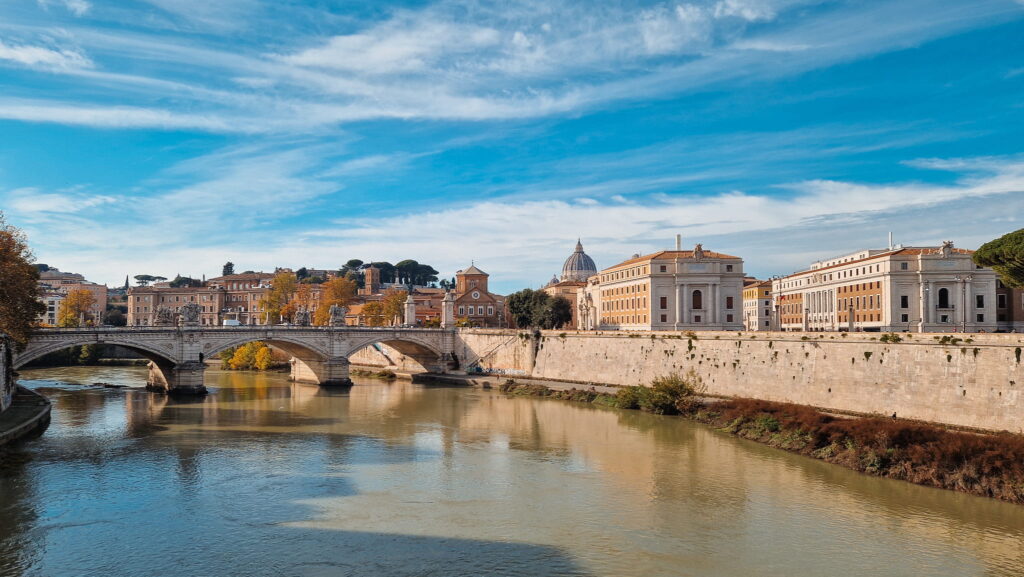
Autumn weather in Rome
Autumn in Rome is usually mild, with mostly sunny days and comfortable temperatures during the day. Mornings and evenings are cool, so always dress in layers if you go out early or plan to stay out late.
Rain gets increasingly more frequent as we move toward winter, with November being the rainiest. While September still feels like summer, October is probably the best month for both pleasant temperatures and the start of foliage.
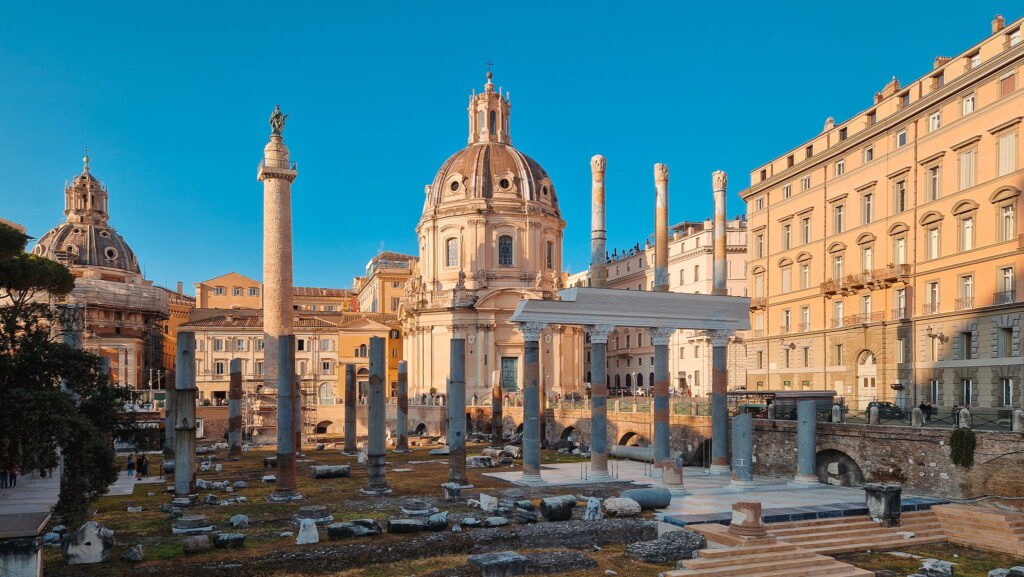
What to do in Rome in autumn
If you’re lucky enough to have sunny days, you can enjoy all the incredible landmarks that are too overcrowded in late spring and summer. But even when the weather is not ideal, there’s so much to do that you could spend weeks just visiting museums, churches, and art galleries.
- Outdoors: Check out the Colosseum and Roman Forum, stroll around the charming neighborhoods of Monti, Trastevere, and Campo de’ Fiori, and visit iconic landmarks like the Trevi Fountain, Pantheon, Piazza Navona, Piazza Venezia, Basilica di San Pietro, and Castel Sant’Angelo.
- Indoors: Rome has plenty of incredible museums where you can spend cold and rainy days admiring beautiful art. Aside from the obvious Vatican Museums and Galleria Borghese, check out the Capitoline Museums, Ara Pacis, Galleria Doria Pamphilj, Centrale Montemartini, and Galleria Colonna, to name a few. Plus, you can visit all the spectacular churches, which are free!
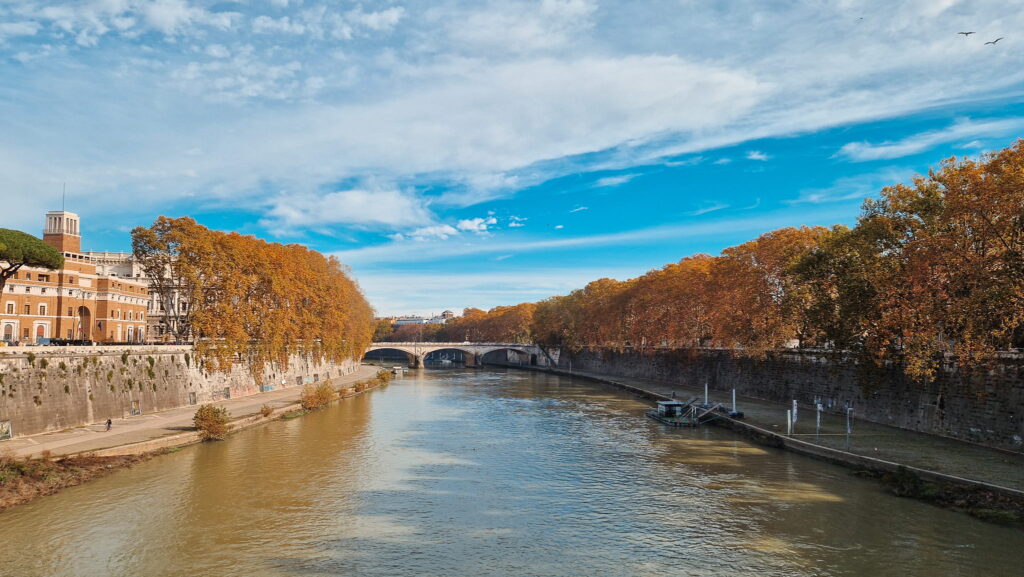
- Fall foliage spots: Along the Tiber River, Villa Borghese, Gianicolo, and Villa Doria Pamphilj.
- Day trips: Tivoli, Castel Gandolfo, Nemi, Genzano di Roma, Ostia Antica, Bracciano, and Viterbo.
P.S. I’m working on a big project about Rome and Italy in general, so I may soon have a few dedicated guides. Sign up for my newsletter to be notified when it launches!
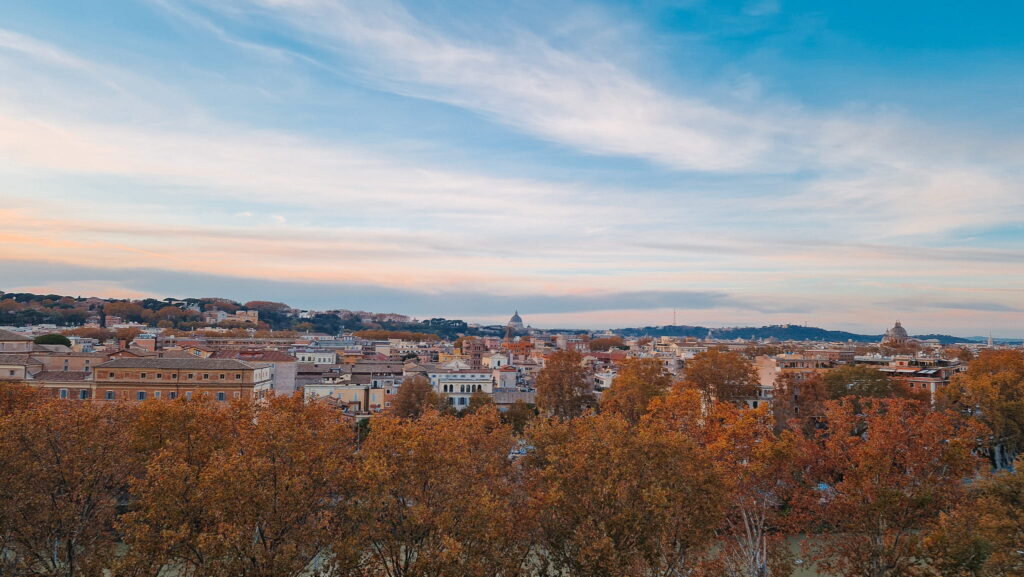
2. Tbilisi, Georgia
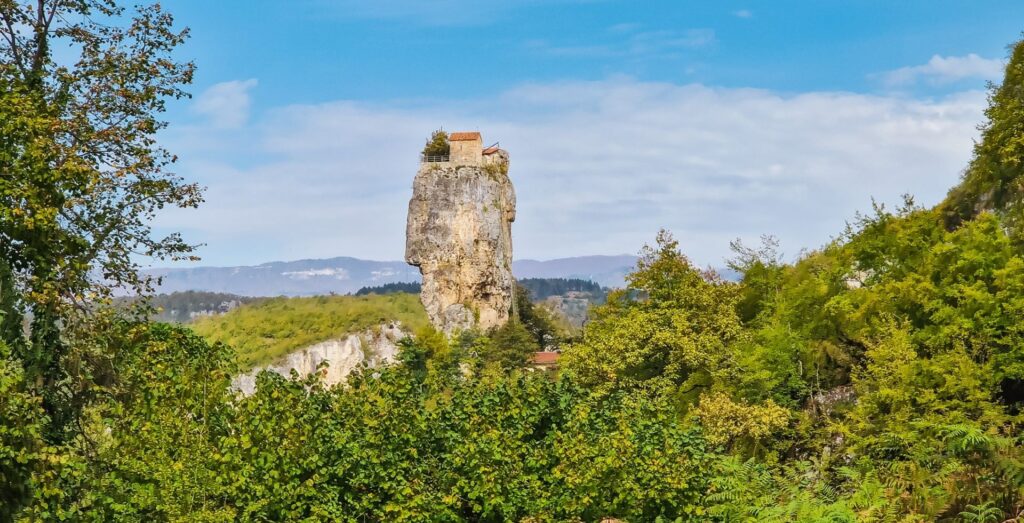
I traveled around Georgia between October and early November and had an incredible time with lovely weather. In just over a week in Tbilisi, I tried the local food, explored the city’s landmarks, experienced the sulfur baths, and visited cool museums. I also managed to fit in a couple of day trips and discover more of Georgia beyond the capital.
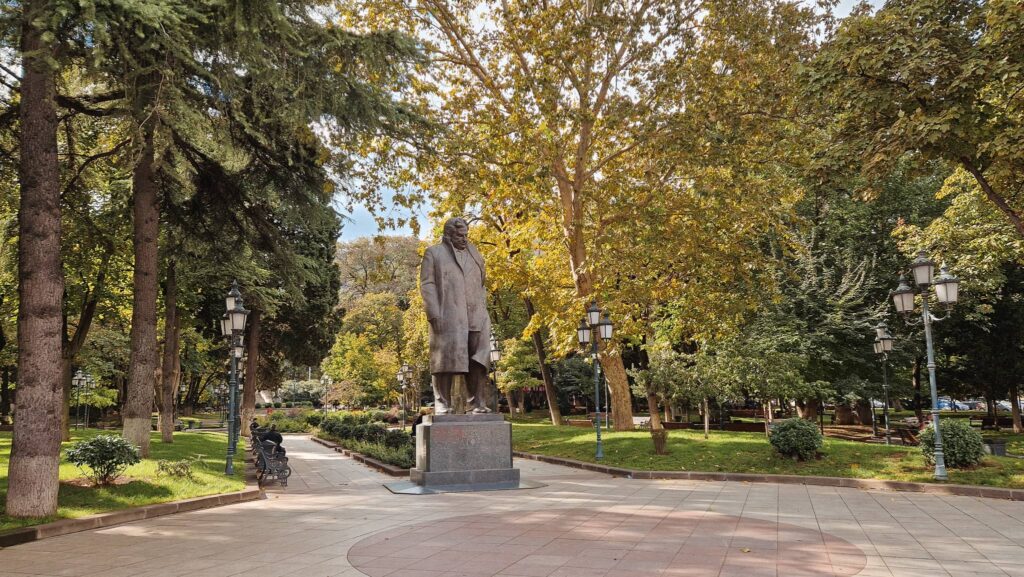
I loved every single part of Georgia, but Tbilisi stood out for me as a vibrant and incredibly picturesque city. The lovely old town with its charming buildings, the cable cars offering sweeping views, the countless viewpoints, the flea markets, and the beautiful churches all made me fall in love with this city.
I was also extremely lucky to have beautiful weather throughout my stay, with blue skies making the landscape even more spectacular. I can imagine Tbilisi getting very hot in the summer, so October was truly an ideal time to be there, not to mention the lovely foliage that was starting to show up!
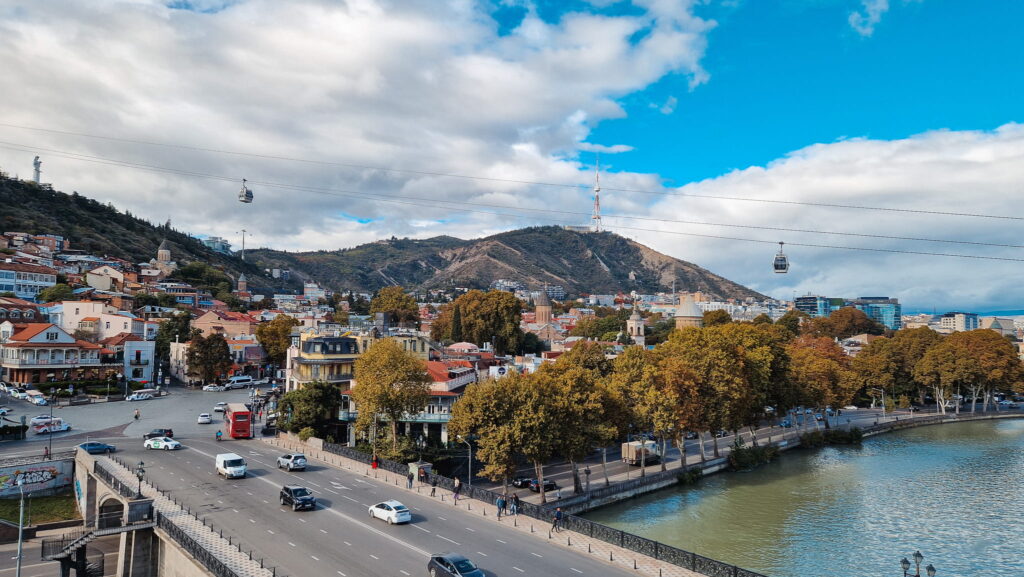
Autumn weather in Tbilisi
Autumn in Tbilisi is a lovely season with mild temperatures, especially in October. It rains much less in the capital compared to the coastline (like Batumi), so you’ll mostly have dry weather with blue skies.
While September still has summer weather, the temperature drops around mid-October. Although November is typically the best month for foliage, late October is ideal for warmer weather and blue skies.
What to do in Tbilisi in autumn
Tbilisi is a big city with incredibly diverse neighborhoods, stunning viewpoints conveniently served by cable cars, and cool museums. Not to mention the iconic sulfur baths. So it’s safe to say there’s no lack of things to do whether the sun is shining or it’s pouring rain.
- Outdoors: Explore the Old Town and Abanotubani, enjoy the view from Mother of Georgia, visit the Zion Cathedral of the Dormition and the Holy Trinity Cathedral, buy antiques and souvenirs at the Dry Bridge Market, and visit the iconic Chronicle of Georgia.
- Indoors: Relax at the sulfur baths, sample Georgian wines, indulge in traditional food, and visit cool museums like MoMA Tbilisi, the Silk Museum, the Georgian Museum of Fine Arts, and the Georgian National Museum.
- Fall foliage spots: Rustaveli Avenue, Mtatsminda Park, National Botanical Garden, and Narikala Hill (around Mother of Georgia).
- Day trips: Kakheti wine region, Kazbegi, Mtskheta, Telavi, Gori, and Uplistsikhe.
If you plan to visit Georgia’s capital, check out my detailed article on the best things to do in Tbilisi. Also, head to my Georgia hub for more guides and practical information about traveling around the country.
3. Brașov, Romania
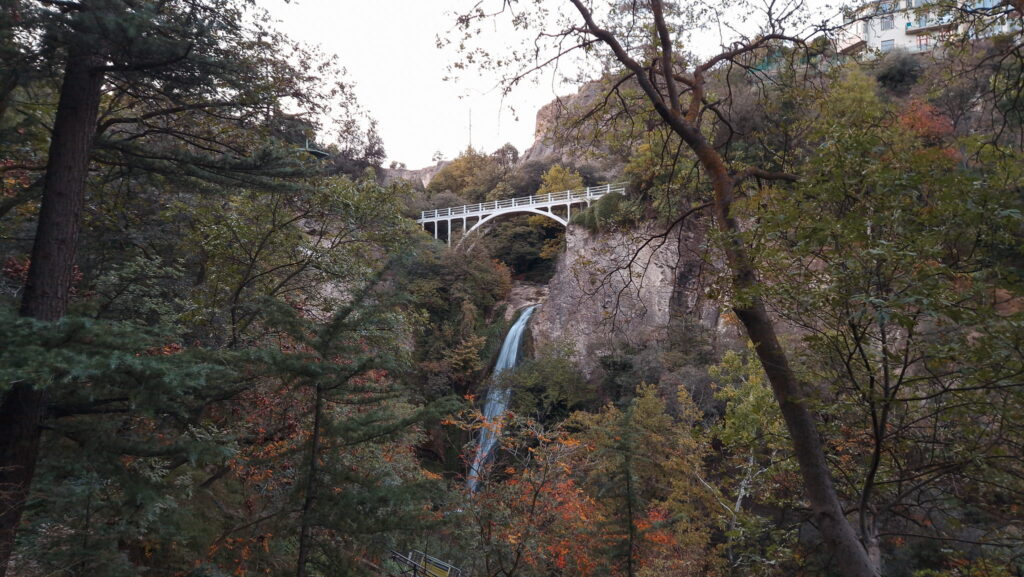
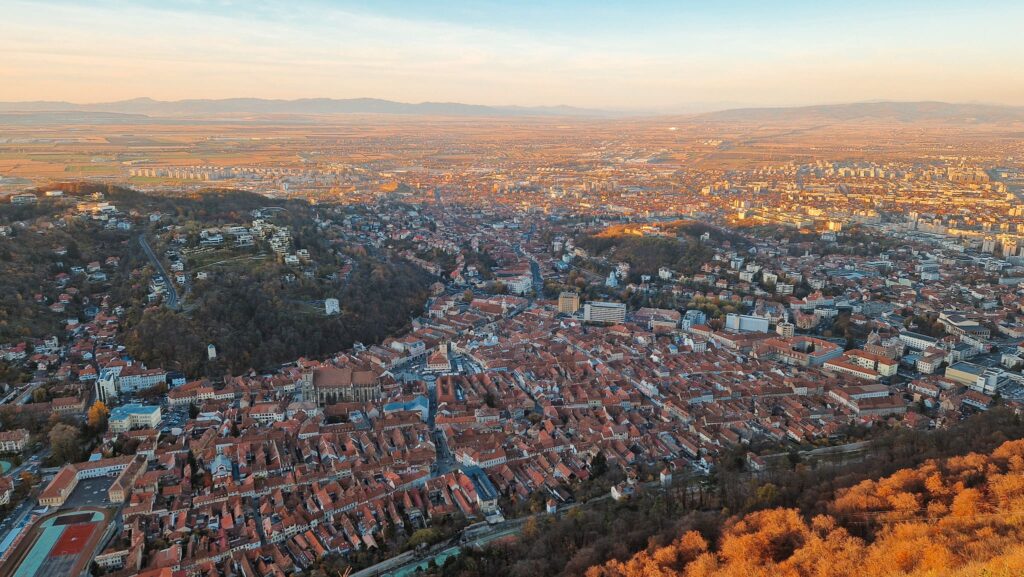
Brașov is my hometown, so I may be a little biased, but if you’re looking for a more underrated destination to visit in autumn, this is a great one! While it may get cold given its location in central Romania, surrounded by mountains, the lovely foliage makes up for it.
Although it’s much more popular than a few years ago, especially since we have our own airport, Brașov is still quite an underrated travel destination among foreigners. Of those who do visit, most people only stop by for a day trip from Bucharest. That makes sense if you don’t have much time, but there’s so much to do in the area that I think it’s a shame not to stay longer.
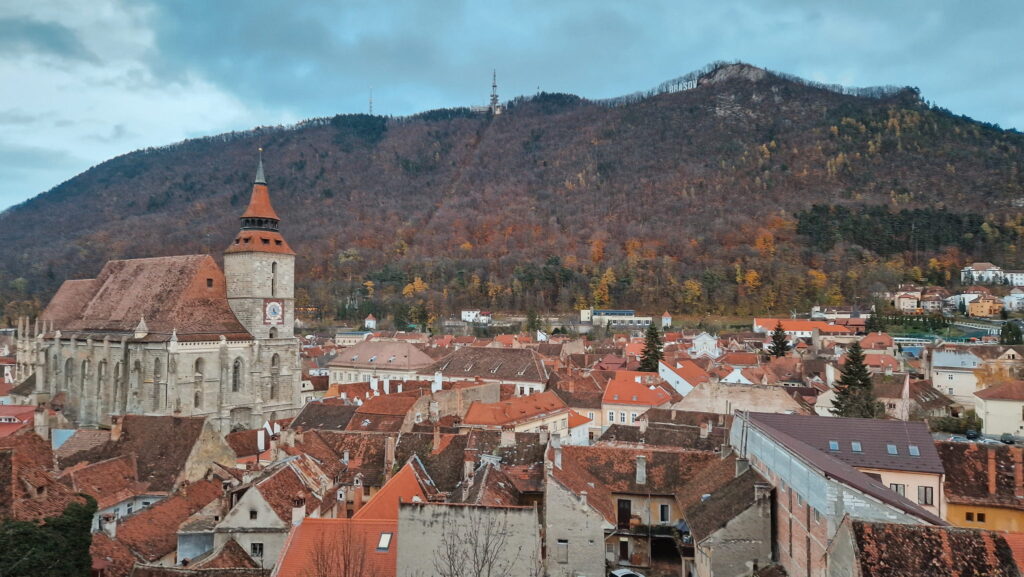
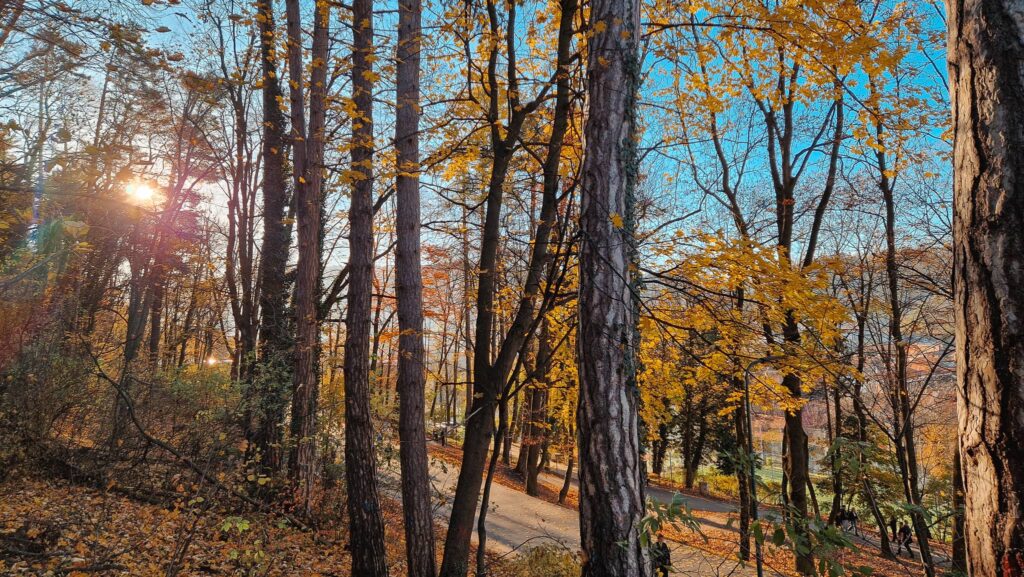
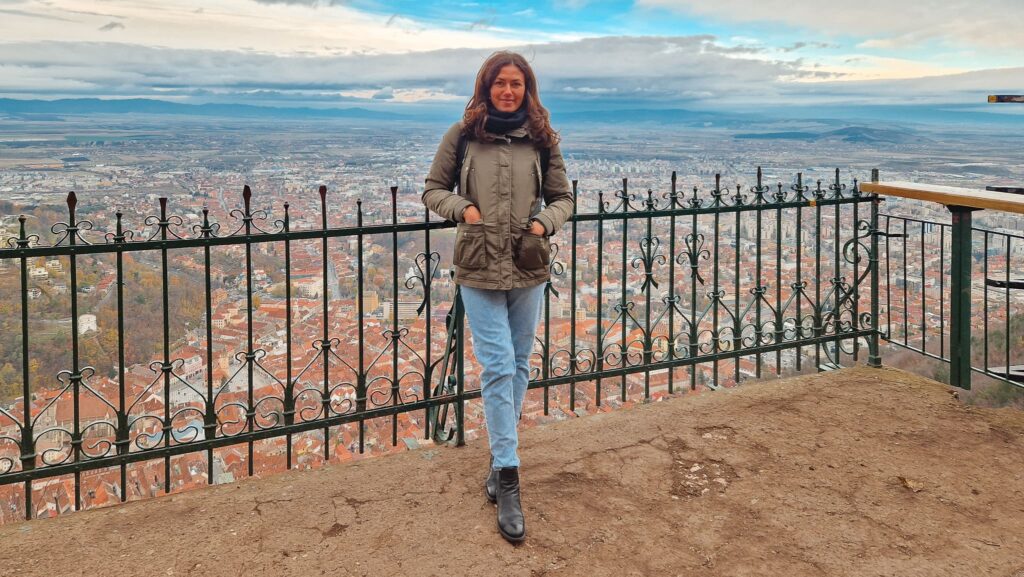
If you visit Brașov in autumn, you can enjoy the gorgeous foliage around Tâmpa (the mountain in the middle of the city) and the local parks. Plus, within one hour of the city, you can enjoy spectacular nature in the Bucegi Mountains! If you need more convincing, read my article on my top reasons to visit Brașov.
Autumn weather in Brașov
The weather in Brașov in autumn ranges from sunny and warm to extremely cold and rainy. Unfortunately, there’s no way to predict these fluctuations that sometimes happen in a span of two or three days. One day you may be wandering around in a T-shirt, and the next you need your winter jacket.
I know these big fluctuations are not ideal when traveling, so your best option is to dress in layers. Generally, September tends to be still quite warm and sunny, with October getting colder and November ranging from rainy and a bit cold to freezing and snowy. I’d say mid- to late-October is your best bet here!
What to do in Brașov in autumn
The cool thing about visiting Brașov in the fall is that, aside from exploring the city proper and visiting its main landmarks, you can take lots of incredible day trips (or even half-day) to nearby places that offer spectacular landscapes, especially with the vibrant cover of fall foliage.
- Outdoors: Walk around the Old Town, catch the cable car to Tâmpa, explore the Schei neighborhood, check out the old city gates, and enjoy the views from the Black Tower and the White Tower.
- Indoors: Visit the Black Church, cozy up with a hot drink in one of the many lovely cafés, and visit the local museums: Casa Mureșenilor, Brașov Art Museum, and the Museum of Urban Civilization.
- Fall foliage spots: Tâmpa Mountain (both the promenade at the foot of the mountain and the trails to the top), the trails between the Black Tower and the White Tower, Nicolae Titulescu Park, and Poiana Brașov.
- Day trips: Sinaia & Peleș Castle, Bran Castle (especially cool for Halloween), Bușteni and Cantacuzino Castle, and Râșnov.
I also have a Romania travel hub where you can find more guides and practical information to plan your trip.
4. Madrid, Spain
Madrid is always a good idea, but with the huge crowds and extreme summer heat, autumn is a much more pleasant time to explore Spain’s capital. I’ve traveled to Madrid in every season, and my favorites are spring and autumn.
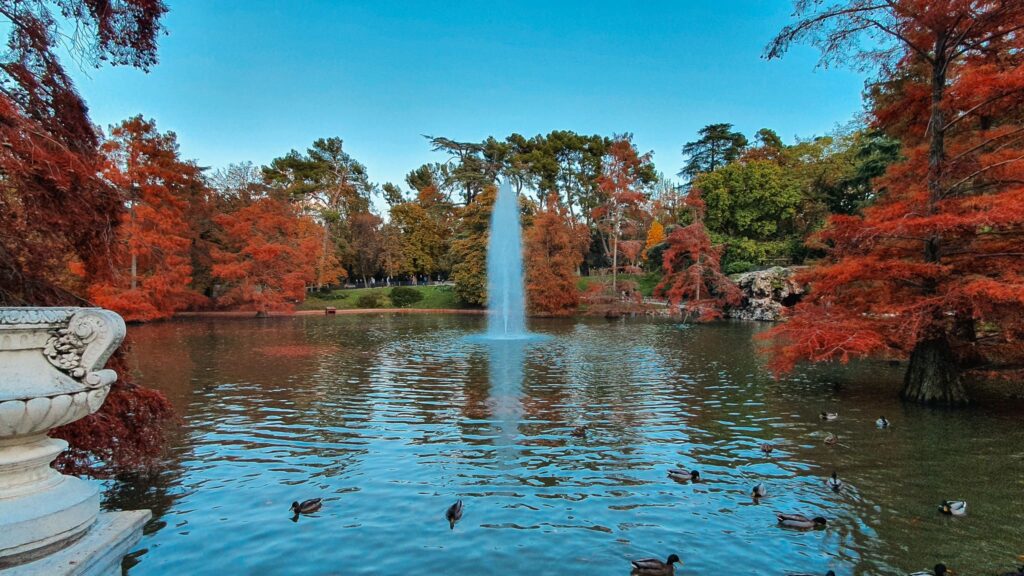
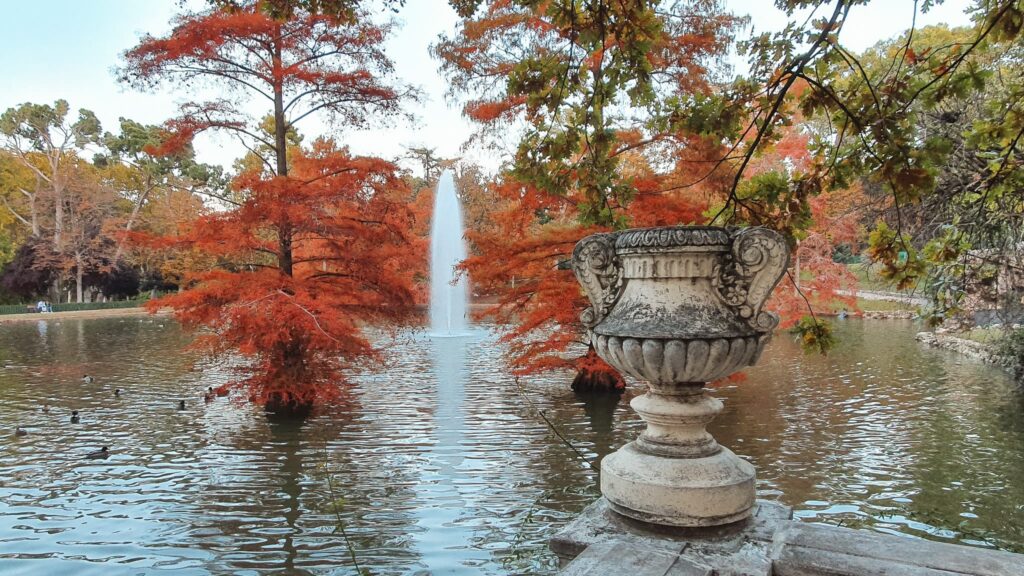
Don’t get me wrong, you’ll hardly ever see Madrid without the crowds, but late fall is an ideal time to visit. El Retiro shows off its vibrant foliage, the museums have shorter lines, and the cooler temperatures mean fewer people crowd the streets and landmarks.
Autumn tends to arrive fairly late in Madrid, so for the best chance to witness the fall foliage, I recommend visiting in late fall, between late October and early November. The city doesn’t get much rain, so you’ll still have a good chance of blue skies, but even if the weather is not ideal, there’s plenty to do indoors!
Autumn weather in Madrid
Unlike the coastal cities facing the Mediterranean, Madrid has a cooler climate, although summer can extend until the end of September. October has mild temperatures and is an ideal time to explore the city, while November can get quite cold and rainy.
October is more likely to offer pleasant days with blue skies, although mornings and evenings are chilly. Visiting toward the end of the month is ideal if you want to catch the start of the fall foliage.
What to do in Madrid in autumn
The Spanish capital may be better known for its two world-famous museums, El Prado and Reina Sofía, but it’s a real metropolis with beautiful architecture, lovely parks, incredible restaurants, and lots of other cool art galleries and museums.
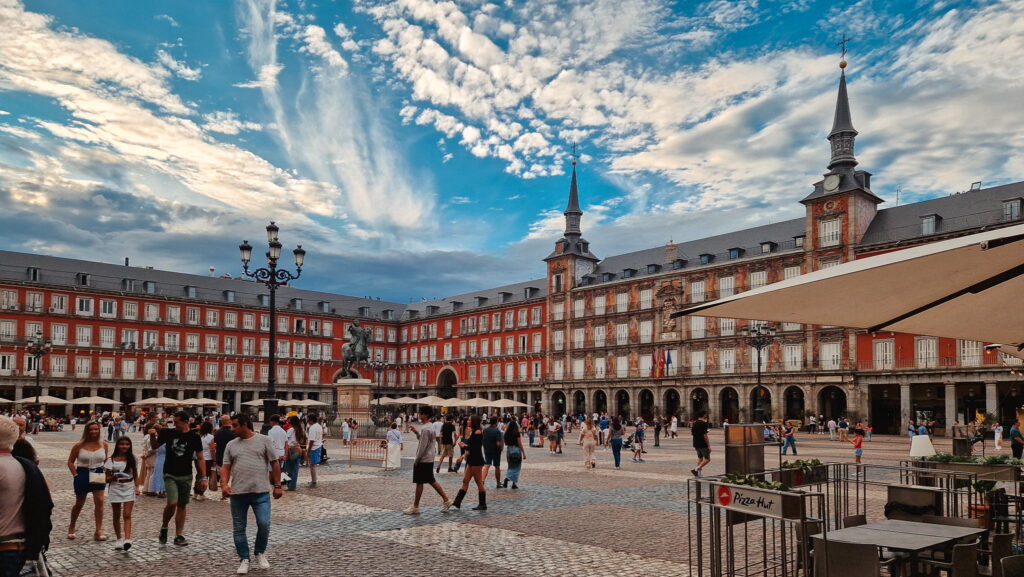
- Outdoors: Check out the impressive squares (Puerta del Sol, Plaza Mayor), visit Campo del Moro, admire the imposing Royal Palace of Madrid, explore the lively barrios of La Latina, Lavapiés, and Cortes, and take a boat ride in El Retiro Park.
- Indoors: Visit the two must-see museums, El Prado and Reina Sofía, admire even more European masterpieces at the Thyssen-Bornemisza National Museum, sample local delicacies at Mercado de San Miguel, and tour the Royal Palace of Madrid.
- Fall foliage spots: El Retiro (my favorite spot), Campo del Moro, Royal Botanical Garden, and Casa de Campo.
- Day trips: Segovia, Toledo, Chinchón, Ávila, Nuevo Baztán, and Alcalá de Henares.
For more guides and practical information on Spain, head to the dedicated travel hub.
5. Lisbon, Portugal
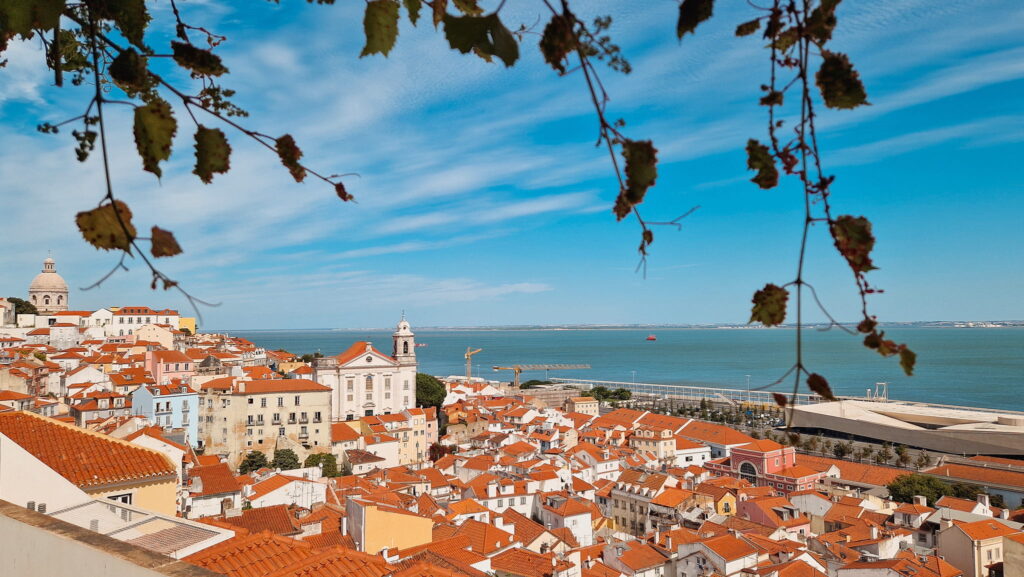
I couldn’t leave my beloved Lisbon out of this list of European cities to visit in autumn. I lived in the Portuguese capital for over two years, so I saw every season, and fall is one of my favorites!
Among the European cities I visited on repeat in the past decade, Lisbon is the one that has suffered the most from overtourism. There’s a stark contrast between the city I discovered when I moved there in 2017 and the city I visited just last year, in 2025. So visiting outside peak tourist season is a way to lessen the impact of overtourism, as well as enjoy the city with fewer crowds.
Around late October and November, Lisbon’s parks and tree-lined avenues offer picturesque fall cityscapes, but you can enjoy even more beautiful foliage outside the city, in nearby Sintra. Beyond that, fall is simply the perfect season for sightseeing and enjoying sweeping views from Lisbon’s miradouros.
Autumn weather in Lisbon
The Portuguese capital has beautiful weather nearly year-round, with lots of sunny days even in winter. In autumn, the temperatures drop around late October and November, but it’s still nice during the day and mostly cold at night.
September is still warm but also quite busy. October is a good month to visit, especially toward the end. However, the city is quite windy year-round, so it may feel colder than you’d expect. Wear layers and always bring a jacket; even if it’s cold during the day, it can get cold in the evening.
What to do in Lisbon in autumn
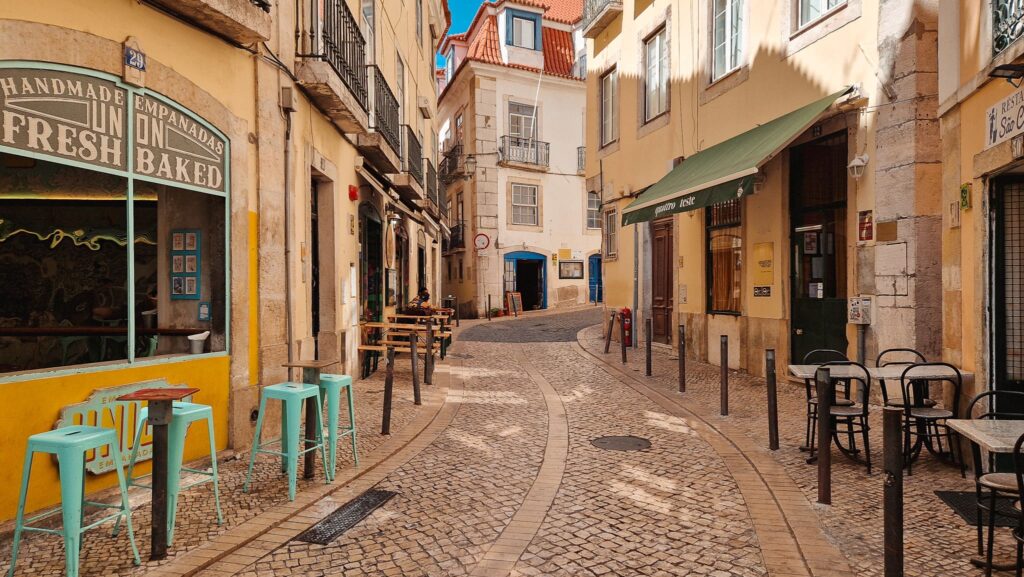
Lisbon is a lively and vibrant city any time of the year, and autumn is no exception. Once the summer heat has ended and the crowds have thinned, you can actually enjoy the city at a more relaxed pace, exploring its charming neighborhoods, enjoying all the beautiful viewpoints, and experiencing its nightlife. Rainy days are rare, but you can spend them at local restaurants, lively bars, and cool museums.
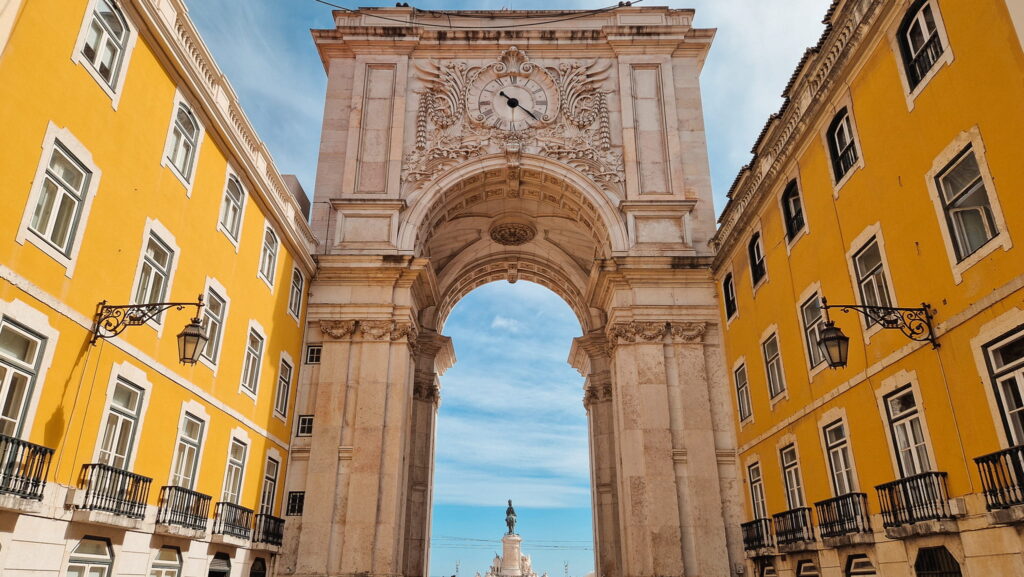
- Outdoors: Enjoy sweeping city views from the many miradouros, explore the old neighborhood of Alfama, enjoy strolls by the river, visit the São Jorge Castle, admire the iconic Praça do Comércio from the Rua Augusta Arch, visit the Carmo Archaeological Museum, and check out the picturesque alleys, stairways, and squares around Baixa, Chiado, and Bairro Alto.
- Indoors: Visit the Lisbon Cathedral, learn about Portuguese music at the Fado Museum, go to LX Factory for food, arts, and crafts, check out beautiful art at the Calouste Gulbenkian Museum, and head to Belém to visit the Jerónimos Monastery, the Museum of Contemporary Art, and Belém Tower.
- Fall foliage spots: Jardim da Estrela, Parque Eduardo VII, Avenida da Liberdade, Parque Florestal de Monsanto, and Botanical Garden of Lisbon.
- Day trips: Sintra, Óbidos, Ericeira, Nazaré, Peniche, Cascais, Sesimbra, Setúbal, Leiria, and Batalha.
Head to my Portugal hub for more travel guides and practical information on traveling around the country.
6. Athens, Greece
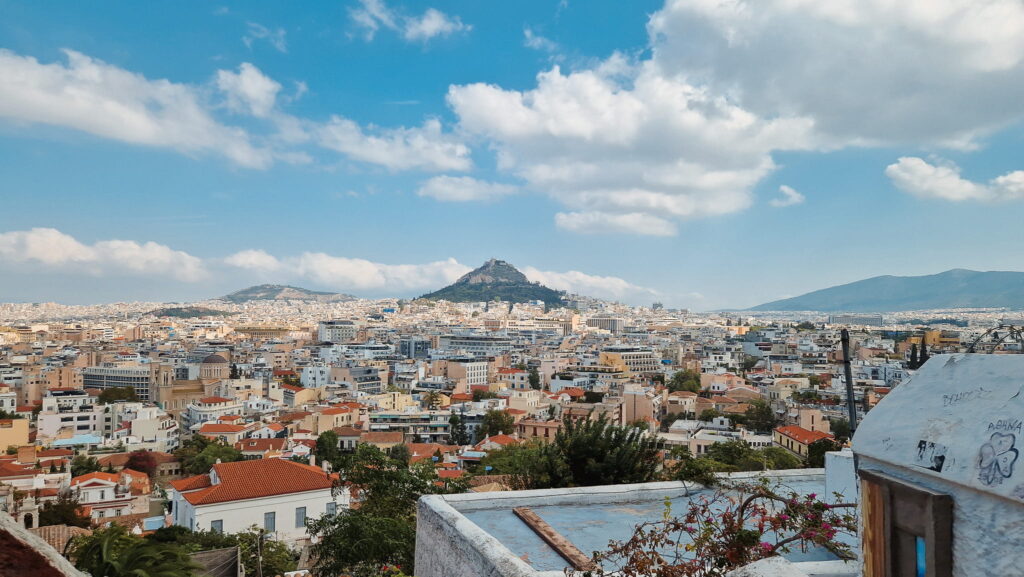
I’ve been in Athens twice, in late spring and early autumn. While I greatly enjoyed both visits, I found autumn to be a much better time to explore the city. The weather is pleasant, the crowds begin to thin, and the city seems to adapt to a more relaxed pace.
My first visit to the city was between late September and early October, and I must say it was still very warm. I believe late October would be an even better time to visit, especially since summer seems to linger longer lately.
The main landmarks will still be fairly crowded, especially the Acropolis, but at least you won’t have to stand in a long line with 40 degrees Celsius and no shade! But you’ll still have a high chance of beautiful weather, with plenty of things to do if you happen to be unlucky and experience rain.

Autumn weather in Athens
September is pretty much still summer in Athens, with temperatures only lowering around mid-October. Even then, the days are often still sunny and warm, while it gets colder at night. I’d say the second half of October is an ideal time to visit.
November is still a good month to visit the Greek capital, but it can be quite rainy, so you’ll need to pack accordingly. Since many attractions in Athens are outdoors, I’d choose October for a higher chance of sunny weather.
What to do in Athens in autumn
Athens is an incredible city to visit in any season, but I truly believe autumn is among the best times to be there because so many attractions are out in the open; visiting in summer can be challenging due to the heat, while winters can be quite rainy. But even if the weather is not ideal, you can visit one of the many incredible museums!
- Outdoors: Obviously, visit the Acropolis, enjoy the beautiful views from Philopappos Hill, watch the sunset from Lycabettus Hill, visit the Panathenaic Stadium and Hadrian’s Library, explore the Ancient Agora of Athens, and wander around the charming Anafiotika neighborhood.
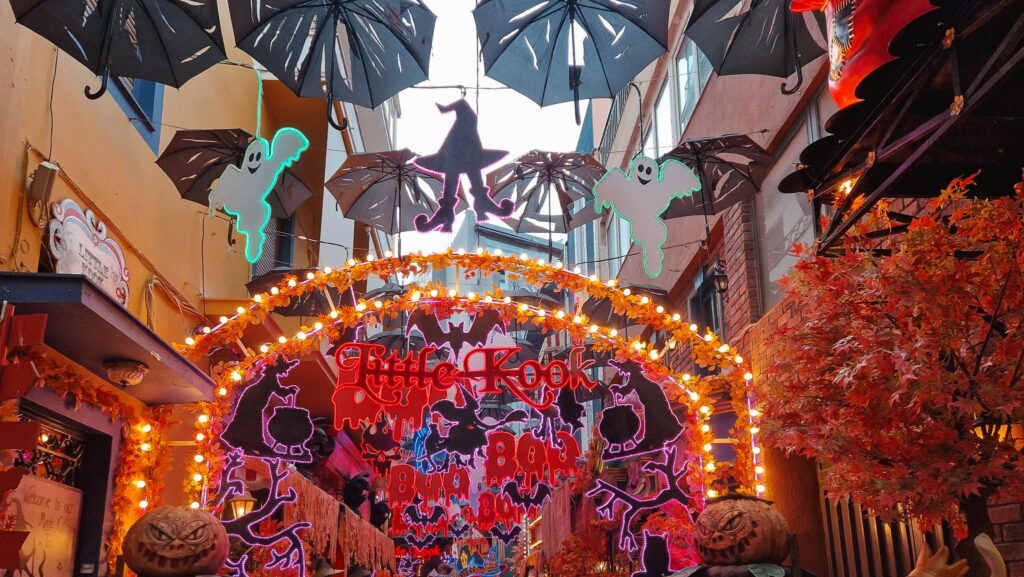
- Indoors: Visit cool museums like the Acropolis Museum, the Museum of Ancient Greek Technology Kotsanas, and the Benaki Museum; savour Greek food at the traditional restaurants around Plaka; have a coffee at a cozy café like Little Tree or the famous Little Kook.
- Fall foliage spots: Athens National Garden, Philopappos Hill, Mount Hymettus, and National Park of Parnitha.
- Day trips: Piraeus, Cape Sounio and the Temple of Poseidon, Corinth and Acrocorinth, Aegina Island.
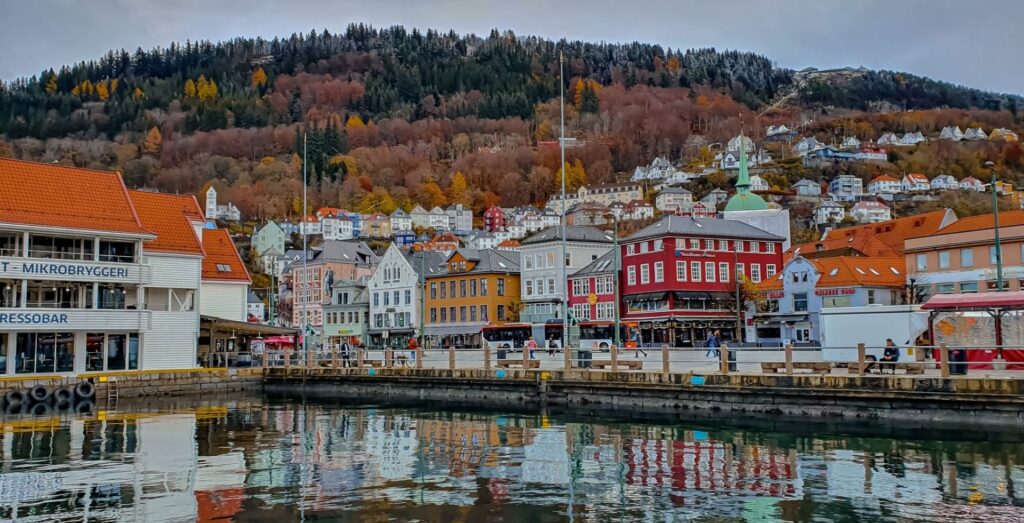
7. Bergen, Norway
Bergen was one of the European cities that surprised me the most, possibly because I knew little about it before visiting. My travel style ranges from accurately planned in minute detail to spontaneous and messy, and my trip to Bergen falls in the latter, but I enjoyed every second.
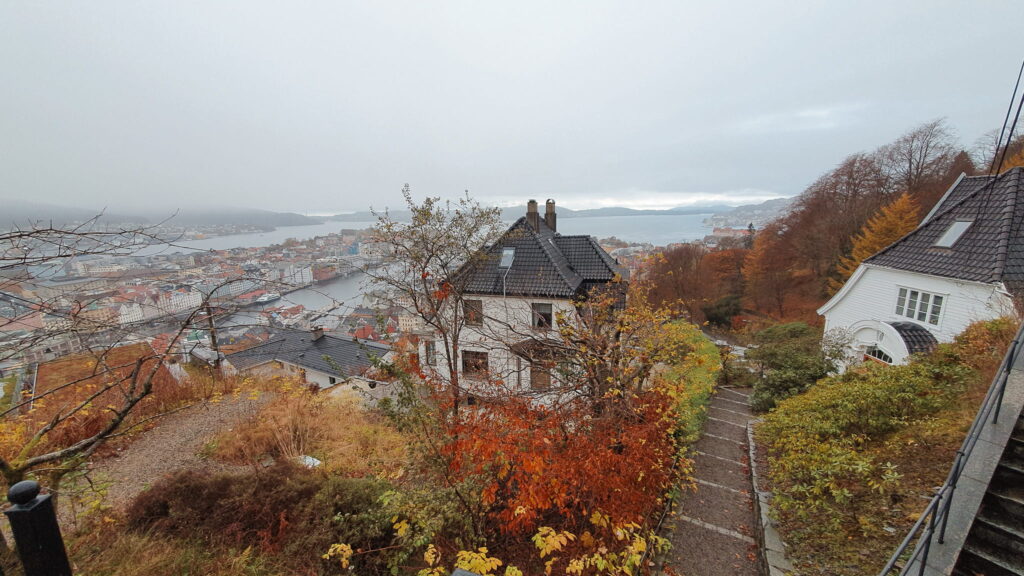
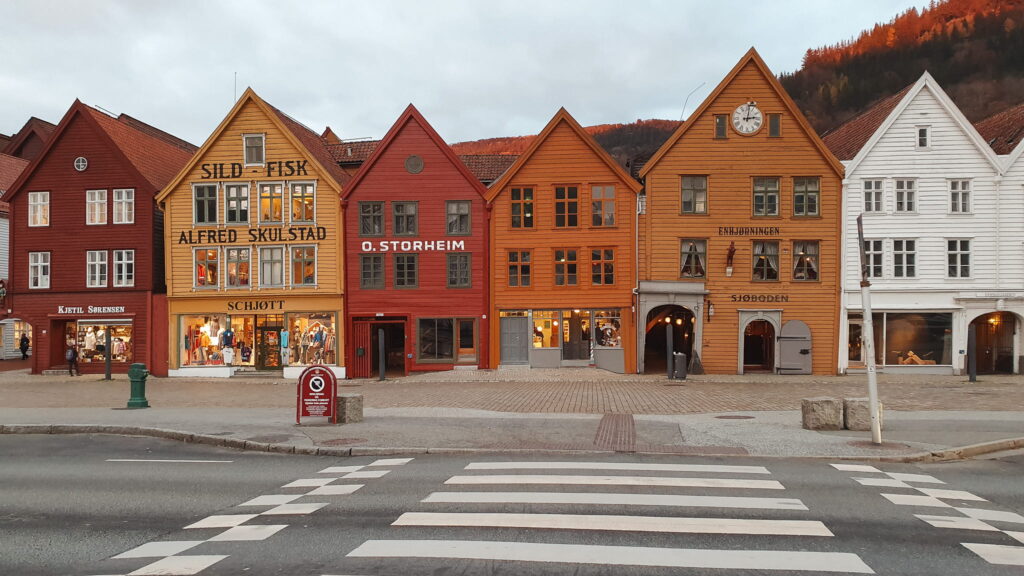
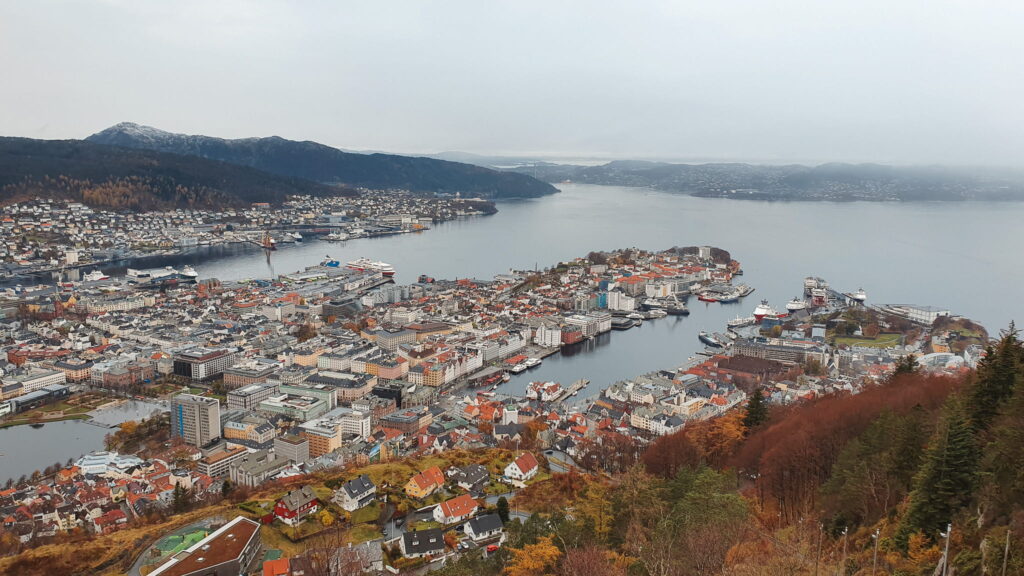
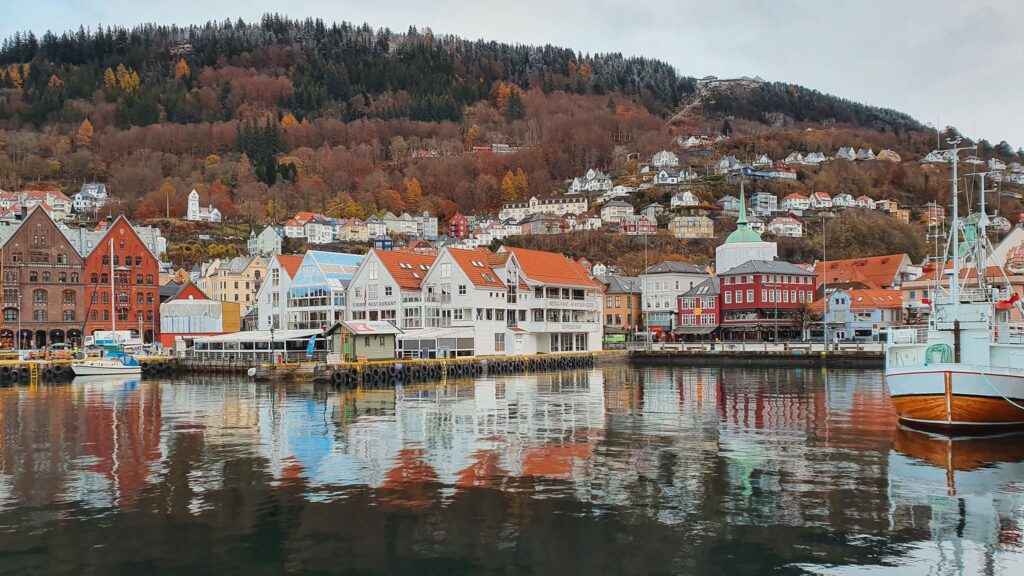
I visited Bergen in early November, which is probably a little late if you don’t want cold weather and chances of snow. It indeed snowed for a little while when I was there, but on the plus side, I was rewarded with beautiful fall foliage in the forests covering Mount Fløyen. The view from Bryggen was worth enduring the cold.
October is probably a better time to visit Bergen if you want to enjoy the foliage but avoid winter-like temperatures. But even if the weather is not ideal, there are many things to do indoors, from visiting museums to cozying up with a hot tea or coffee in one of the many cute cafés.
Read my guide on how to spend two days in Bergen.
Autumn weather in Bergen
Unlike most of the places I included in this article, Bergen can actually get pretty cold in autumn. When I visited in early November, it already started snowing, although it didn’t last long. On the bright side, fall foliage was at its peak.
You can expect September to be still somewhat pleasant, though temperatures are usually around 10-14°C (50-57°F). It gets colder already in October, and by November it’s pretty much winter. If you want to see the foliage, visit around late October, but pack warm winter clothes.
What to do in Bergen in autumn
Bergen has lots of cool outdoor spots, but it can get cold and rainy in autumn. You can still find things to do indoors or just cozy up in a café in between sightseeing; you just need to prepare for cold weather.
- Outdoors: Check out the Hanseatic buildings in the Bryggen area, hike up to Mount Fløyen or catch the Fløibanen funicular, explore the Bergen Harbour, go see the lovely architecture around Knøsesmauet, and walk around the historic Vågsbunnen district.
- Indoors: Cozy up with a warm drink in a café, have a traditional meal at the indoor Fish Me Fishmarket, admire Norwegian art at Kode Art Museum – Lysverket, and visit local museums like the Bergen Maritime Museum, the Hanseatic Museum, and the Bergen University Museum – Natural History.
- Fall foliage spots: Mount Fløyen (hike up or admire from the harbor), Festplassen, Mount Ulriken, and lots of random corners around the central districts.
- Day trips: Flåm Railway, Nærøyfjord, Folgefonna National Park, and one of the many Fjord Cruises.
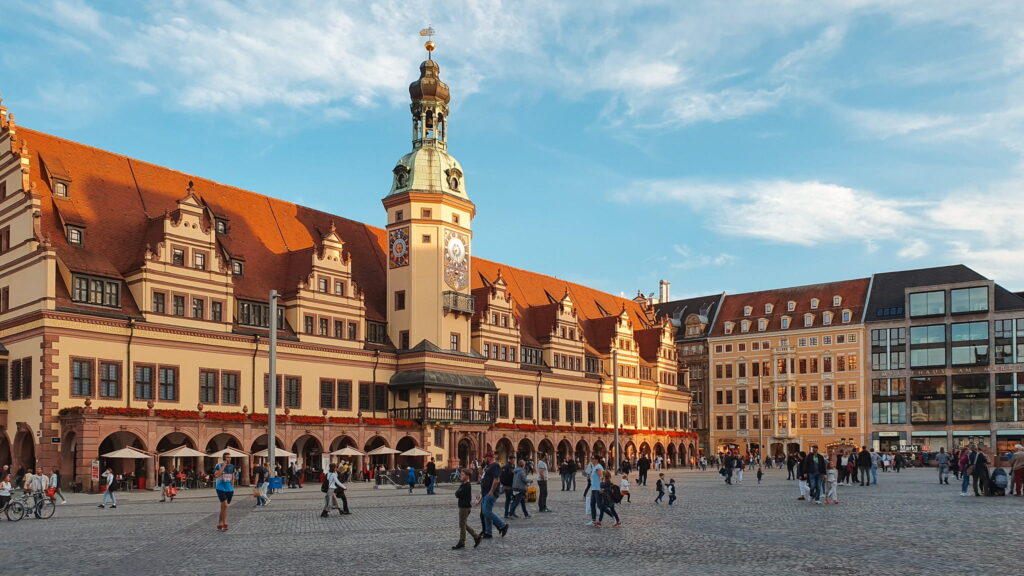
8. Leipzig, Germany
I visited Leipzig on a weekend while living in Berlin with little more than an idea of the main spots I wanted to see. It turns out, sometimes that’s all you need: to hop on a train, get off somewhere new, and let your intuition guide you. Planned trips are great, but allowing space for spontaneity makes for the best memories.
I didn’t know it at the time, but Leipzig is nicknamed Hypezig since lots of artists and young creatives moved to the city, leading to its establishment as a cultural hub in the early 2010s. But Leipzig was a city of arts long before that. In fact, it’s among Europe’s most important cities for classical music, the hometown of Bach, Wagner, and many other composers and musicians.
There are plenty of landmarks and museums where you can learn more about Leipzig’s influence in classical music, but beyond that, there’s so much to do in the city, starting with exploring its beautiful Old Town. And since summer is a popular tourist season, fall is the next best time to visit!
Autumn weather in Leipzig
Autumn in Leipzig is cool and moderately wet, though the weather can vary a lot, especially in recent years. I visited around mid-October, and it was still warm enough to be in a T-shirt in the middle of the day.
In general, September is still pleasant and mostly warm, while October is cooler and November is pretty much winter. However, the foliage doesn’t come out until mid- to late-October, so that is typically a good time to visit, with good enough weather to walk around. However, dress in layers and be prepared for potential rain.
What to do in Leipzig in autumn
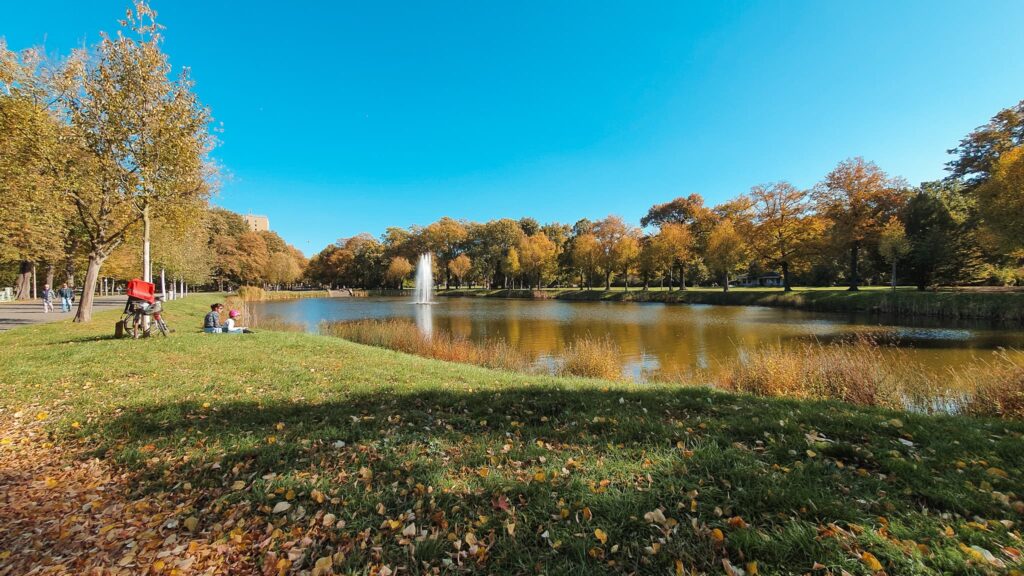
The city is just lovely to walk around when the weather is nice, with huge parks that turn from vibrant green in spring and summer to various shades of yellow and orange in the fall. But besides the beautiful outdoors, there are lots of cool museums to visit!
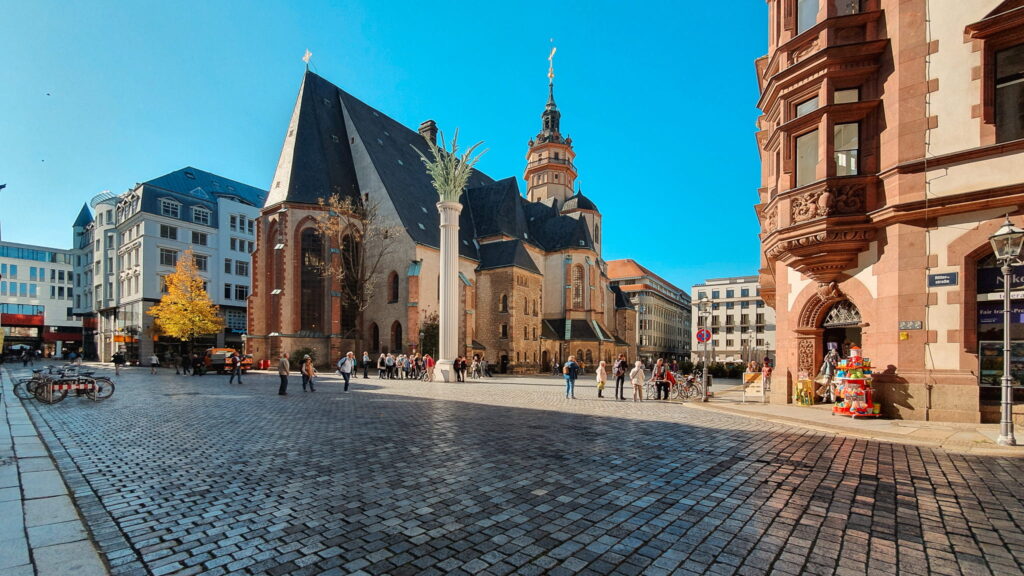
- Outdoors: Explore the lovely area around Marktplatz Leipzig, check out the beautiful St. Nicholas Church, go for a stroll in Clara-Zetkin-Park, wander around Musikviertel, check out the imposing Federal Administrative Court and the baroque Alte Börse, and visit the huge Leipzig Zoo, one of the oldest in the world (and to my knowledge, among the most sustainable and ethical, as far as zoos go).
- Indoors: Learn about local history at the Stadtgeschichtliches Museum Leipzig, admire beautiful art at the Leipzig Museum of Fine Arts, attend a concert at Gewandhaus, and expand your classical music knowledge at Bach-Museum Leipzig, Mendelssohn-Haus, and Schumann-Haus Leipzig.
- Fall foliage spots: Leipziger Auwald, Johannapark, Clara-Zetkin-Park, Palmengarten, and Fockeberg.
- Day trips: Halle, Dresden, Erfurt, Weimar, and Wittenberg.
9. Warsaw, Poland
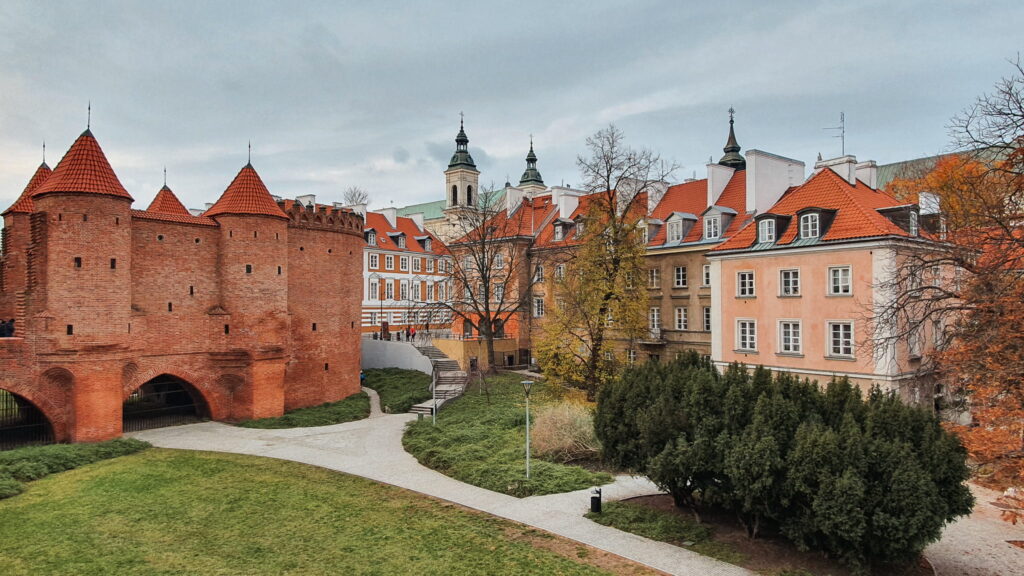
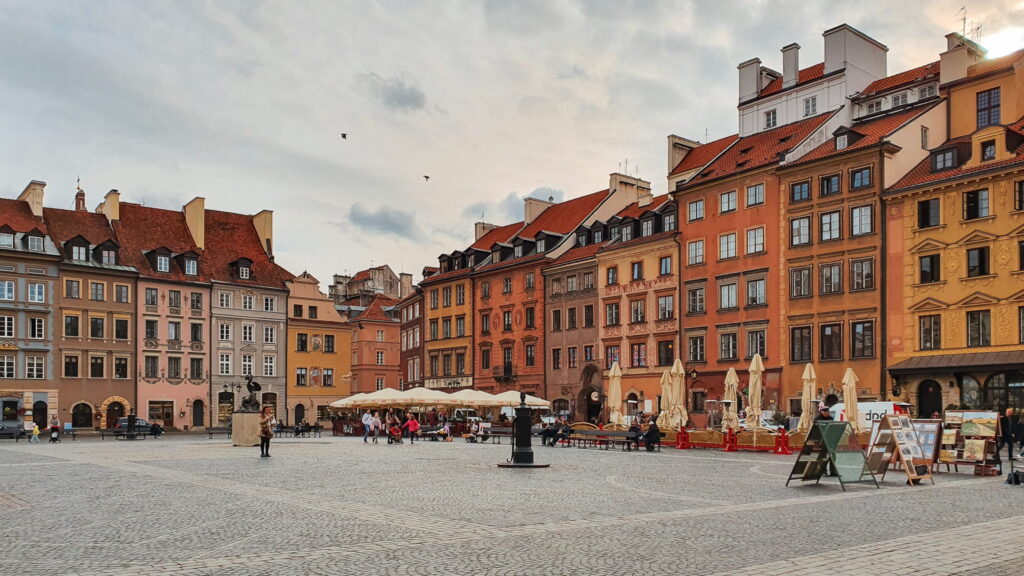
For me, Warsaw was one of those cities you have to take time to appreciate fully. Unlike many other cities, it wasn’t exactly love at first sight, but the more I explored its different neighborhoods, the more I enjoyed it. The city’s architecture is an eclectic mix of Gothic, Soviet-era, and modern. The rebuilt Old Town provides a stark contrast to the towering skyscrapers in downtown Warsaw.
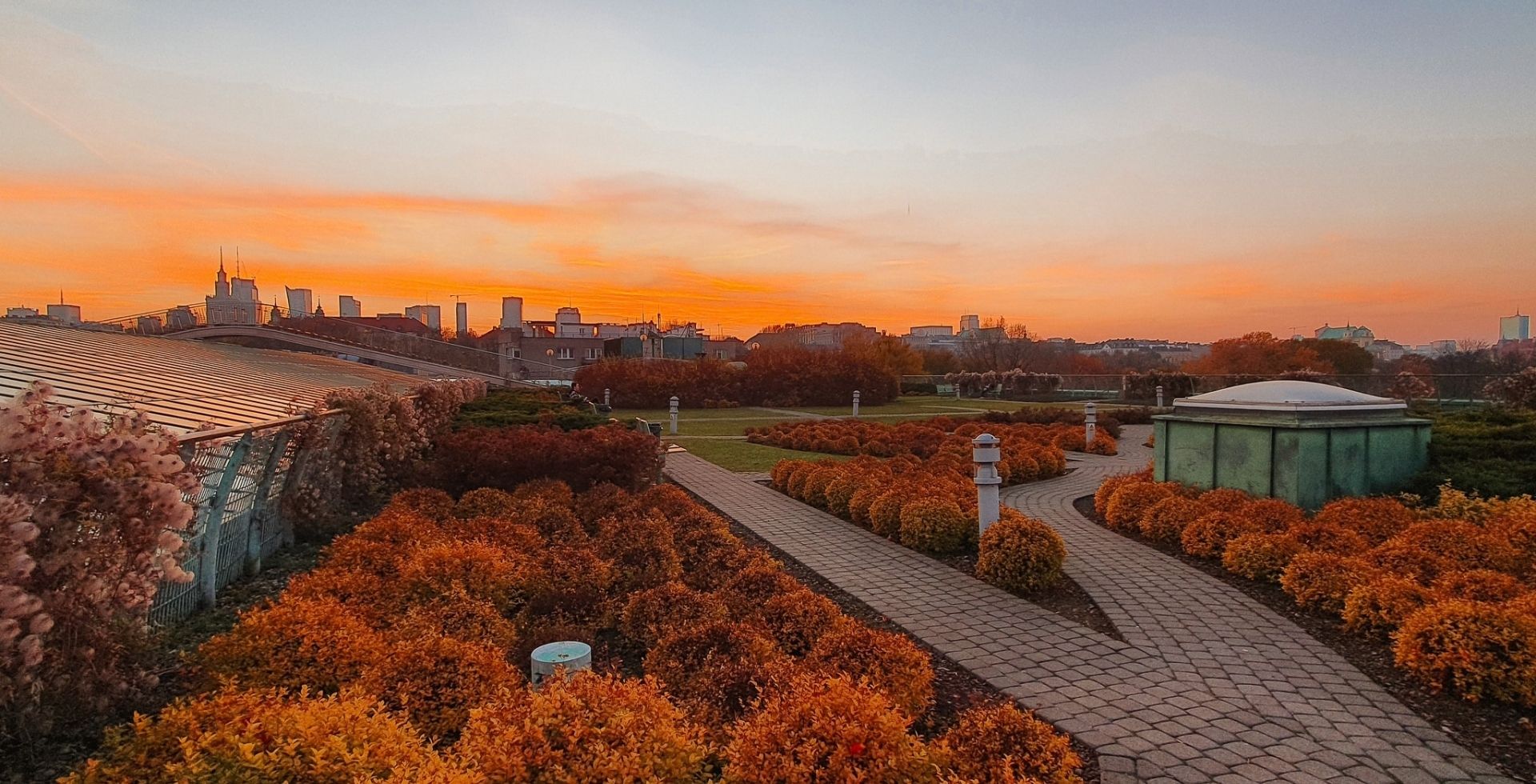
I visited Warsaw in November, and although it was a little cold, I had beautiful weather with mostly clear skies and pleasant days for walking around. The city is huge, so there are plenty of things to do both outdoors and indoors, from exploring the Old Town to visiting cool museums and art galleries.
I only spent a few days in Warsaw, but by the end of my stay, I knew I wanted to be back and explore more of the city. It felt like the city has many layers you need to slowly peel off to finally get to know it, and that takes time I unfortunately did not have on my first visit. But I will certainly be back!
P.S. I have a dedicated guide about visiting Warsaw in autumn coming soon. Sign up for my newsletter to be notified when it’s live!
Autumn weather in Warsaw
Autumn in Warsaw ranges from mild and pleasant in September to chilly and rainy in November. I visited in late October, and I somehow witnessed every variation of this in the span of a few days.
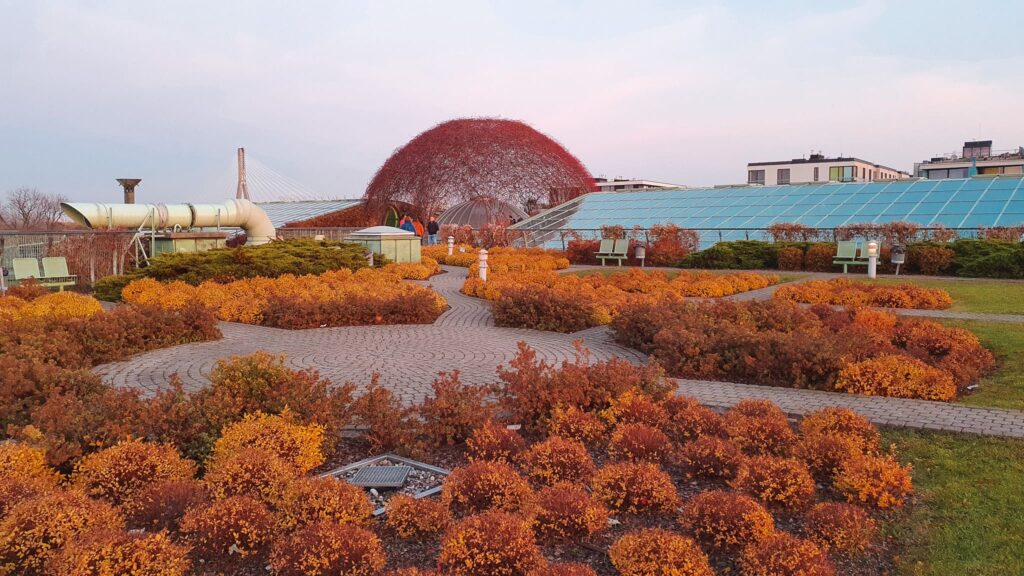
While late September may be a good time for a trip to Warsaw, the city’s vibrant foliage shows up around mid- or late-October. It was at its peak when I visited at the end of the month. November, on the other hand, can already be very wet and gray, so the city may not look as scenic.
What to do in Warsaw in autumn
Warsaw surprised me with the amount of cool things to do and areas to explore. From the beautifully rebuilt Old Town to the skyscrapers downtown and the stunning parks, Poland’s capital city is a vibrant and lively city with a lot to offer on an autumn visit.
- Outdoors: Explore the beautiful Old Town, enjoy city views from the Palace of Culture and Science, stroll around Łazienki Park, admire baroque gardens at the Museum of King Jan III’s Palace at Wilanów, go for a walk along the Vistula Boulevards,
- Indoors: Visit the Royal Castle, check out the beautiful art collection at the Royal Łazienki Museum, learn about local history at the Warsaw Uprising Museum, admire local art at the Polish National Museum, learn about the communist era at the Muzeum Życia w PRL, discover the life of the renowned Polish composer at the Museum of Fryderyk Chopin, indulge in local food at traditional and modern restaurants, and have a hot drink in one of the many cozy cafés.
- Fall foliage spots: Łazienki Park (aka Royal Baths Park), Castle Gardens, Krasiński Garden, Morskie Oko Park, Warsaw University Library Garden, Marshal Edward Rydz-Śmigły Park, and Skaryszewski Park.
- Day trips: Łódź, Lublin, Kampinos National Park, Kazimierz Dolny, and Piotrków Trybunalski.
10. Valencia, Spain
I know this is the second city in Spain I added to this guide, but I can’t help it; this is one of my favorite countries in the world, and I’ll never stop going back. Also, I wanted to add something a bit different from the usual cities to visit for fall foliage.
In Valencia, summer weather lingers well into autumn, with the sun shining brightly for around 300 days per year! That places the city among the sunniest in Europe, and although a few other Spanish cities rank higher, I wanted to highlight Valencia because I’ve personally visited multiple times in every season and I just love it so much.
While the city may not be a top choice for fall foliage, which is scarce given that it mostly has evergreen trees, it’s an ideal place to visit if you live in colder places and want to enjoy a few days of sunshine, mild temperatures, a great paella, and possibly even a day at the beach. I’ve personally been at the beach in Valencia as late as early November! And I mean for actual sunbathing.
Autumn weather in Valencia
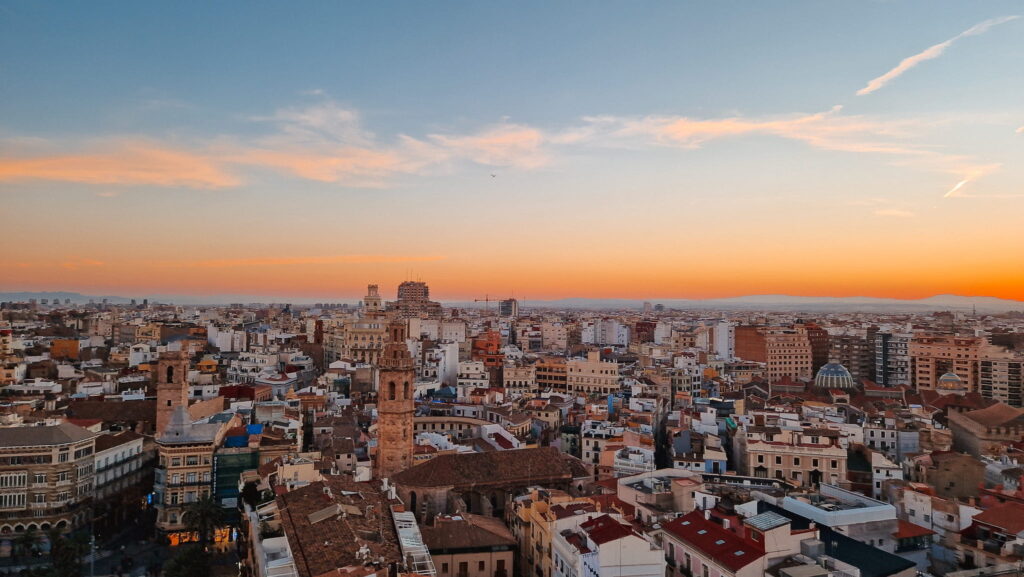
Valencia has beautiful weather in autumn, with sunny days and pleasant temperatures that last well into November. In fact, September is still summer-like, and even in October you can get warm days that feel like late summer. November starts being cooler, but daytime temperatures can easily reach 20°C (68°F).
As I mentioned, rain is not frequent in Valencia, but it is more likely in November and in the winter months. Between late October and early November would be my top choice for a visit to Valencia.
What to do in Valencia in autumn
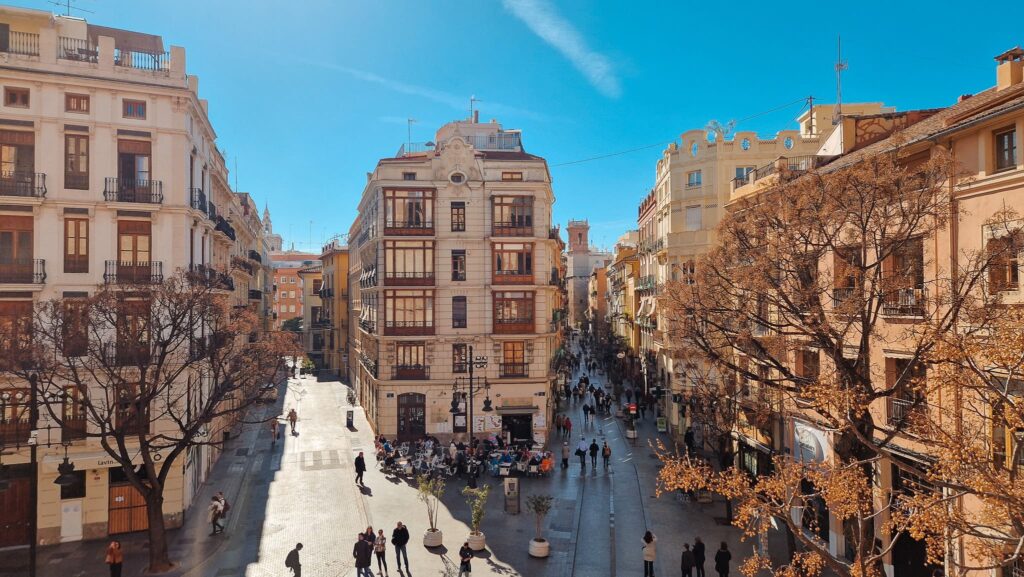
Autumn is as good a season as any to explore Valencia’s historic neighborhoods on foot, admire the beautiful architecture, visit cool museums, and sip an Agua de Valencia at an outdoor terrace. The weather will likely be ideal for walking around, but if you’re unlucky, there are also lots of things to do indoors!
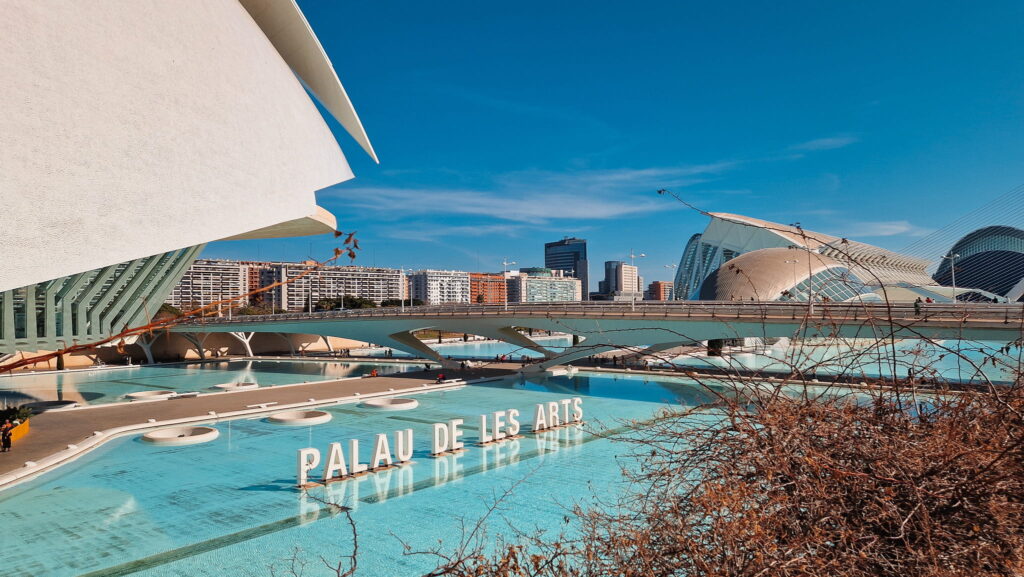
- Outdoors: Explore the alleys and squares in the Old Town, go for a stroll around the Ciudad de las Artes y las Ciencias, enjoy the view from Torres de Serranos, go find cool street art around El Carmen, check out the cafés and restaurants in Russafa, and maybe relax at the beach.
- Indoors: Go see the holy chalice inside the Valencia Cathedral, enjoy local food at the indoor markets, and visit some of the city’s unique museums and art galleries, like the Museo Nacional de Cerámica y Artes Suntuarias, Lonja de la Seda, Centro del Carmen de Cultura Contemporánea, and Museo de Bellas Artes.
- Fall foliage spots: Foliage is quite limited in Valencia, but you can check out the Jardín del Turia, Jardines del Real, and Valencia Botanical Garden.
- Day trips: Sagunto, Xàtiva, Vilafamés, Teruel, and Benidorm.
If you’re traveling to Valencia on a budget (though not only), I have a dedicated guide with lots of cool free things to do!
Practical advice for your Europe Autumn Trip
I’ll leave you with some general advice for your next fall trip around Europe. First of all, while I’ve included specific weather information for each city, it’s worth noting that weather is unpredictable, especially in recent years. I’ve experienced unusually cold weather in otherwise warm places and surprisingly warm days in places where it’s typically cold.
Always check the forecast before your trip, but also prepare for unexpected weather changes. Autumn is particularly tricky, especially later in the season, when the weather can change vastly overnight. Make sure you pack layers and prepare for rain.
My other piece of advice would be not to cram too many activities into your itineraries and to allow for enough time to visit each place. The days get shorter in autumn, leaving less time for some outdoor activities. Museums and other attractions may also close earlier compared to summer, so you may not be able to do as many things. Plus, I think it’s nice to take it slow and truly get to experience a city before moving on.
Also, make sure you meet all the necessary entry requirements. Some countries (like Georgia, which I included in this post) have a mandatory travel medical insurance requirement. Besides the requirements, having travel insurance is always a good idea. I use SafetyWing and highly recommend it, especially if you travel frequently. You can read more about it in my article about SafetyWing Nomad Insurance.
Lastly, note that the Entry/Exit System (EES) is operational for non-EU nationals visiting participating European countries (EU members plus Iceland, Liechtenstein, Norway, or Switzerland). This is an automated IT system for registering non-EU visitors whenever they cross the external borders of the mentioned European countries. You can read more about the EES on the Travel Europe website.
That’s it for this guide to autumn travel in Europe. I hope you’ll get to visit some of these incredible cities on your next trip. If you do, let me know your thoughts in the comments!
Travel Resources
I’ll leave you with a selection of my go-to travel planning apps and websites. For more details, you can refer to my travel resources hub.
| Website/App | Category | Description | Book Here |
|---|---|---|---|
| Booking.com | Accommodation | My favorite website for great accommodations for different budgets. | Find a Place |
| Kiwi.com | Flights | My new favorite platform for finding affordable flights. | Find Flights |
| Omio | Transportation | You can book everything from buses and trains to ferry rides. | Transportation |
| SafetyWing | Insurance | One of the best travel medical insurance options for frequent travelers. | Get Insured |
| Manawa | Activities | A great platform to book activities and adventures with local hosts. | Find Activities |
| GetYourGuide | Activities | My go-to platform for tours and experiences with lots of options. | Experiences |
| Viator | Activities | A great alternative for activities all over the world. | Experiences |
| GuruWalk | Free tours | A great platform for free walking tours (tipping is recommended). | Book a tour |
| DiscoverCars | Car rental | My go-to platform for car rental anywhere in the world. | Rent a Car |
| Airalo | eSIM | My favorite app for buying digital SIM cards when traveling abroad. | Get an eSIM |
| Saily | eSIM | A great alternative to Airalo, with cheaper plans in some destinations. | Get an eSIM |
| Xe | Currency | A currency converter showing real-time rates. Website or app. | Get Xe App |
| Maps.me | Navigation | My favorite navigation app for hiking trails and remote areas. | Get Maps |

Pin this for later!