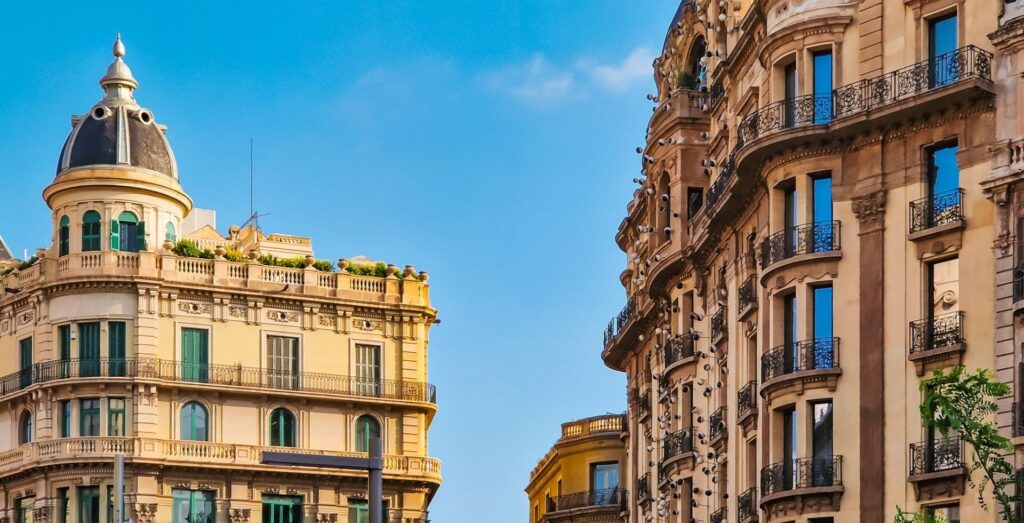

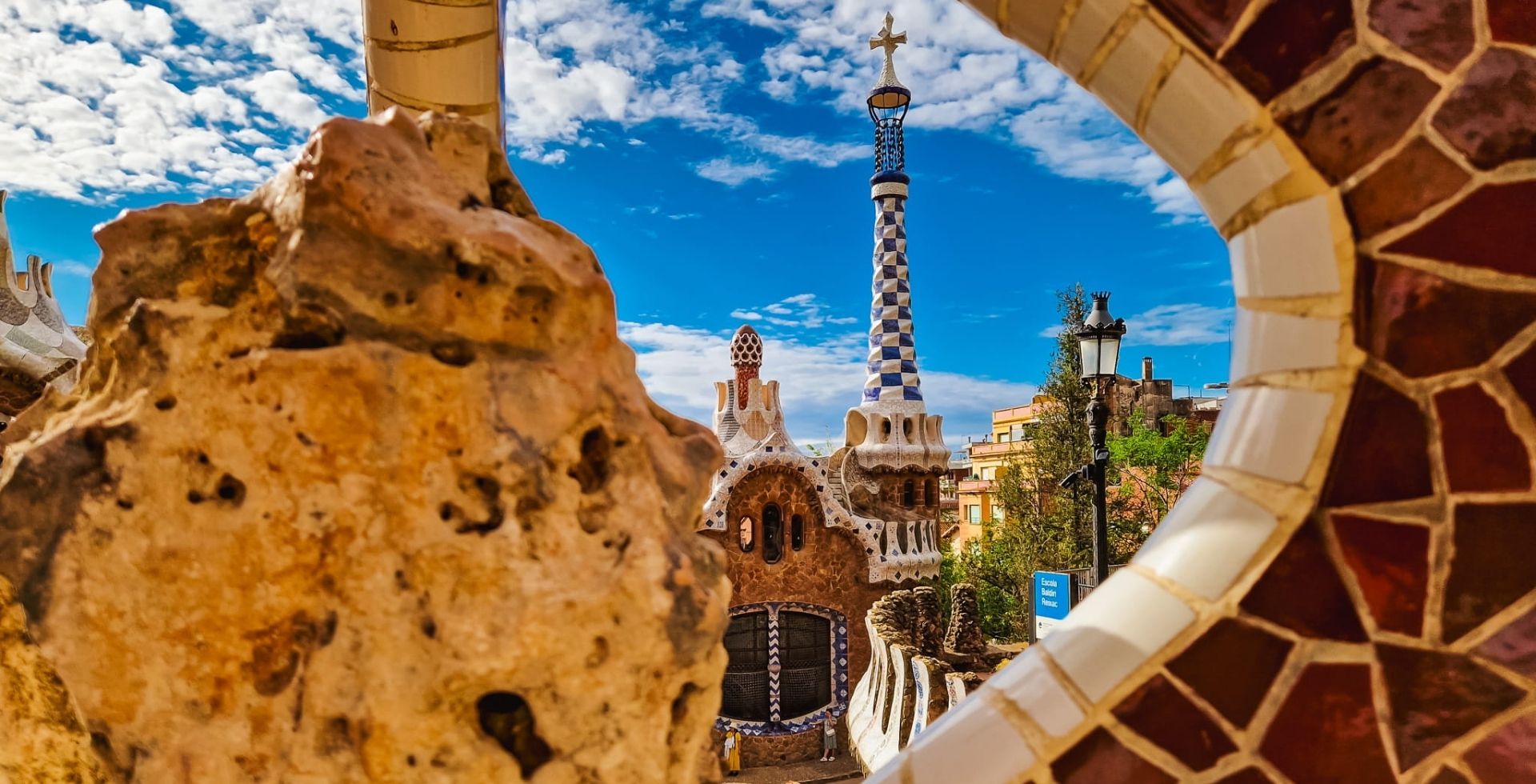
After I finally visited these landmarks myself, I thought it was time to share this practical guide on how to visit every Gaudí building in Barcelona. This is a complementary guide to my article about my experience visiting these buildings.
This page contains affiliate links. If you buy through these links, I may receive a small commission, at no additional cost to you. I only recommend products or services I have tried and/or find useful and reliable.

When I wrote my article about my experience visiting all the Gaudí landmarks in Barcelona, I’d initially added all this practical information there. I then realized it was way too long, and splitting the two was a better idea. So this post is entirely dedicated to the practical information you need to know before embarking on this journey.
Why visit all Gaudí’s buildings?
I’m not saying you absolutely need to visit every single Gaudí building in Barcelona, but if you have the chance, I think it’s a great idea. Checking out the different buildings allows you to observe the evolution of the architect’s style, notice recurring motifs, and have a better understanding of Gaudí’s vision.
Yes, some of his buildings are world-renowned and Instagram-worthy – especially Casa Batlló and the Sagrada Família. But visiting all the different buildings gives you a deeper insight into how profoundly this one artist has shaped the modernist architecture in Barcelona. So that was my main purpose for embarking on this journey through the architect’s body of work.
I was also curious to see what was beyond the façade. I’d walked past some of the buildings countless times while living in Barcelona and on my subsequent visits, so I was excited to find out how the interior compares to the quirky exterior. I was not disappointed! You can read more about my impressions here. For now, I’ll just give you a quick overview of my experience and focus on the practical side of things.
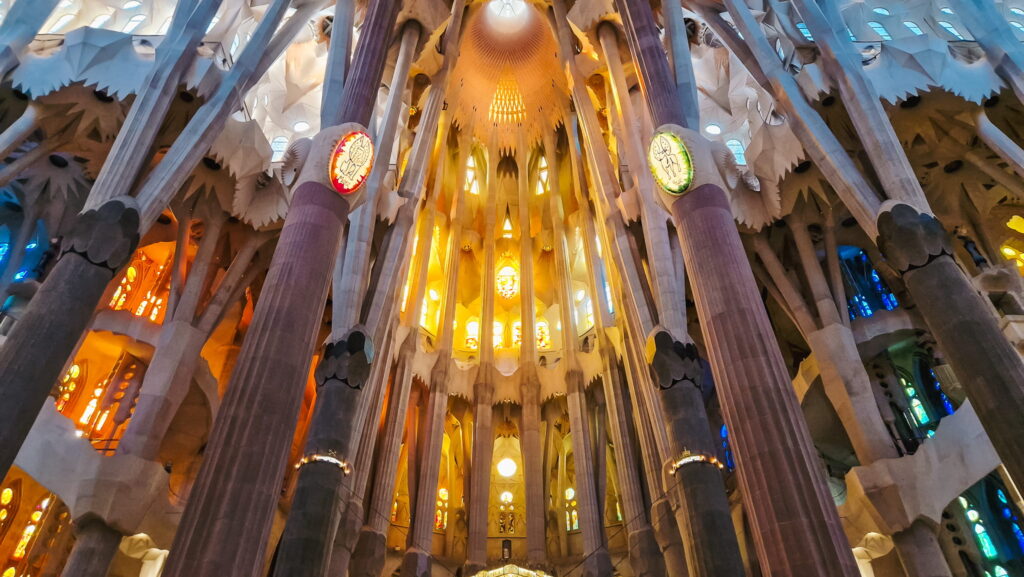
Overview of my visit
I visited most of Gaudí’s works in Barcelona in the summer of 2024, except for Torre Bellesguard, which I visited in 2025. It was peak tourist season both years, so the places were fairly crowded, but the lesser-known ones were actually mostly empty.
Because I’m often an all-or-nothing kind of person, in 2024, I decided to visit five Gaudí buildings in a single day. I planned it all ahead of time and knew it would be exhausting, but I did it! Would I recommend it? Absolutely not! Is it doable? Yes, but you need lots of energy!
I’ll give you some basic details for each building, then give you my honest thoughts on which I believe are most worthy of your time and which are optional. I’ll also share my tips for experiencing Gaudí on a budget, as much as possible.
As for the order of your visit, it really depends on the kind of experience you’re aiming for. If you want to observe the evolution of Gaudí’s style, I recommend the chronological order by year of construction. Otherwise, it’s probably easier to group nearby sites. I chose my route based on the August heat and the location of each building.
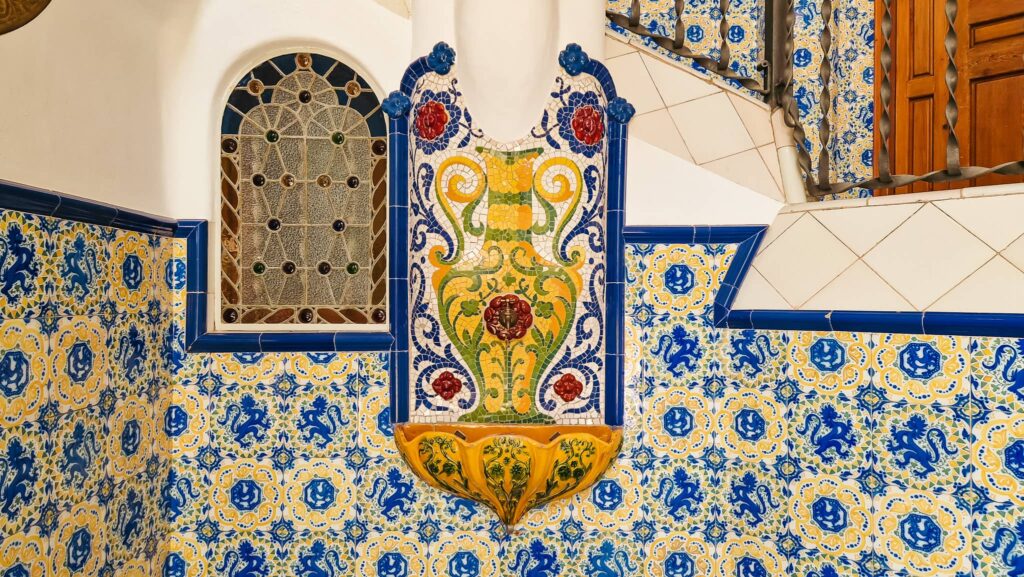
Gaudí Buildings You Can Visit
I’ll cover all the buildings below in chronological order based on the year construction started. Some of these took a long time to complete, which is why the style may differ in buildings that began early in the architect’s life but were completed much later.
I’m only including the buildings you can actually visit inside, but I’ll list Gaudí’s other works in the city toward the end of the article.
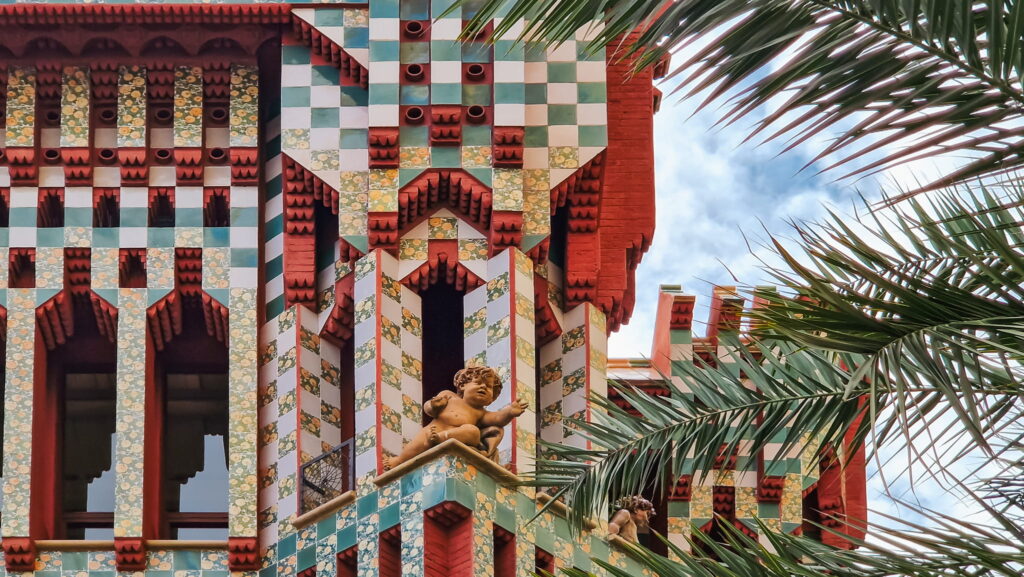
1. Casa Vicens (1883–1885)
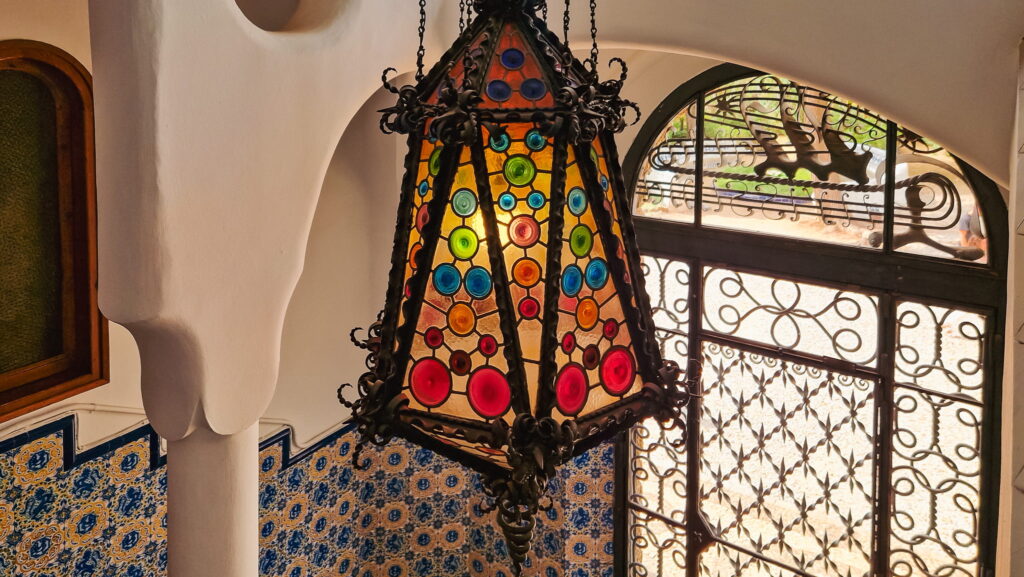
Gaudí’s first major house in the Orientalist style is in the Gràcia neighborhood, a short walk from the metro stop Fontana (L3). The self-guided visit lasts just over one hour with the audio guide, which is available via a QR code, so bring your earphones! Booking tickets online is recommended.
- Opening hours: Daily from 9 AM to 6 PM from November to February and to 8 PM from March to October.
- Closed: December 25 and from January 7 to 14, 2027.
- Entry fees: €20 for self-guided visits; €24 for guided tours. Discounts are available.
More details on the Casa Vicens website.
2. Palau Güell (1886–1890)
One of Gaudí’s first works for Eusebi Güell is in El Raval, just off the Rambla. The closest metro stop is Liceu (L3). The visit lasts just over one hour, and the audio guide is included in the ticket fee. They provide a device with headphones. You can book your ticket online or buy it at the ticket office.
- Opening hours: Tuesday to Sunday from 10 AM to 5.30 PM from November to March and until 8 PM from April to October.
- Closed: Mondays, 25 and 26 December, 1 and 6 January, and the last week of January (for maintenance).
- Entry fees: €15 for adults. Guided tours are available on weekends for the same price. Free admission on the first Sunday of each month and open doors days.
More details on the Palau Güell website.
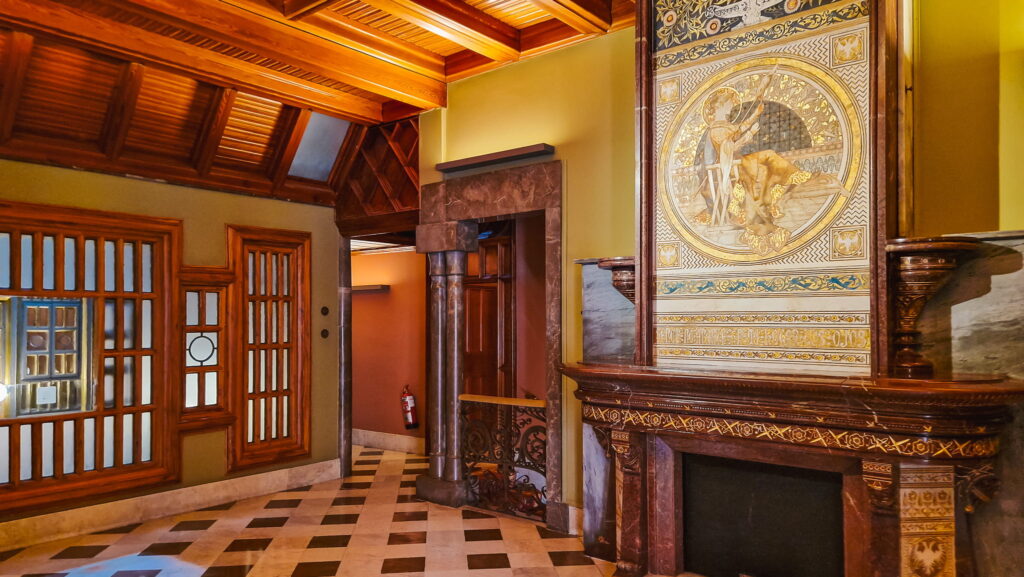
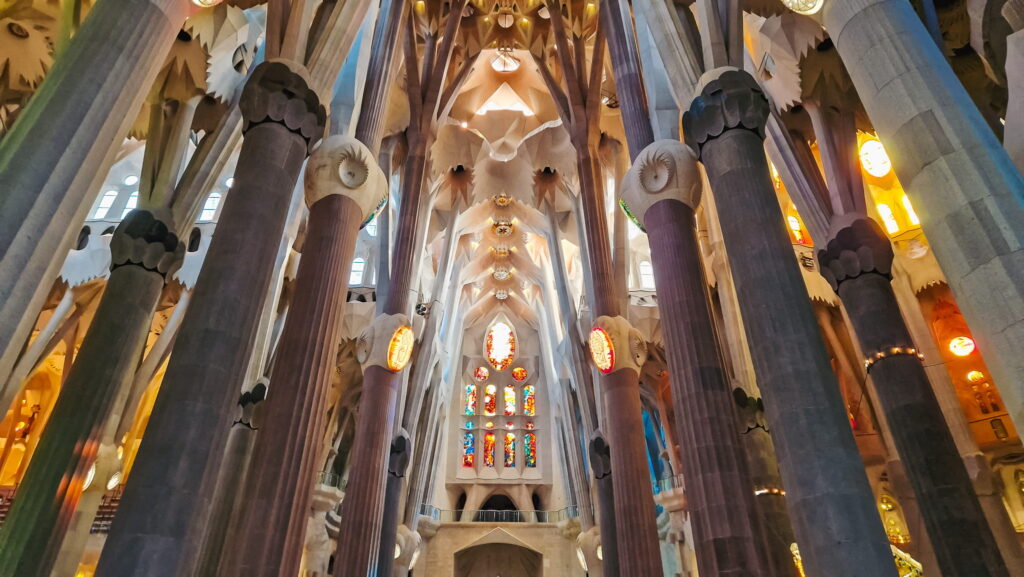
3. Sagrada Família (1883–1926)
Gaudí’s masterpiece is in the heart of Barcelona, towering over the city with its 172.5 meters of height, the world’s tallest church. You can reach it via metro lines L2 and L5, and the stop is called Sagrada Família, so you can’t miss it.
You must buy tickets online, as they are not sold on-site. In your ticket confirmation email, you’ll also find a link to download the app that you’ll need for the audio guide. Remember to bring your earphones!
- Opening hours: Opening time is always 9 am Monday to Saturday and 10.30 am on Sundays. Closing time varies depending on the season (6 pm November through February, 7 pm March and October, and 8 pm April through September.
- Closed: The basilica is always open, but it has reduced opening hours on 25 and 26 December, 1 and 6 January, when it opens from 9:00 am to 2:00 pm.
- Entry fees: €26 for a self-guided tour of the basilica and €30 for a guided tour; €36 if you include access to the towers and €40 for the guided tour. These prices are for adults, but discounts are available.
More details on the Sagrada Família website.
4. Torre Bellesguard (1900–1909)
This Neo‑Gothic and early Modernist building is a bit outside the center of Barcelona, in the Sarrià-Sant Gervasi neighborhood in northwestern Barcelona. To get there from the center, you can catch metro line L3 to Penitents and bus H2, or the Ferrocarril line L7 to El Putxet and then walk for about 20 minutes.
You can buy your ticket online or directly at the ticket office since it’s never really crowded. They provide an audio guide on their devices. While you can wander around at your own pace in the outdoor areas, access to the building’s interior is every 30 minutes with a member of staff.
- Opening hours: Tuesday to Sunday from 10 am to 3 pm.
- Closed: Mondays except public holidays, January 1st and 6th, December 25th and 26th.
- Entry fees: €12 for the self-guided visit and €20 for the guided tour, only available from Thursday to Sunday. Discounted rates are available.
More details on the Bellesguard website.
5. Park Güell (1900–1914)
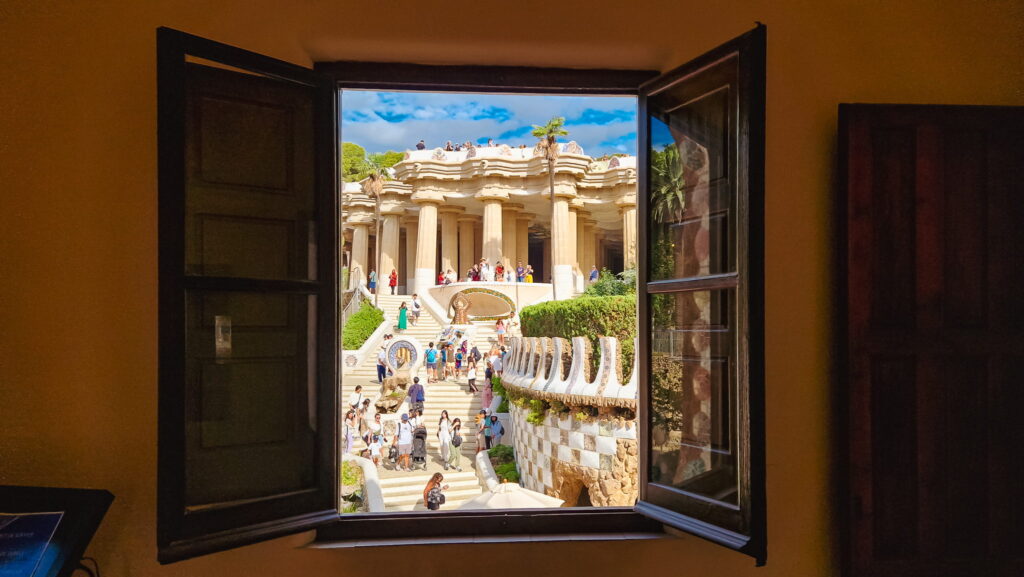
Gaudí’s impressive park spreads over roughly 19 acres, overlooking Barcelona from its location in the hills of the La Salut neighborhood. The closest metro stop is Lesseps (line L3), but you need to walk about 20 minutes to the park. Alternatively, catch bus V19 or 24 and get off at Carretera del Carmel – Albert Llanas. Line 24 starts in Catalunya, while line V19 starts at the port.
Buy your tickets online in advance to be able to choose your preferred entry slot. You can choose between self-paced visits and guided tours. There is no audio guide here.
- Opening hours: The park opens at 9 or 9.30 am, depending on the season. Closing time changes every few months, between 5.30 and 7.30 pm.
- Closed: The park is open year-round.
- Entry fees: €18 for the monumental area, or €24 with the visit to the Gaudí House Museum; €35 for guided tours, park only. Discounted rates are available. Access to the park is free for Barcelona residents.
More details on the Park Güell website.
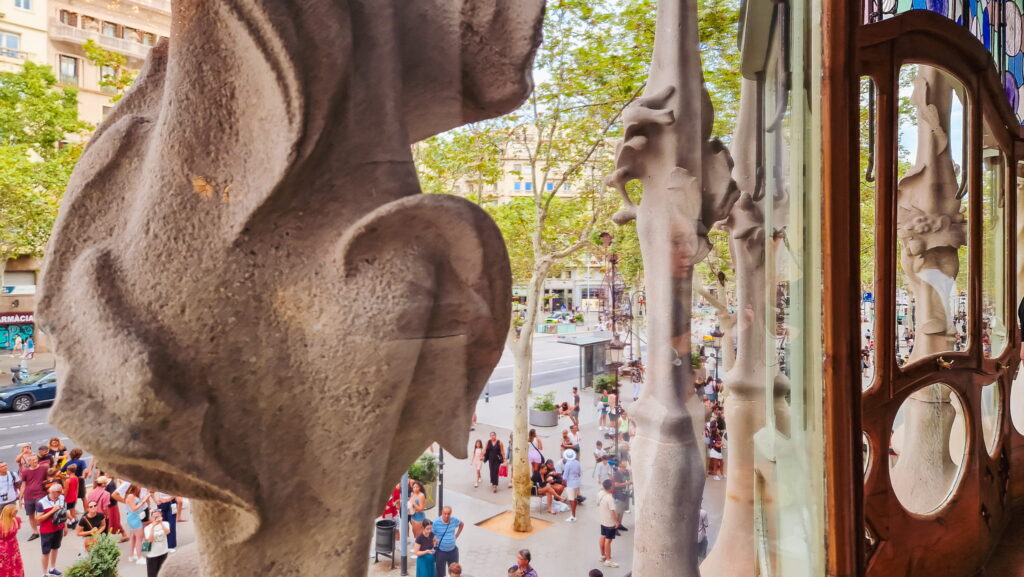
6. Casa Batlló (1904–1906)
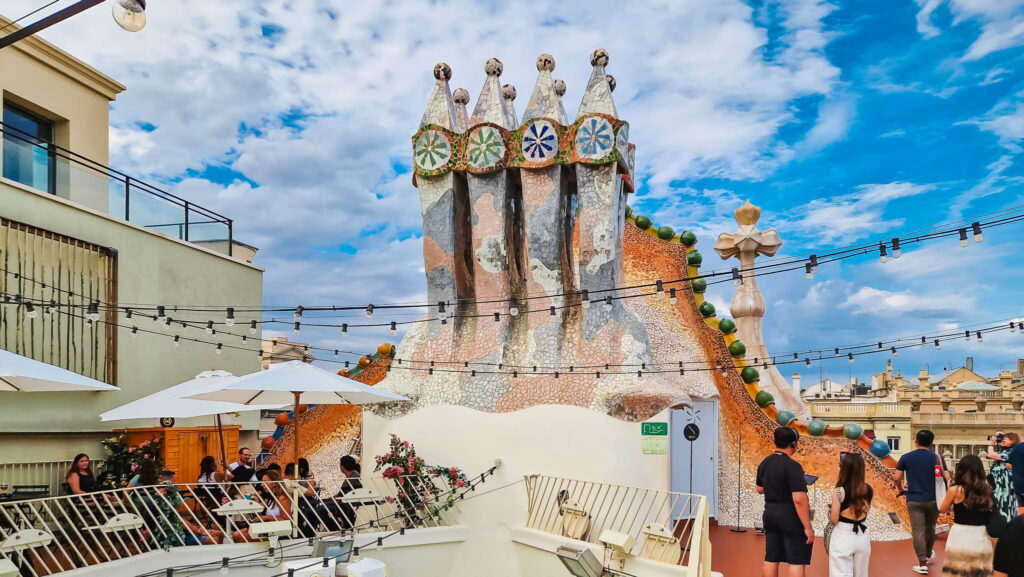
Gaudí’s most famous house is a remodel of an existing building on Barcelona’s most exclusive street, Passeig de Gràcia. You can easily reach it via metro lines L2, L3, or L4 (stop at Passeig de Gràcia) or by walking from Plaça de Catalunya. Moreover, there is a nearby Rodalies (commuter trains) stop, Barcelona – Passeig de Gràcia.
Several tickets are available, and online booking is strongly encouraged, but there is an on-site ticket office. However, prices can be much higher at the ticket office, so it’s really worth booking online. You can also download the official app for exclusive content, augmented reality, ticket management, and more.
All tickets include the audio guide. You can choose between the regular self-guided visit, a night visit, a visit with breakfast or tapas, and a visit that includes the ongoing temporary exhibition. Moreover, there are special visits that vary by season.
- Opening hours: Daily from 8.30 am to 10.30 pm, but the ticket office closes at 9 pm.
- Closed: The house is open year-round.
- Entry fees: Regular visits start at €29 for the self-guided house tour without the rooftop. The most affordable ticket is for the night visit, starting at €25. For each type of ticket, there are four tiers: blue, silver, gold, and platinum. Blue is the basic and cheapest one, while the others are increasingly more expensive as they include more extras. You can see all the ticket options here.
More details on the Casa Batlló website.
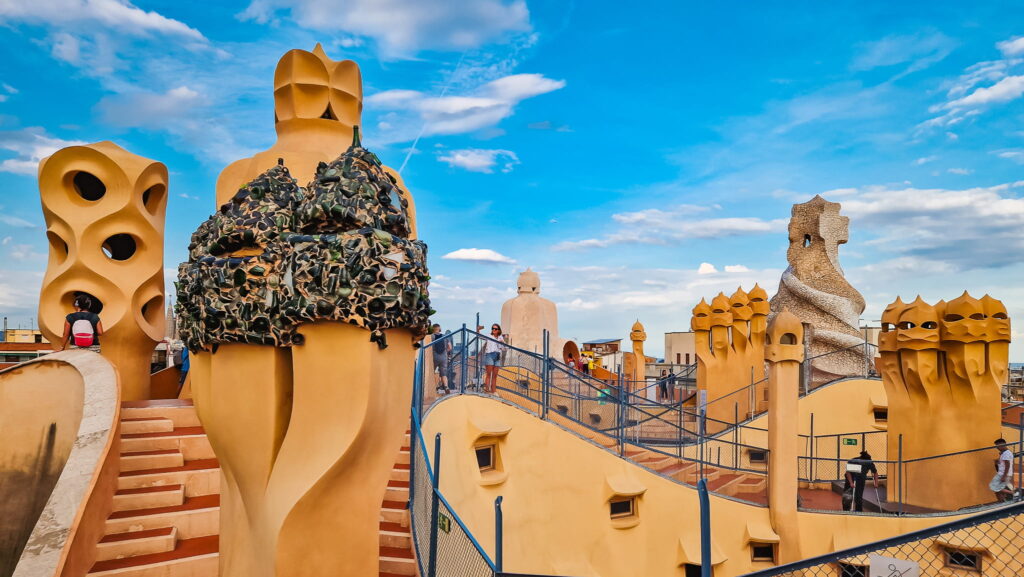
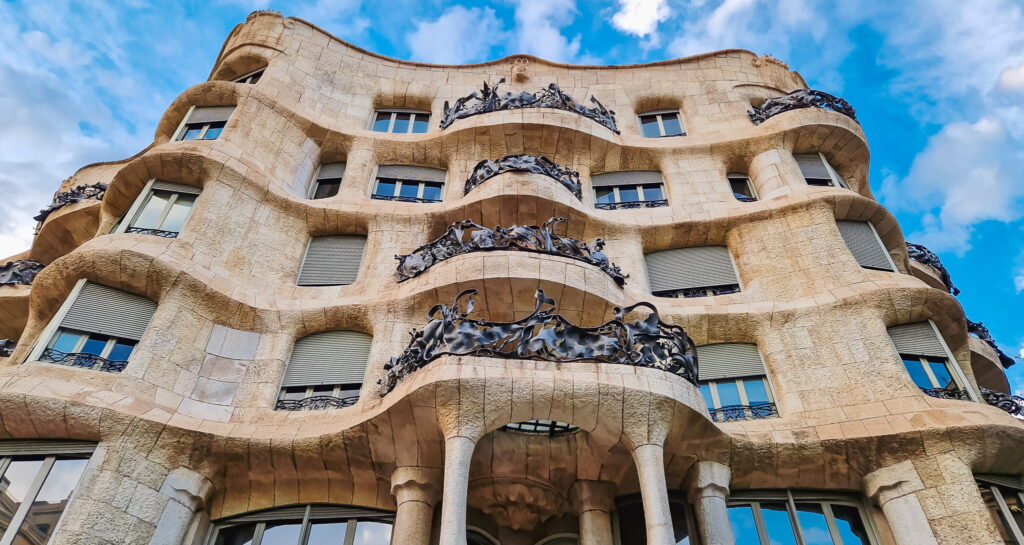
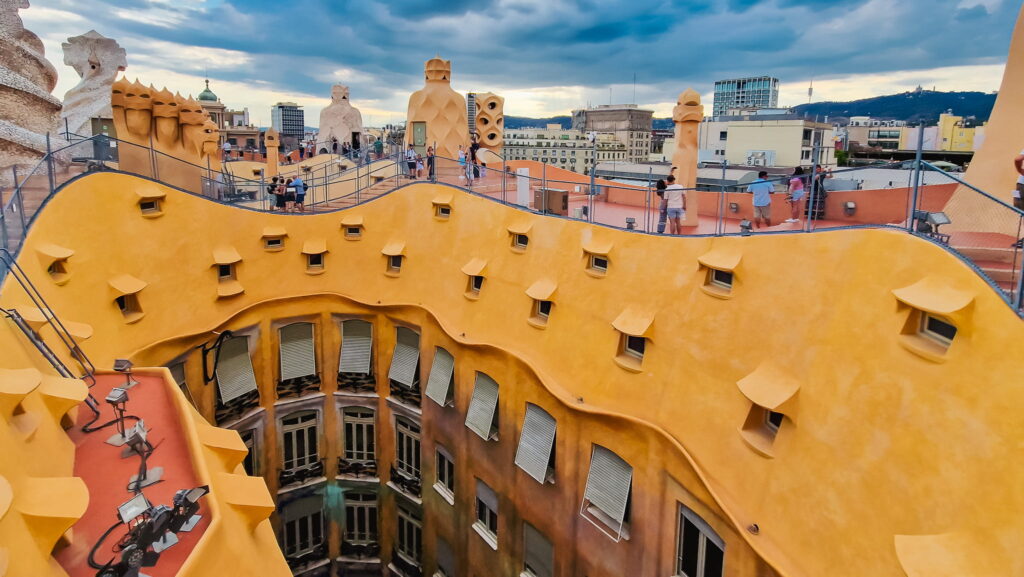
7. La Pedrera (Casa Milà) (1906–1912)
Still on Passeig de Gràcia, just a short walk from Casa Batlló, La Pedrera is the last residential building Gaudí built in Barcelona. You can easily reach it by walking for around 15 minutes from Plaça de Catalunya or via metro line L3, getting off at Diagonal.
While La Pedrera is still among the most visited Gaudí landmarks, it gets way fewer visitors than Casa Batlló, Park Güell, and the Sagrada Família. Even so, it’s worth buying your tickets online, also because they are cheaper than at the ticket office. All
- Opening hours: Monday to Sunday from 9 am to10:20 pm from March through October, and from 9 am to 11:00 pm from November through February.
- Closed: 7 September and 25 December 2026, and from 11 to 17 January 2027.
- Entry fees: The regular daytime visit starts at €29 per adult, while the sunset access is cheaper, starting at €25. Other ticket options include the night visit, the sunrise entrance, and a premium access that includes areas usually not accessible to the public. Combo tickets with other Barcelona landmarks are also available. You can check them all here.
More details on the La Pedrera website.
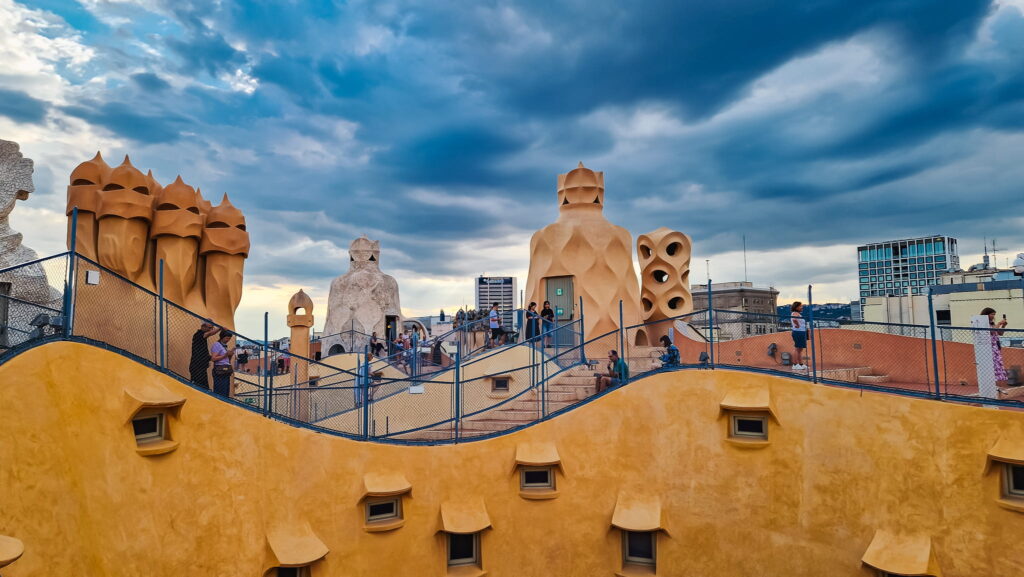
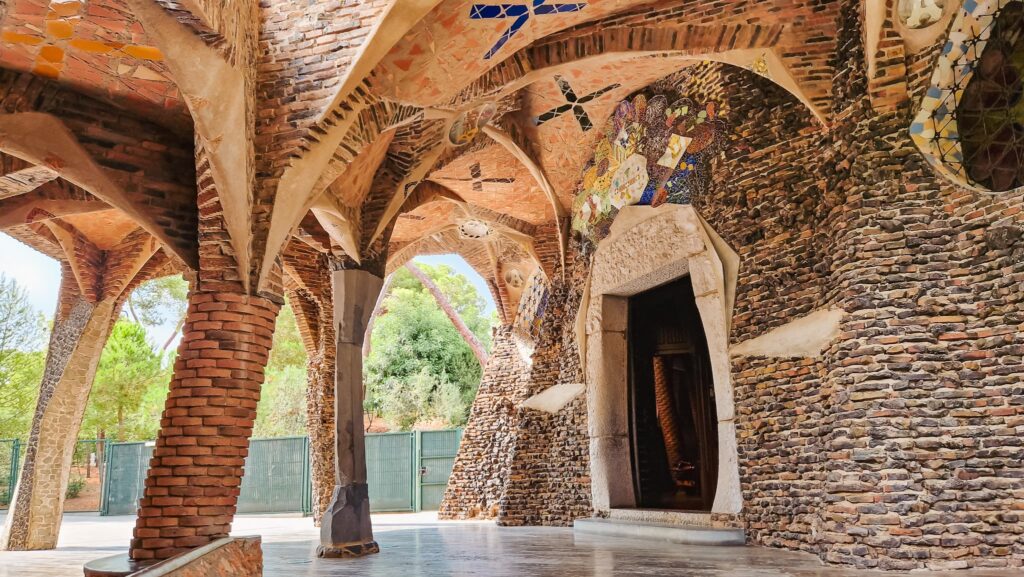
8. Cripta de la Colònia Güell (1898–1915)
Finally, the most underrated Gaudí landmark you can visit in Barcelona is in the town of Santa Coloma de Cervelló, just outside the city proper. You’ll need a Zone 2 ticket to reach this location via Ferrocarril lines L8, R6, S4, or S8 from Espanya. You’ll need to account for the extra ticket fee when you visit this one.
Very few people visit this place, so you can either buy your tickets online or at the ticket office. There is no price difference. Regardless, you’ll need to head to the visitor center when you arrive to get your audio guide.
- Opening hours: From 10 am to 5 pm on weekdays and until 3 pm on Saturdays, Sundays, and holidays.
- Closed: January 1 and 6, Palm Sunday, Good Friday, and December 25 and 26.
- Entry fees: €10 with the audio guide, or €13 for the guided tour (to reserve in advance). Discounts are available for children, students, and those over 65. You can also buy the Combinat Güell ticket with a return ticket from Barcelona for €15.80.
More details on the Colònia Güell website.
How to choose which Gaudí landmark to visit
My first instinct is to say all of these are worth visiting, because I truly think that’s the case. But I realize this is not doable for most travelers, whether due to time constraints or the high entry fees.
Most of these buildings are pretty expensive, and while I do think some are worth the price, I also believe a few are overpriced! I had the opportunity to visit some of these landmarks thanks to my journalist pass, for which I am grateful, because the ticket prices sure add up!
Anyway, I’ll share below the places I think are absolute musts, those that are nice to visit if you can, and those you can save for another time if you return to Barcelona.
Must‑see – if you have the budget
These places are so famous for a reason. But if crowds are an issue for you, skip to the next section. Except for the Sagrada Família, don’t skip that one, please!
Worth it – if you have extra time or prefer less crowded places
These are seriously underrated places absolutely worth visiting in my opinion. Choose these either in addition to the must-see, or as alternatives if you seek less crowded places.
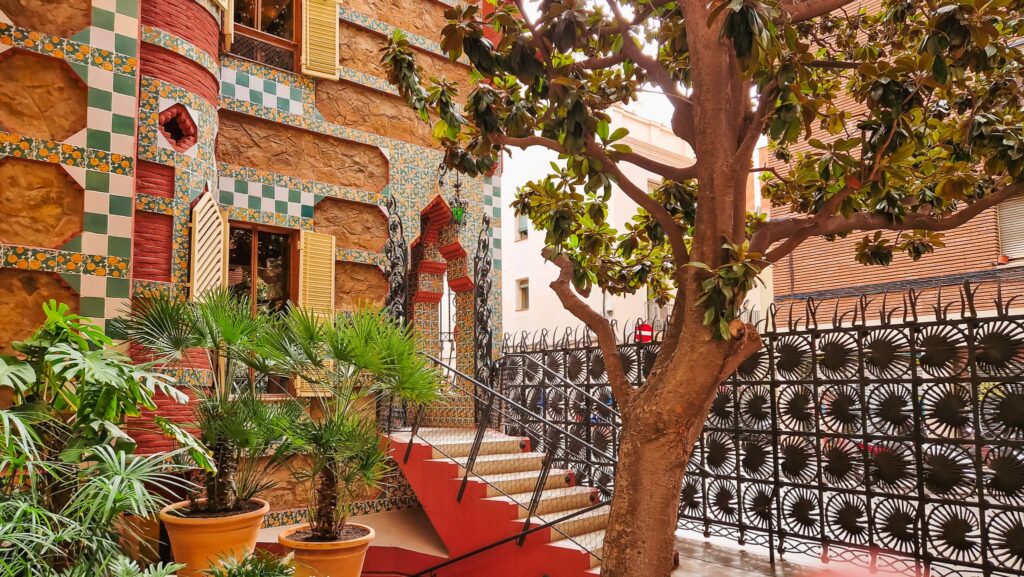
Optional – save these for your next trip.
While I think these are still worth your time, I get that excessive crowds (looking at you, Park Güell), a harder-to-reach location, or the different architectural style may not be for everyone. At least not as the first encounter with Gaudí’s style.
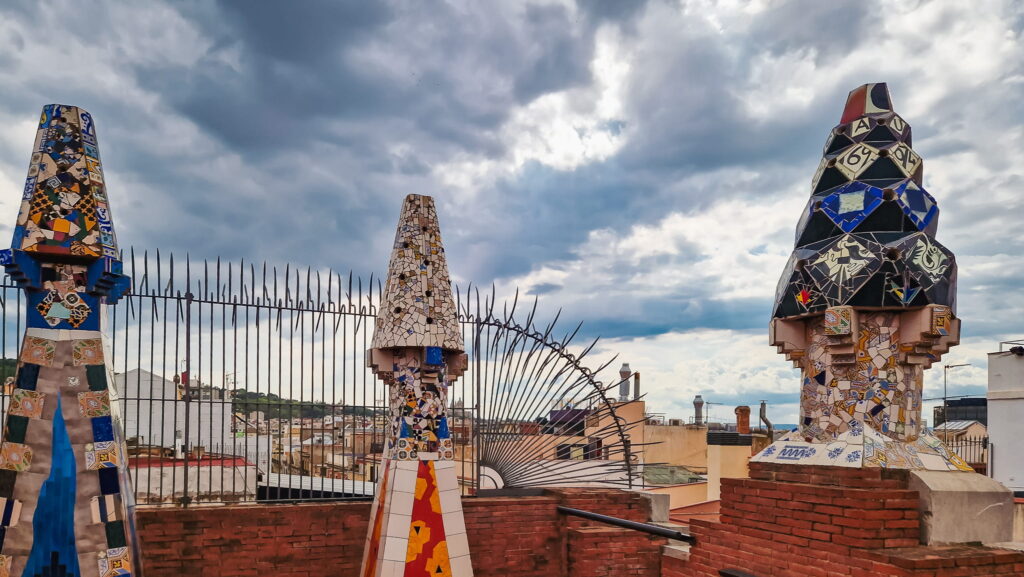
Entry fees
Here is a recap of the entry fees for each Gaudí building. I listed the starting price for adults, though some have multiple ticket options, as I mentioned in the individual descriptions above. Prices are updated as of August 2026.
- Sagrada Familia: From €26 per adult.
- Casa Batlló: From €25 per adult.
- La Pedrera: From €25 per adult.
- Casa Vicens: From €22 per adult.
- Park Güell: From €18 per adult, or €24 with the Gaudí House Museum.
- Palau Güell: From €15 per adult.
- Torre Bellesguard: From €12 per adult.
- Colonia Güell: From €10 per adult.
I know. These add up quickly. If you were to visit all of them with the most basic ticket, you would have to pay €153. So is it possible to experience Gaudí on a budget? Yes, if you plan your visit carefully and choose the more underrated buildings.
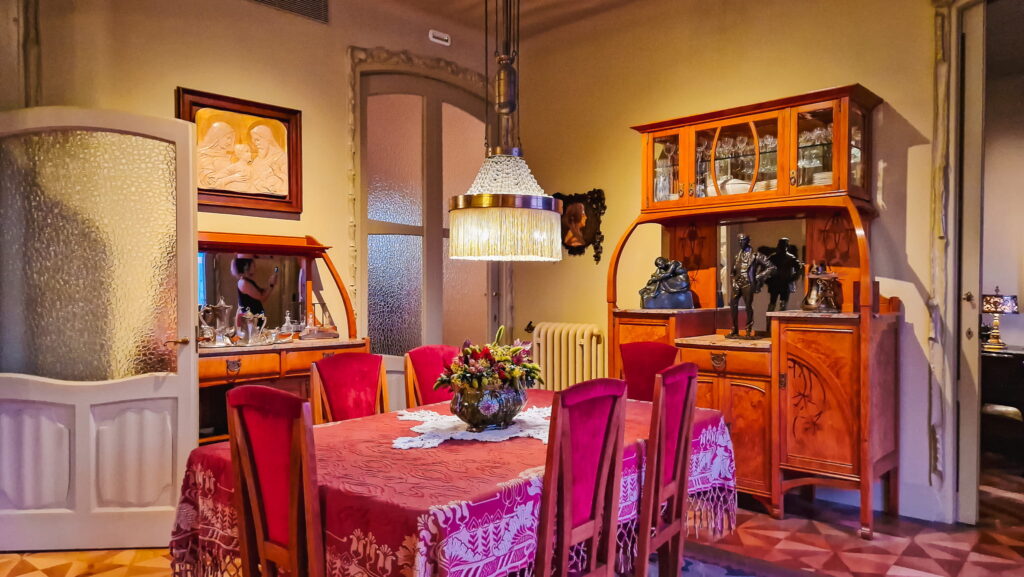
Gaudí on a budget
Let’s be honest, Barcelona is not a cheap city in general, so visiting every Gaudí landmark may not be for everyone’s pocket. But there are options for those who want to experience Gaudí without spending excessive amounts.
If you don’t care about visiting the most famous landmarks and just want to get an idea of Gaudí’s style (and genius!), you can choose a combination of landmarks that won’t break the bank while still giving you some insight into the artist’s works.
Firstly, plan your trip to coincide with the first Sunday of the month or one of the open doors days for a free visit to Palau Güell. Then, depending on your budget, consider adding a visit to Torre Bellesguard for €12, Park Güell for €18, or Casa Vicens for €22.
Open doors: February 12 (Santa Eulàlia), April 23 (Sant Jordi), the Long Night of Museums, September 11 (National Day of Catalonia), September 24 (La Mercè), and additional local festivities approved yearly by the City Council of Barcelona.
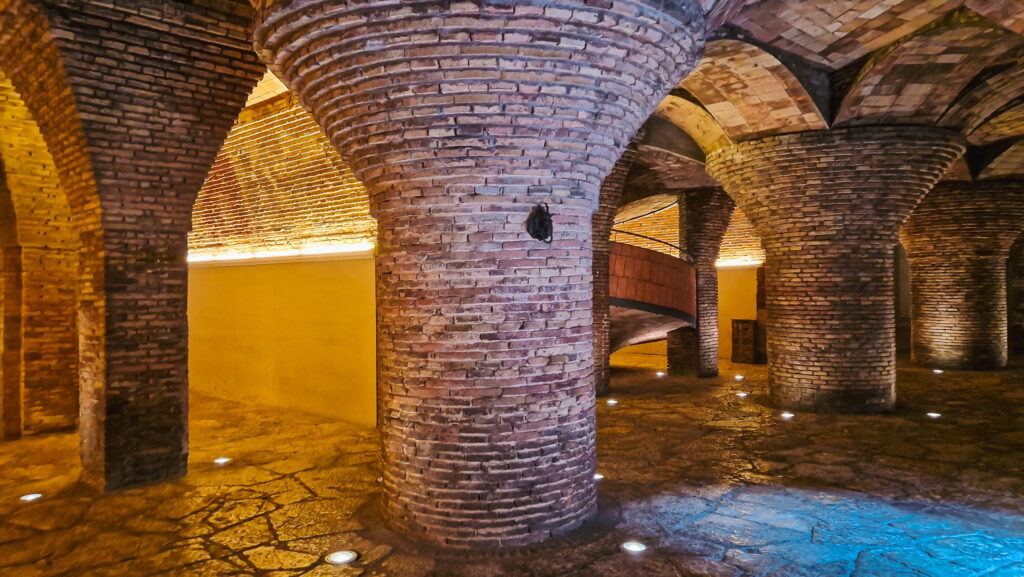
You can also pick one famous landmark, and that’s it. In that case, it’s an easy choice in my opinion: go to the Sagrada Familia! My second choice would be Casa Batlló, and my third, La Pedrera.
Another way to save some money is to buy a Barcelona Card. Several options are available, but if you want to visit the most Gaudí buildings along with other modernist buildings, the Barcelona Card Modernista is the best option.
Alternatively, this Gaudí Bundle includes Park Güell and either the Sagrada Familia or Casa Batlló, and the 3 Houses of Gaudí includes Casa Batlló, La Pedrera, and Casa Vicens. These are only worth it if you use the discounts they offer on additional landmarks; otherwise, you might as well purchase the individual tickets.
Other Gaudí buildings
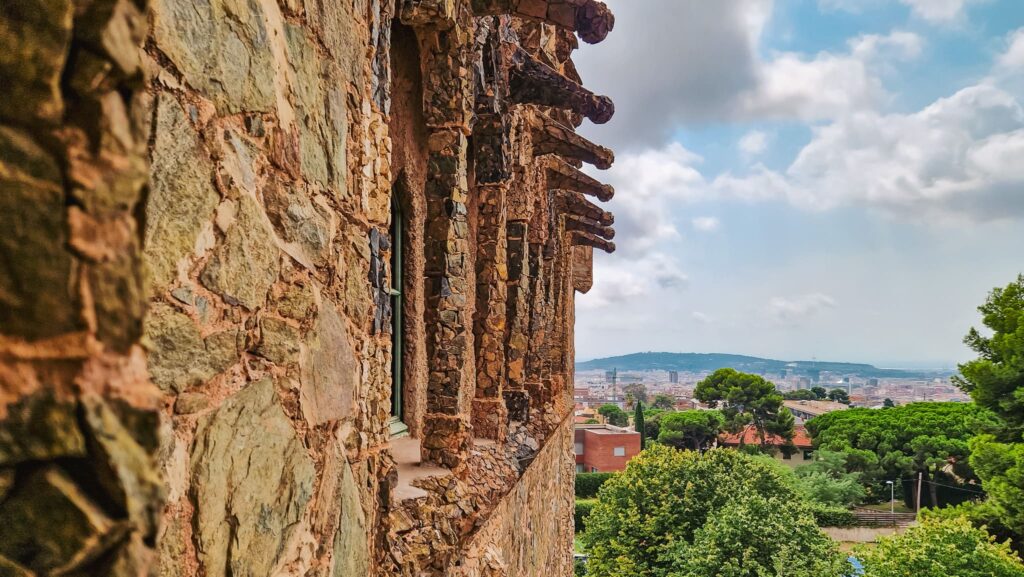
Aside from the already mentioned landmarks, there are a few more buildings designed by Gaudí that you can only admire from the outside. Since I wanted to be thorough, I went to check out each of these.


Your trip to Barcelona
Beyond Gaudí’s buildings, there is so much more to see and do in Barcelona. I have an extensive guide dedicated to visiting the city on a budget, which includes 32 free things to do in Barcelona. I also have plenty of other guides on other places in Spain that you can find on my dedicated Spain travel page.
If it’s your first time in the city, one of the best ways to learn about it is by joining a free guided tour with a local. You can book walking tours completely free through GuruWalk, then tip your guide at the end. Here are a few cool walking tours in Barcelona:
Getting around Barcelona
You can explore a lot of central areas in Barcelona on foot, which I believe is the best way to experience a city. The neighborhoods of Gràcia, Gótico, El Born, and El Raval must be experienced on foot. But you should also walk down the beautiful Passeig de Gràcia and, of course, La Rambla (though it’s currently under construction until 2027, so it’s not the best experience at the moment).
Public transportation works great in Barcelona, but tickets can get pretty expensive. A single ride is €2.90, and it’s not integrated, so valid only for one means of transportation (metro, funicular, or bus). A better option is the T-casual, which gets you 10 rides for €13. You need to validate it on every means of transport. Check more information on the TMB website.
Taxis are relatively affordable in Barcelona, but Uber and Bolt are also available.
Where to stay in Barcelona
You have endless choices for places to stay in Barcelona. If you want to be close to most attractions, find accommodation around the Ciutat Vella, Dreta de l’Eixample, and L’Antiga Esquerra de l’Eixample. Gràcia is another great neighborhood to base yourself (and my favorite). If you don’t want to stay in the center, Poblenou and Sarrià-Sant Gervasi are both nice areas.
Travel Resources
Finally, here’s an overview of my go-to websites and apps for travel planning. You can find more details on my travel resources page.
| Website/App | Category | Description | Book Here |
|---|---|---|---|
| Booking.com | Accommodation | My favorite website for great accommodations for different budgets. | Find a Place |
| Kiwi.com | Flights | My new favorite platform for finding affordable flights. | Find Flights |
| Omio | Transportation | You can book everything from buses and trains to ferry rides. | Transportation |
| SafetyWing | Insurance | One of the best travel medical insurance options for frequent travelers. | Get Insured |
| Manawa | Activities | A great platform to book activities and adventures with local hosts. | Find Activities |
| GetYourGuide | Activities | My go-to platform for tours and experiences with lots of options. | Experiences |
| Viator | Activities | A great alternative for activities all over the world. | Experiences |
| GuruWalk | Free tours | A great platform for free walking tours (tipping is recommended). | Book a tour |
| DiscoverCars | Car rental | My go-to platform for car rental anywhere in the world. | Rent a Car |
| Airalo | eSIM | My favorite app for buying digital SIM cards when traveling abroad. | Get an eSIM |
| Saily | eSIM | A great alternative to Airalo, with cheaper plans in some destinations. | Get an eSIM |
| Xe | Currency | A currency converter showing real-time rates. Website or app. | Get Xe App |
| Maps.me | Navigation | My favorite navigation app for hiking trails and remote areas. | Get Maps |