
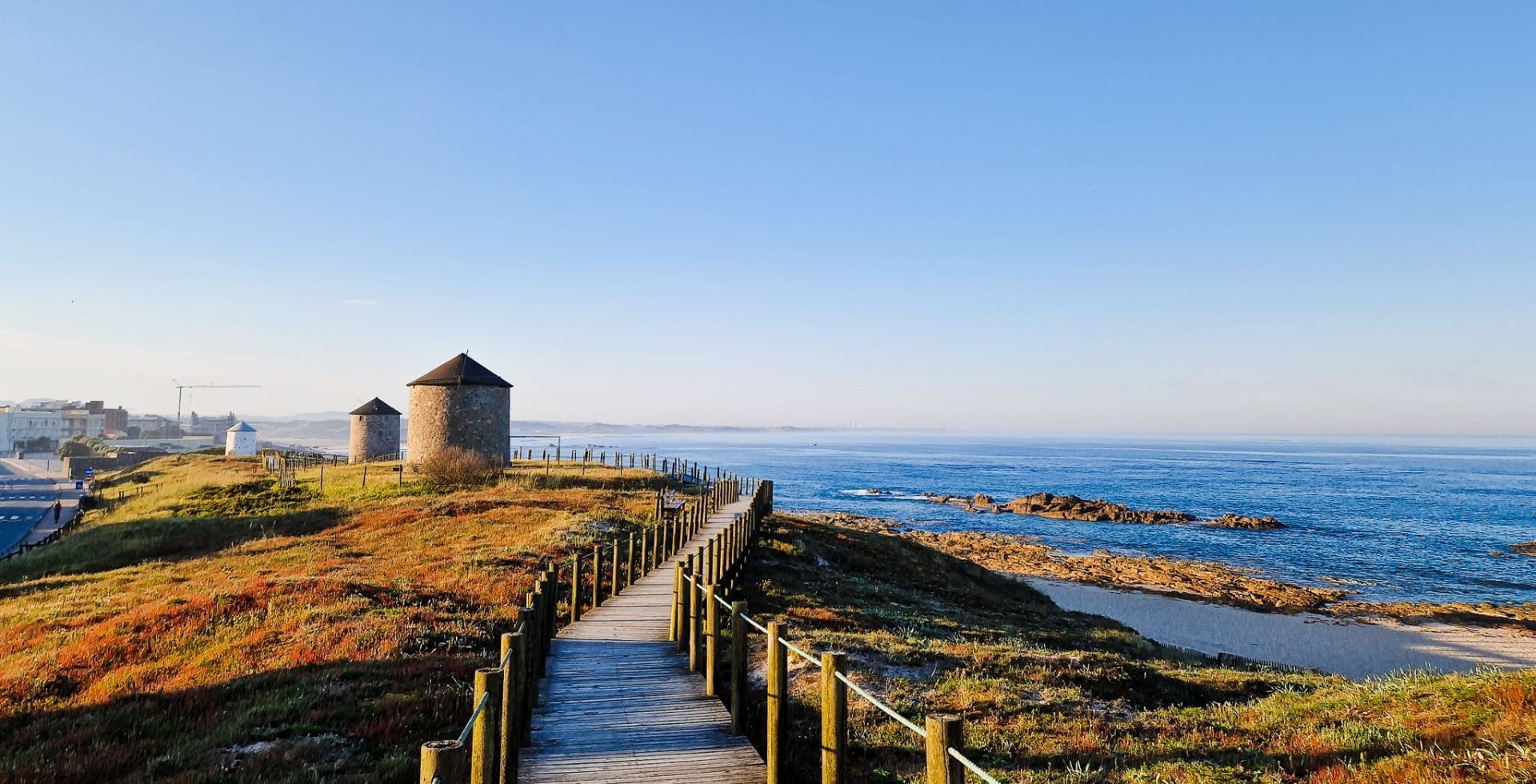
My brutally honest experience walking the Camino Portugués de la Costa from Porto. I don’t talk about stages or packing lists, just the things I wish someone had told me before I embarked on this Camino de Santiago. Hope this helps!
This page contains affiliate links. If you buy through these links, I may receive a small commission, at no additional cost to you. I only recommend products or services I have tried and/or find useful and reliable.
- The Camino Portugués de la Costa from Porto
- I wish I'd known how solitary the Camino Portugués could feel
- I wish I'd known not to rush the first days
- I wish I'd known how hard the pavement would be on my feet
- I wish I'd known that waterproof shoes are not the best choice
- I wish I'd remembered how Sundays and holidays affected everything
- I wish I'd known how unpredictable Galicia’s weather could be
- I wish I'd known I’d need extra rest days
- I wish I'd known how emotionally hard this Camino would be
- What I’d do differently if I were to walk the Camino Portugés again
- The Camino Portugués is beautiful, but it can be challenging
- More from the Camino Portugués

The Camino Portugués de la Costa from Porto
I walked the Camino Portugués de la Costa in May 2024. This Camino technically begins in Lisbon, but many people start in Porto, which was what I did, too, since I only had time for a short one. The coastal route from Porto is roughly 260 kilometers long and normally takes between 10 and 13 days. I also have a dedicated article on how long it takes to walk this Camino.
This was my second Camino, after walking Via de la Plata from Sevilla in 2022. That route is over 1000 kilometers long, and it took me six weeks to complete. Compared to that, the Camino Portugués seemed like a walk in the park. Well, it wasn’t.
In this article, I want to tell you all about the things I wish I’d known before walking the Camino Portugués: what surprised me, what challenged me, and what humbled me. It was a memorable experience in the end, but it challenged me more than I had expected.
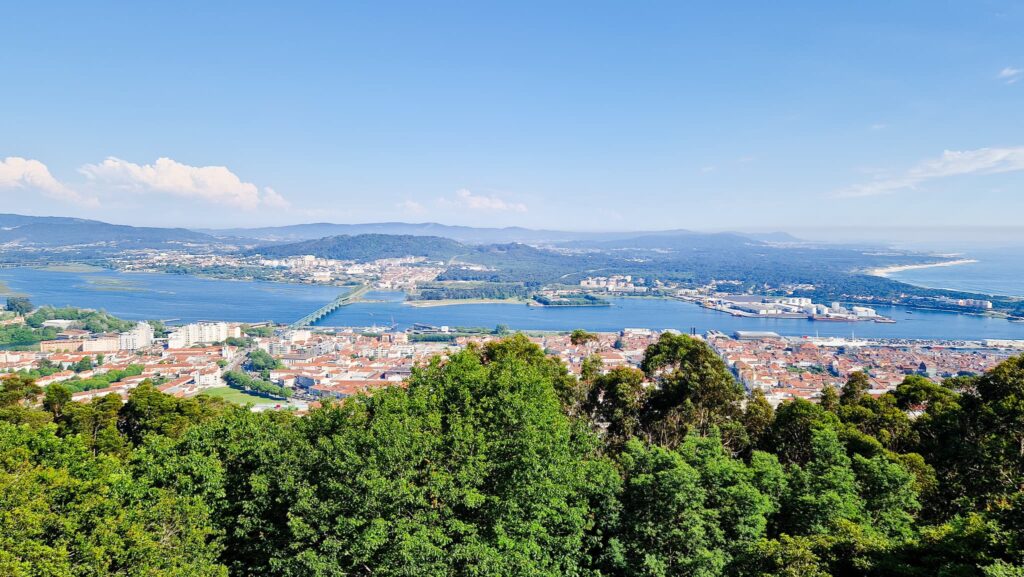
I wanted to quit this Camino many times, but I didn’t. I’m nothing if not stubborn, and that’s what ultimately drove me all the way to Santiago, but by the end of it, I was drained. Physically, emotionally, mentally. It was an exercise of willpower and resilience.
I made quite a few mistakes, the first one being assuming that it would be an easy Camino. So with this article, I want to share the things I wish someone had told me before I took those first steps away from the Porto Cathedral. Maybe I wouldn’t have learned the things I have, but it would have saved me a great deal of pain.
I wish I’d known how solitary the Camino Portugués could feel
I’ve already mentioned I walked Via de la Plata as my first Camino, and although there were way fewer pilgrims walking that route, the Camino Portuguese felt much more solitary.
I met way more pilgrims on the Portuguese than on Via de la Plata, yet I felt alone for most of it. And while I typically have no issue with being on my own, walking day after day alone and barely having any interaction beyond a superficial chat can get to you.
All along the way, I saw several groups walking this route, meaning that people are already walking with friends or family and are less interested in connecting with other solo walkers. Yes, you may have a chat, but it rarely goes beyond that. If you’re planning to walk this route alone, you should keep this in mind.
Moreover, unlike Via de la Plata, where the stages are pretty set, and it’s hard to switch things up, on the Portuguese, you have plenty of options to walk shorter or longer stages, depending on how you feel. You can also switch between the coastal and inland routes. That means people you meet along the way will often either stay behind or move further, and then you’ll likely never see them again.
If you prefer solitude and don’t mind not connecting with other pilgrims along the way, then you should have no trouble walking the Camino Portugués. But despite being more of an introvert myself, I find that part of the beauty of the Camino lies in the people you meet along the way. This factor was nearly absent for me until the last four days.
I wish I’d known not to rush the first days
I mean, this wasn’t my first Camino, so I SHOULD have known this. But I guess I got too excited and threw caution to the wind. The first couple of days, I felt like I was gliding along effortlessly. I was feeling energetic, the days were sunny and pleasantly warm, and my feet felt great in my shoes. So I walked FAST. I was whizzing past other pilgrims as if it were a race, not because I saw it as a race, but because I am a fast walker, and it felt effortless. Until it wasn’t.
Turns out, I pushed myself too hard and, while I wasn’t feeling it during those first two days, I paid the price soon enough. I got shin splints. In both my legs. By the end of day three, I started feeling that familiar piercing pain in my right leg, on the anterior lower part of my shin. By the end of day four, it felt like someone was stabbing both my shins with every step I took.
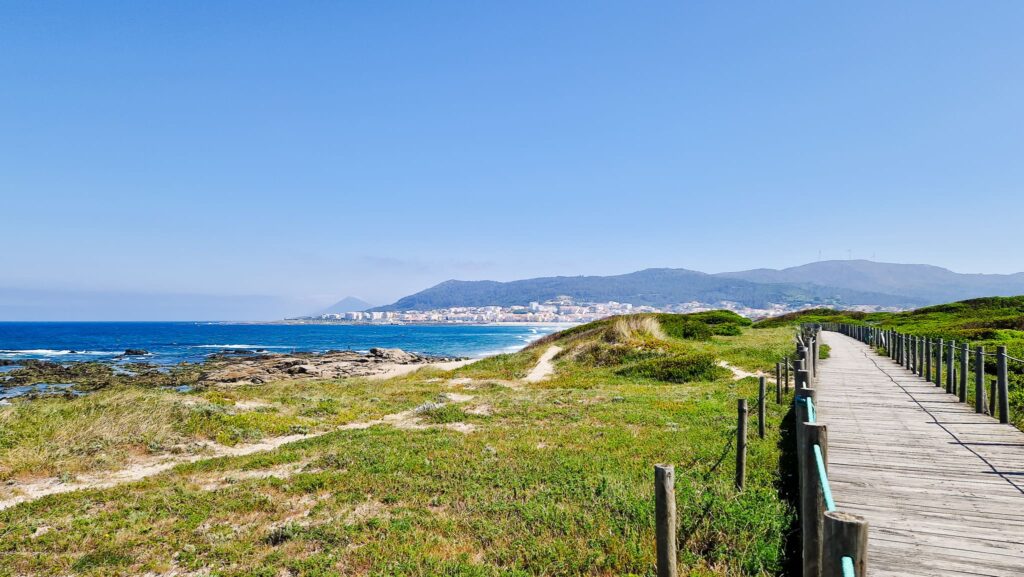
But here’s the thing. This wasn’t *entirely* my fault. The first few days on the coastal route are mostly along paved roads and wooden boardwalks. That consistent hammering on the hard surfaces, paired with my fast pace and the inevitable weight on my back, ruined me.
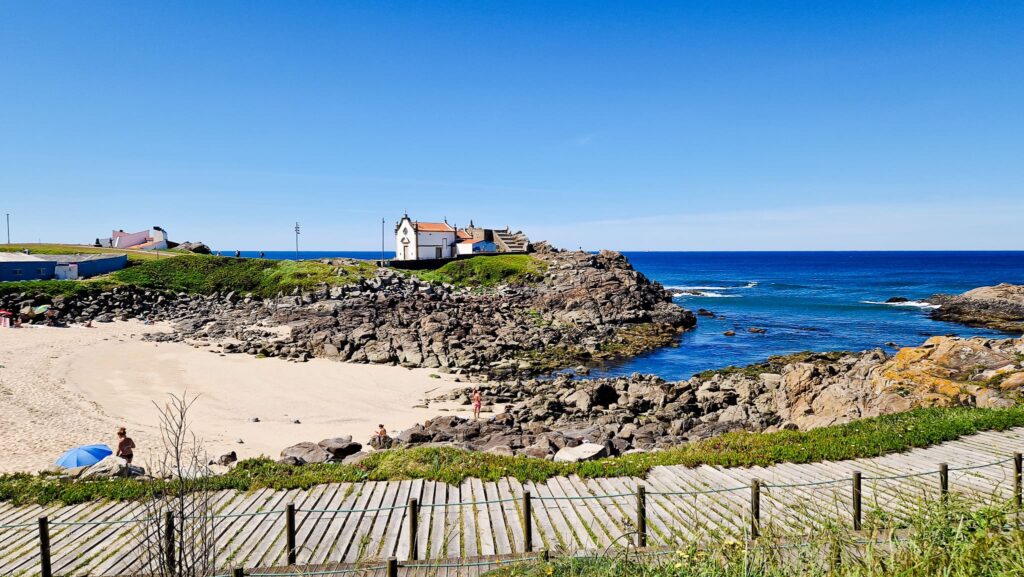
It’s easy to get overly enthusiastic and walk too fast in the beginning, especially when the path feels easy. But you need to pace yourself, even if speeding feels effortless, because everything is straight and leveled out. This is especially true if you haven’t trained in the weeks before the Camino.
I wish I’d known how hard the pavement would be on my feet
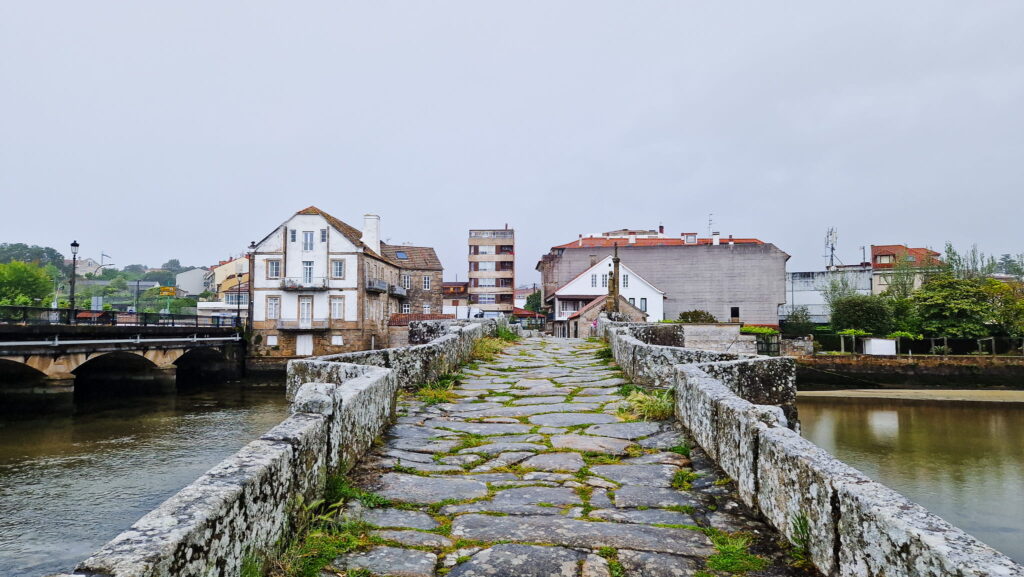
Even beyond the first few days, the Camino Portugués de la Costa has a lot of sections on concrete, asphalt, wooden boardwalks, or cobblestone, aka the infamous calçada portuguesa.
I don’t know about the inland route, but on the coastal one, you barely leave the city on the first day and spend the following two walking along beachside wooden boardwalks. After that, you’ll walk through lots of towns, which means either paved roads or cobblestone. There are barely any dirt roads, and only after you reach Galicia.
Even with the best shoes, walking consistently on such hard surfaces will affect your feet and legs. The thing is, you don’t really feel the effect at first, but it does become increasingly tough with every passing day. I paid a higher price because, on top of it, I didn’t pace myself. I walked fast and had really long days in the beginning.
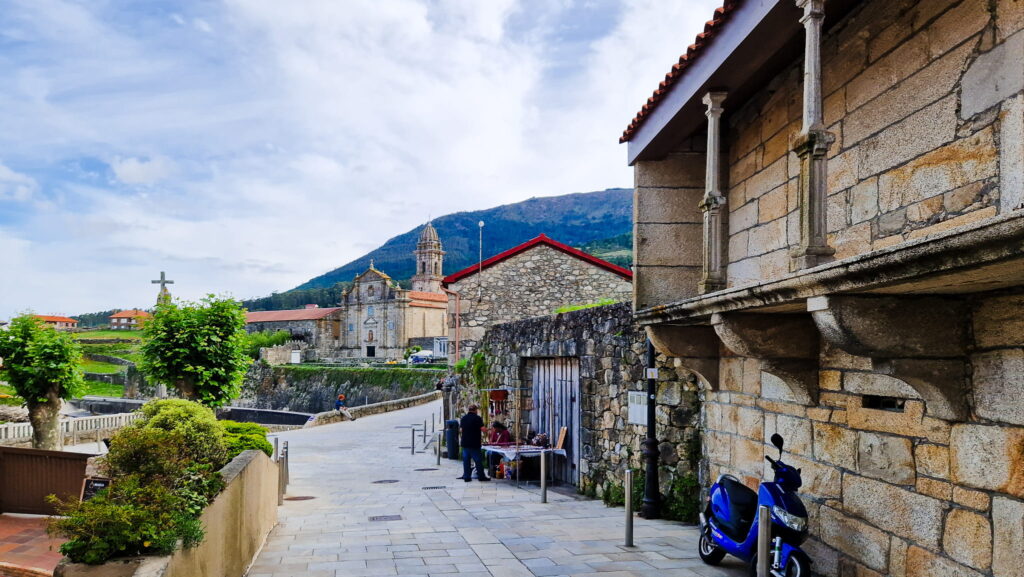
If you choose to walk this route, you must take the terrain into account. Walking on asphalt and cobblestone is hard on the feet and legs. The lack of uphill or downhill sections makes it easy to walk fast, but it’s important to pace yourself to avoid injuries. Also, having supportive footwear is crucial here.
I wish I’d known that waterproof shoes are not the best choice
I honestly thought I’d made a better choice regarding my shoes on this Camino than on Via de la Plata. A few weeks before starting the Camino, I had invested in a good pair of Solomons, wore them for quite a few days to break them in, and was confident they were comfortable enough. But comfort is not all.
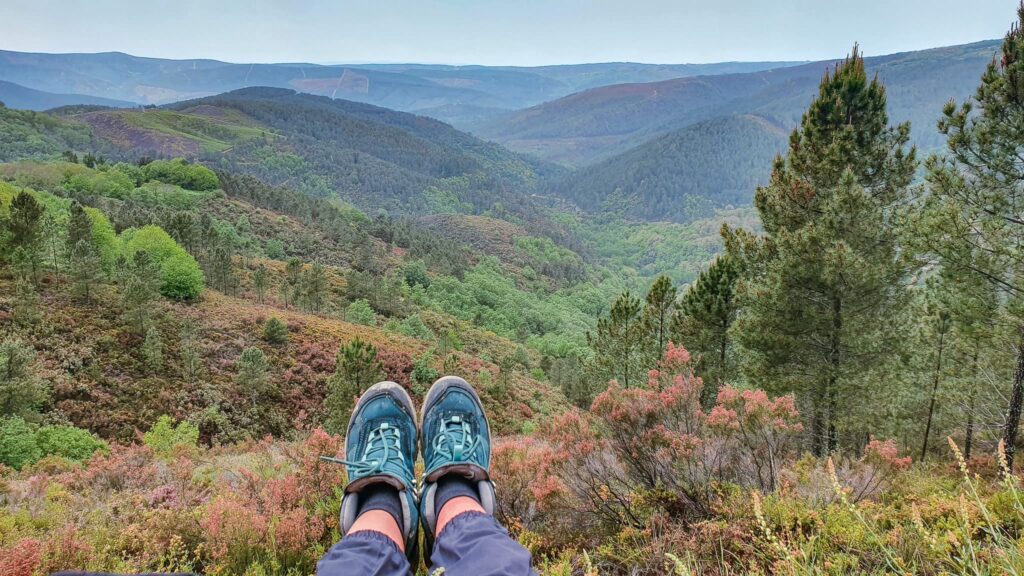
Yes, my shoes were very comfortable. But they were waterproof. While that’s a good idea in theory, and they certainly kept my feet dry on rainy days, it’s a really bad idea in warm weather.
I started walking this Camino in early May, and the first few days were pretty hot. My shoes trapped moisture, making my feet very hot and sweaty. That’s the perfect environment for blistering and swelling. Despite my best efforts to take breaks, remove my shoes to air my feet, and take them off as soon as the walking day was over, it was not enough.
So waterproof shoes are not a good idea for this Camino. I’d say breathable, lightweight shoes are the best option, but spoiler alert, I’ve since walked another Camino in running shoes, and they are not perfect either. Though I’d argue the right pair of breathable shoes is still your best bet!
I wish I’d remembered how Sundays and holidays affected everything
They say you live and learn, but sometimes you need to face an issue several times before you actually learn your lesson. I should have learned this one after my Via de la Plata experience, but I guess two years are enough to forget this tiny detail.
Sundays and holidays in Spain are sacred! Supermarkets stay closed, and restaurants have weird opening hours, if they even open. I was confronted with this on a couple of occasions, one in particular while I was stuck taking two rest days in a small town in the middle of nowhere during the Galician Literature Day. Who knew it was such a big deal? Well, now I do. And so do you.
So if you walk ANY Camino in Spain, keep this in mind. Nearly everything is closed on Sundays and holidays. If you need groceries, buy them on Saturday. And depending on where you’ll stay, check in advance if there are enough dining options and whether they observe different opening times on holidays. Restaurants are usually less of an issue, but grocery stores will most likely be closed.
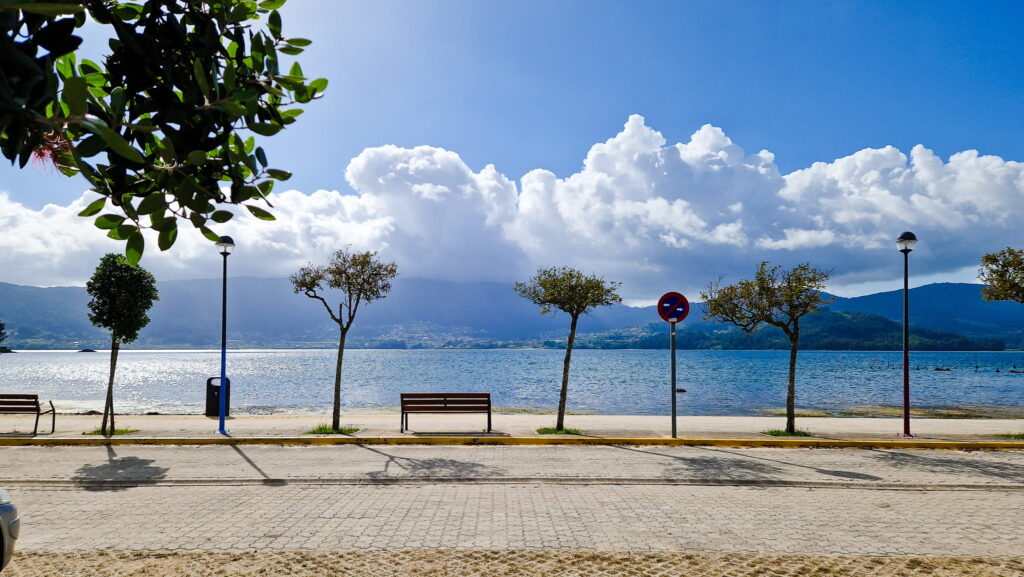
I wish I’d known how unpredictable Galicia’s weather could be
Well, I did kinda know this one too. After all, I walked another Camino. But I guess I was lucky on my first Camino and unlucky on this one. Rainy days are inevitable, but when you walk in the rain for several days in a row, it starts wearing on you. Add to that leg injuries and an overall low morale, and it’s a miserable experience.
I’ll say I was actually prepared for the poor weather gear-wise. I had my backpack cover and rain jacket and managed to stay mostly dry. But if you’re like me and weather impacts your mood, you’ll have to mentally prepare for it. I’d honestly forgotten how miserable walking in the rain makes me feel.
Frankly, there isn’t much you can do about this. Aside from packing all the right clothing to ensure you stay dry, all you can do is be aware that the weather is unpredictable and stay flexible. If it rains too much, you can always take a day off from walking. But you need to have a flexible schedule to do that.
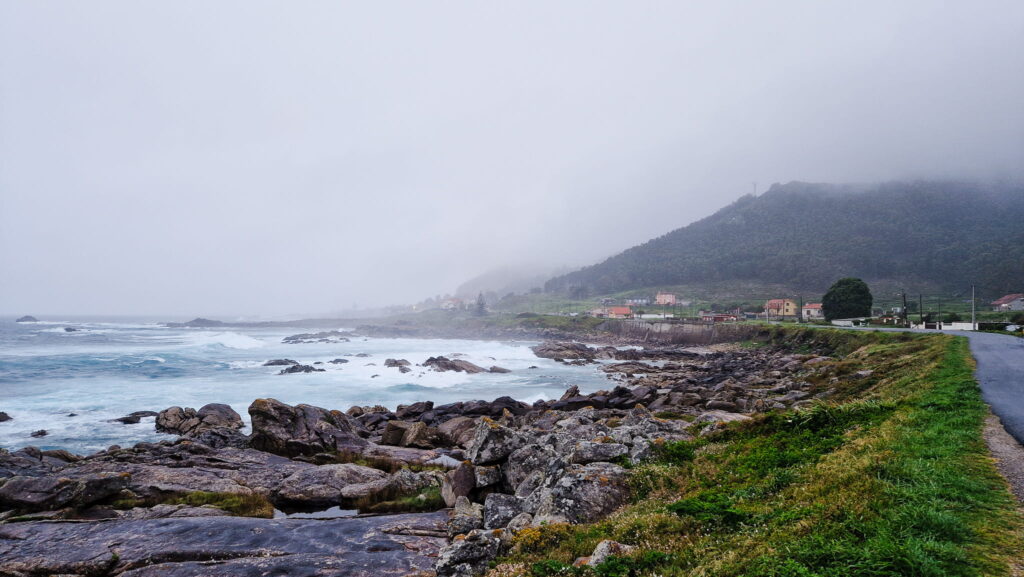
I wish I’d known I’d need extra rest days
Before starting this Camino, I had planned all the stages, even allowing extra time to do the Variante Espiritual – a little detour along the coast after Pontevedra. It was such a short Camino, and I was so confident I could do it easily and without delays. After all, I’d walked over one thousand kilometers of Via de la Plata in 6 weeks. This was just 260 kilometers.
Well, the Camino has a way of humbling you. Also, every Camino is different. I can confidently say that now, after just walking my third Camino in 2026. But back to our Camino Portugués from Porto: yes, it’s short, but don’t get too confident about it.
In my case, shin splints forced me to take three days off and split some stages into shorter ones. It took me a total of 16 days to walk the Camino, instead of the usual 12 or 13. Honestly, it could have gone a lot worse. And I actually took less time off than I should have, forcing myself to walk even if I was in pain. 0/10 would not recommend.
So, my lesson here is to be flexible and allow for extra days to complete the Camino. Even if it’s a short Camino, you never know what unexpected circumstances life throws at you. Being flexible is honestly one of my biggest lessons from the Camino! Also, listening to your body and allowing it to rest when needed.
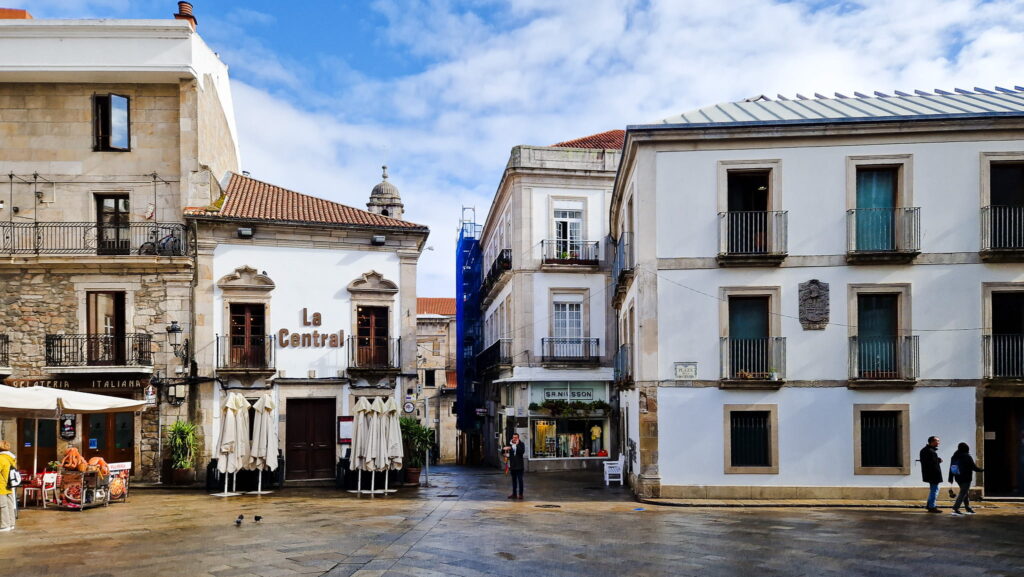
I wish I’d known how emotionally hard this Camino would be
As I said, I went into this Camino full of energy and excitement. I was not prepared to feel so miserable for most of it. The combination of walking alone, being in pain, and dealing with crappy weather for several days in a row wore me down.
I think this Camino can be very humbling, especially when doing it after a longer one. The problem with doing short Caminos, I know this now after also walking the Camino de Madrid, is that you so easily fall into the trap of assuming short=easy. And that is absolutely not the case.
The Camino Portugués is not a physically challenging route. Yes, there are a few uphill sections, but nothing particularly tough. The terrain, however, is really tough on the feet. And I missed the lack of stages through actual nature. While having many towns and villages means proximity to services, it also means you’re not spending much time surrounded by just nature. There’s concrete everywhere you turn.
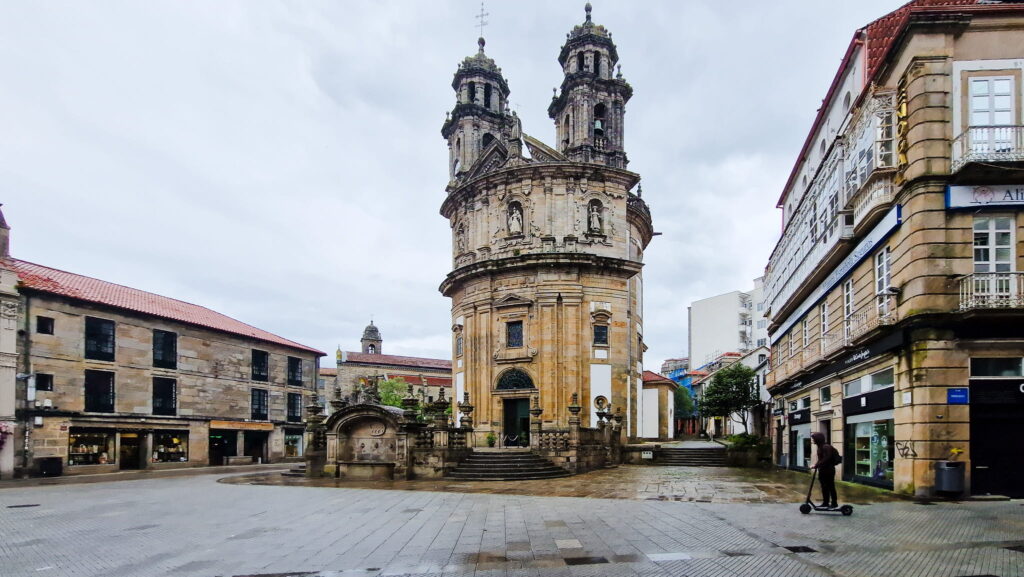
The things I mentioned throughout this article are minor inconveniences when taken alone. But add them all together, and it’s a recipe for an emotionally draining Camino. For me, it was a constant mental battle against that voice in my head telling me to just quit already. I almost listened to that voice quite a few times. It was through sheer stubbornness that I managed to finish this Camino.
What I’d do differently if I were to walk the Camino Portugés again
Well, I think my misadventures have already given you plenty of insight into what you should and shouldn’t do on the Camino Portugues. But let’s do a little recap.
First of all, I wouldn’t underestimate this Camino. Just because it’s short, it doesn’t mean it’s easy. And the physical challenge is only one aspect of it. I would consider the mental challenge, too. Most of all, I would begin walking well aware that this may not be a social Camino and I may be completely by myself for most of it.
I would pay more attention to my footwear, avoiding waterproof shoes, and I would pace myself, especially on paved roads. Especially in the beginning, I would stick to shorter stages rather than pushing myself to go the extra mile.
Lastly, I would allow at least three extra days beyond the longest possible timeframe for completing the Camino. Being time-pressured is not fun, especially when you’re injured, but you’re stubborn as f**k and want to finish at all costs.
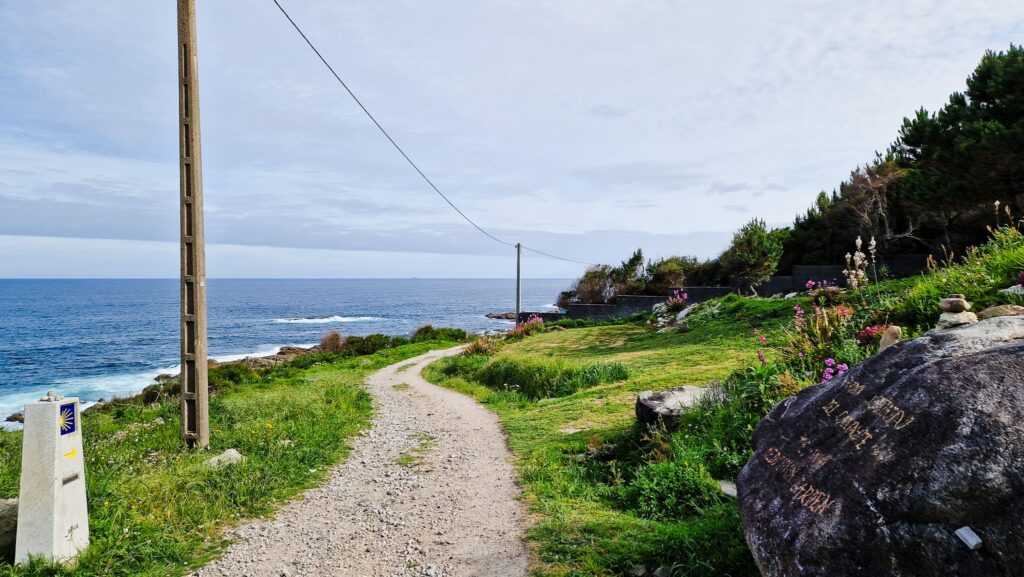
The Camino Portugués is beautiful, but it can be challenging
Do I regret walking this Camino? Absolutely not! It was, at the very least, a formative experience. And I did end up meeting a couple of amazing humans in the end. It took until the very last days for that to happen, but it certainly made it easier to keep going.
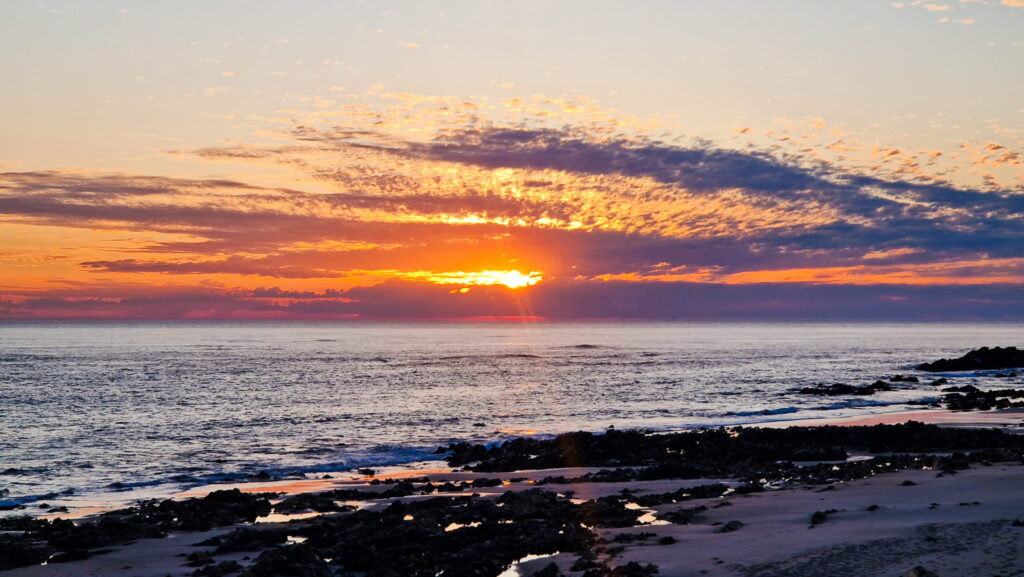
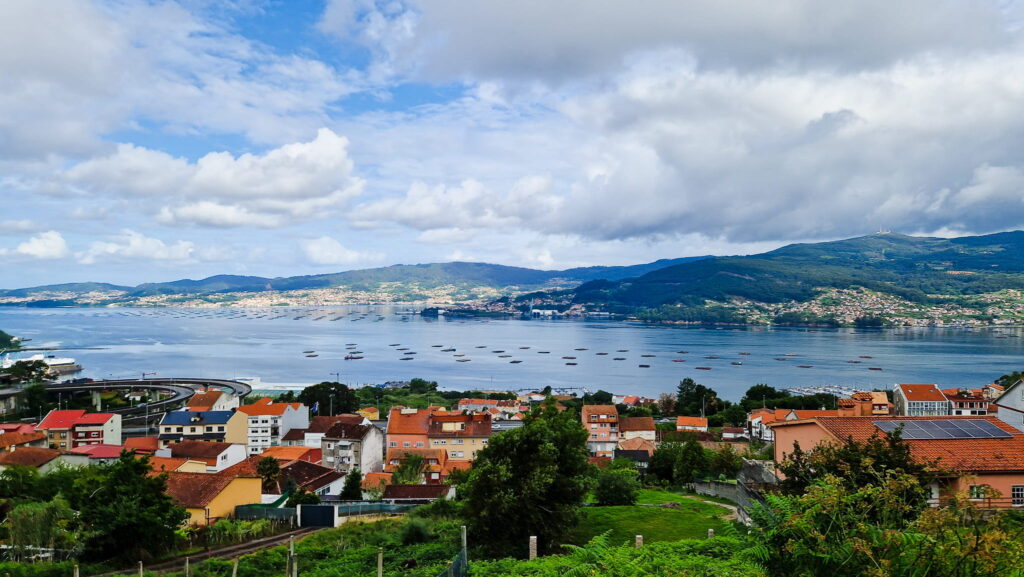
While I complained a lot about the terrain and the constant walking through towns and villages, this Camino is actually beautiful. No, you don’t have long stretches through nature, but you have beautiful ocean views, incredible sunsets, and gorgeous old towns. The landscape is undoubtedly beautiful, albeit mostly urban.
Lastly, I think a lot of things are a matter of luck. I was unlucky with the weather and the lack of human interactions. You may have a completely different experience. But I think ultimately, each Camino will challenge you in one way or another if you allow yourself to be fully present.
That being said, if you seek an easy and social Camino, this may not be it, even though there are so many people walking it. Unless you’re lucky enough to connect with people early on and stick together, it will feel like everyone is just minding their own business. I say this from personal experience, but also from talking to others who have walked it at different times.
On the bright side, it’s an easy Camino from the practical standpoint. You’ll have plenty of stops along the way, good albergues, restaurants, and all kinds of services. You won’t have any particularly long stages or logistical issues. It’s all pretty smooth sailing, or I should say walking. So if you’re on the fence, I’d say walk this Camino! But do learn from my mistakes.
More from the Camino Portugués
I have a few more articles about the Camino Portugués, including a breakdown of my stages and a detailed post on how long the Camino Portugués takes. I also have a series on the Camino de Madrid coming soon. Sign up for my monthly newsletter to receive updates about new blog posts and what I’m up to in general. No spam, I promise!
Meanwhile, if you’re interested in my articles about Via de la Plata, you can check them all here:
- Complete Via de la Plata Stages: From Sevilla to Santiago
- Walking Via de la Plata: How to Plan for the Camino in 2026
- Via de la Plata: From Sevilla to Mérida
- Via de la Plata: From Mérida to Salamanca
- Via de la Plata: From Salamanca to Ourense
- Via de la Plata: From Ourense to Santiago de Compostela
If you’re interested in more Portugal content instead, you’ll find all my articles here. Alternatively, I have an even bigger collection of Spain posts here.
Camino Resources
I’ll leave you with a list of my go-to resources for any Camino de Santiago.
| Website/App | Category | Description | Link |
|---|---|---|---|
| Gronze | Planning | The most exhaustive Camino website with routes, albergue info, and more. | Gronze.com |
| Buen Camino | Navigation | My go-to Camino app, which has the most routes available. | iOS or Android |
| Camino Ninja | Navigation | Another great website and app with most Camino routes. | Camino Ninja |
| Camino Forum | Community | Great forum for first-person experiences and asking questions. | Camino Forum |
| Booking.com | Accommodation | Good to have when you can’t find albergues! | Booking.com |
| Agoda | Accommodation | An alternative to Booking.com, if you have a hard time finding a place. | Agoda |
| Kiwi.com | Flights | My go-to platform for finding affordable flights. | Kiwi.com |
| Omio | Transportation | You never know when you need to catch a bus or train along the Camino. | Omio |
| SafetyWing | Insurance | Don’t skip insurance on the Camino, trust me on this one! | SafetyWing |
| GuruWalk | Free tours | For when you hit those big cities and want to explore them with a local. | GuruWalk |
| Airalo | eSIM | My favorite eSIM app; a great alternative to buying a physical SIM card. | Airalo |
| Saily | eSIM | A great alternative to Airalo. I use them both, depending on the destination. | Saily |
| Xe | Currency | My go-to currency converter, in case you’re from outside the Euro zone. | Xe App |
| Maps.me | Navigation | If you ever get lost, having an offline map is life-saving! | Maps.me |