
I embarked on a journey passing through every Gaudí building in Barcelona, Spain. These are my impressions as someone who’s admired the architect’s work for years and finally got the chance to see it up close.
This page contains affiliate links. If you buy through these links, I may receive a small commission, at no additional cost to you. I only recommend products or services I have tried and/or find useful and reliable.

I’ve been a fan of Antoni Gaudí’s architecture ever since I visited Park Güell on my first trip to Barcelona in 2011. I then spent six months in the city during my Erasmus between 2012 and 2013, and Park Güell was one of my go-to spots. Back then, Barcelona wasn’t overrun by tourists, and the park was free to visit. Oh, the good old times!
Despite loving Gaudí’s architecture, I somehow spent six months in Barcelona without ever entering a single Gaudí building, including the Sagrada Família. I know, don’t judge me. I was living my best Erasmus life, living in a huge apartment with 10 more people, partying from Thursday to Monday, and somehow attending university too. Sightseeing was at the bottom of my to-do list.
I did, however, admire the stunning buildings from the outside. I would walk past La Pedrera on my way to university and crane my neck to take in its fascinating façade; I would walk around the Sagrada Família and admire its elaborate exterior; and I would watch incredible light shows projected on Casa Batlló’s façade during the Christmas season.
I kept telling myself I’d find the time to visit each of those buildings. But my time in Barcelona came to an end, and I never did. I returned to the city a couple of times in the following years, and still I never set foot inside a Gaudí building. Until 2024, when I spent a month house-sitting in Barcelona and thought: it’s time!
On a hot August day in 2024, I woke up bright and early to visit not less than FIVE Gaudí sites in a single day. I then visited two more sites separately, and in 2025 I added the last one, Bellesguard. So here are my thoughts.
Park Güell
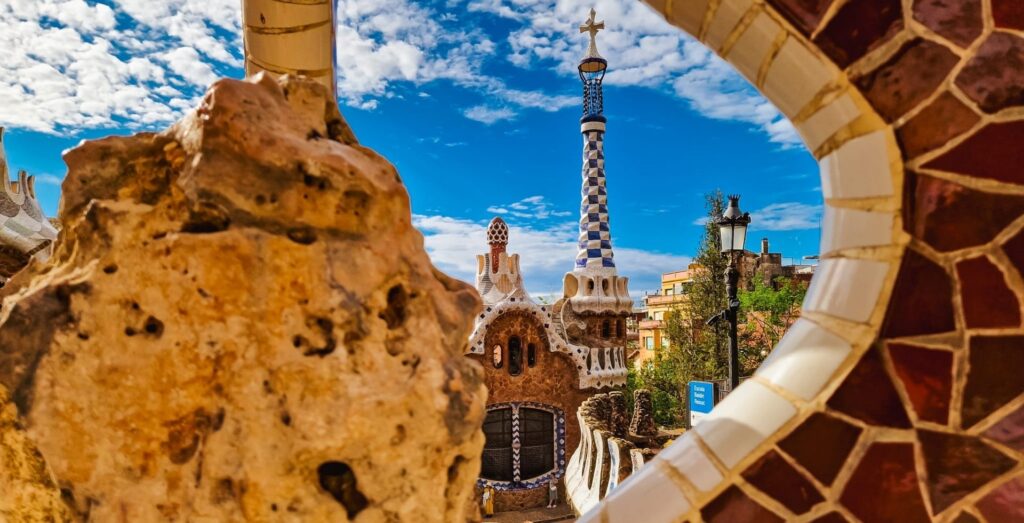
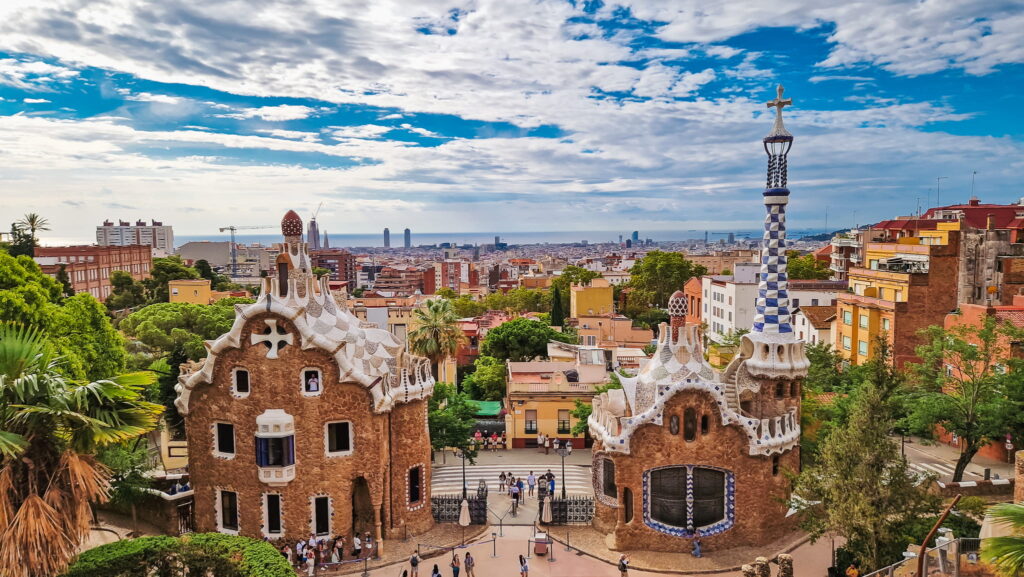
I started my Gaudí day with a visit to one of Barcelona’s most iconic places: Park Güell. This is the only place I was already familiar with, but I wanted to return and see what had changed since 2012, when it was free to access. Spoiler: not much, except the bigger crowds.
Even at opening time, several people were already wandering around the monumental area, and it only got more crowded throughout the morning. At least in the early morning, I could still find some shade before the August sun started baking everything in sight.
My ticket included the Gaudí House Museum, so I headed straight there in hopes of avoiding the crowds, and it was the best idea. By the time I finished my visit, there was already a small line. Even so, it’s one of the more crowd-free spots in the park, as most visitors don’t pay the extra fee.
This was my first time visiting the house museum, and I’m glad I did, because it offers a more personal look at the architect’s life. Gaudí lived here from 1906 to 1925, although it was built as a show house for Park Güell. While the building is simple, it houses original furniture and objects he designed, like quirky benches and chairs. Moreover, the lovely garden surrounding the house was pretty much empty when I visited.
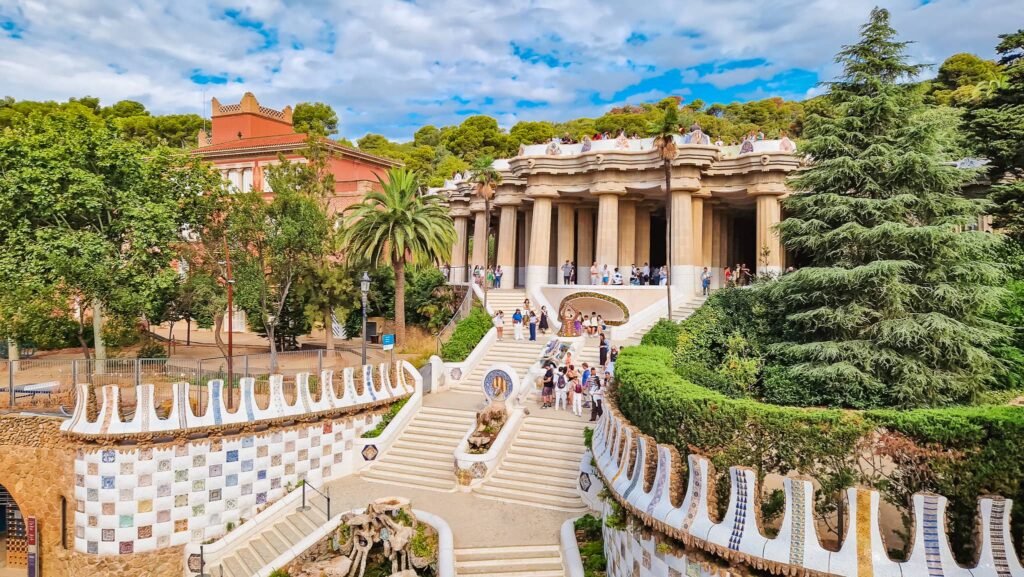
I spent the rest of my time revisiting places I had once been familiar with: the monumental stairway with mosaic-covered decorations, the impressive Hypostyle Room with the towering columns and mosaic ceiling, and the wide terrace overlooking Barcelona. I also entered Casa del Guarda for the first time, enjoying the view of the monumental stairway from a different perspective.
Casa Vicens
After Park Güell, visiting Casa Vicens was the most logical step, so I hopped on a bus and went straight to the heart of the Gràcia neighborhood, roughly 20 minutes away.
Casa Vicens is Gaudí’s first big project, built between 1883 and 1885, but the latest to open to visitors, only in 2017. Here is where natural themes are the most explicitly present, creating a harmony between the surrounding gardens and the building that I haven’t found in the other works.
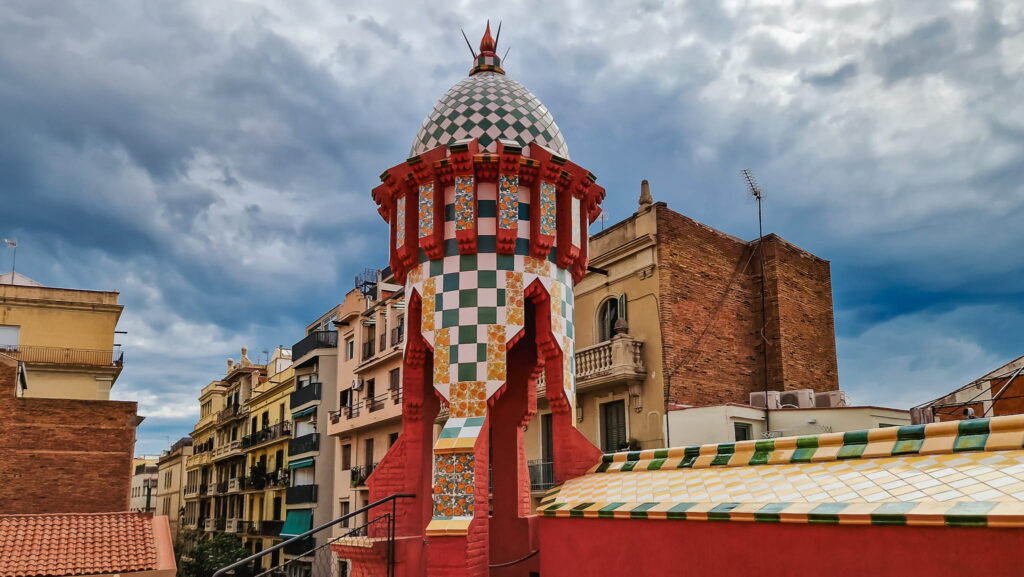
The building is in the Orientalist style, with visible Mudéjar elements. As you step inside, it feels like leaving Barcelona behind to enter a Moorish palace I’d expect to find in Morocco or Andalucía. On the other hand, the colorful tiled rooms made me feel like I landed on the set of a Wes Anderson movie.
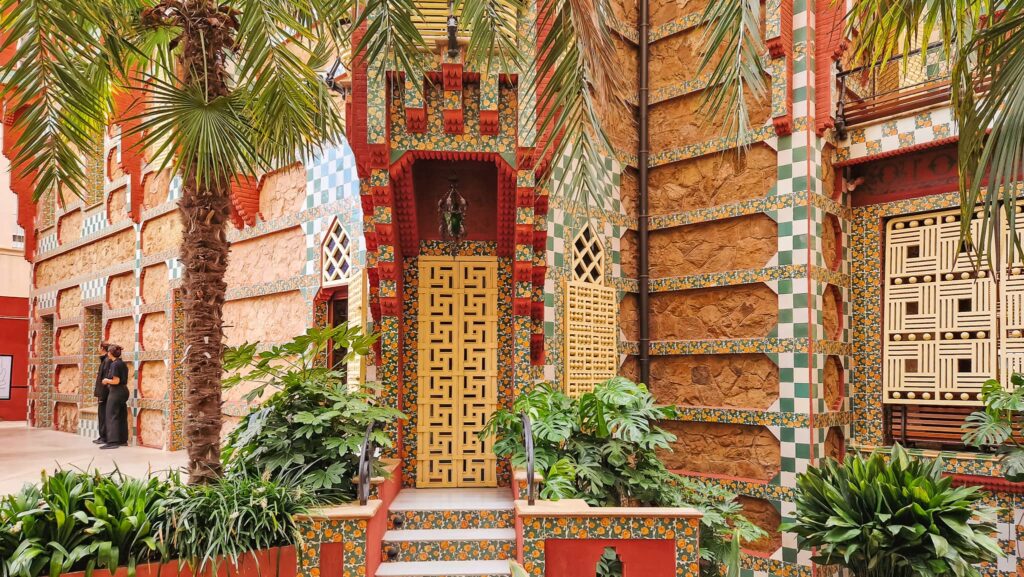
I think the best way to describe the vibe of this place is like a real-life vintage photograph of a holiday in an exotic place. It’s one of my favorites among Gaudí’s buildings in Barcelona, and it’s crazy to think it gets so few visitors compared to Casa Batlló or La Pedrera.
I used the audio guide for Casa Vicens, which I loved because it points to little details in the various rooms, Gaudí’s inspiration for certain elements, and the purpose of each room. Knowing these details allowed me to notice symbols and elements in the other Gaudí buildings I visited afterward.
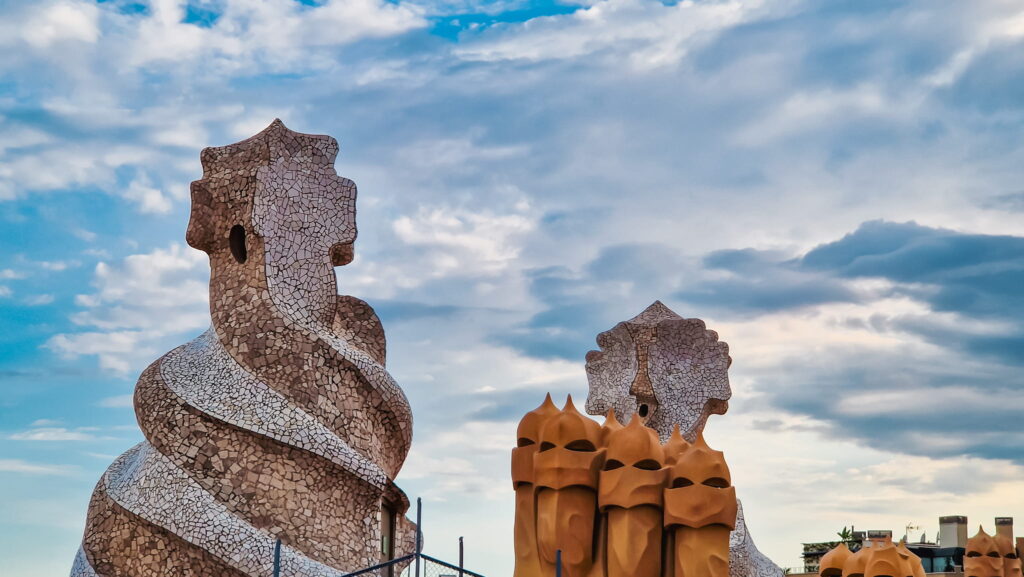
I spent just over an hour on this visit, including the garden, every room, and the rooftop terrace. Speaking of the terrace, it features a tiled corner tower plus a few tiled chimneys that are clearly the first draft of his ever-evolving design recurring in most of his buildings and culminating in the Warriors on La Pedrera.
Palau Güell
After a lunch break in Gràcia, I crossed the city to reach the El Raval neighborhood and Palau Güell, one of Gaudí’s most underrated buildings in Barcelona, especially given its location just a short walk off the Rambla.
Maybe it’s the more austere appearance, or that it’s not promoted much, but Palau Güell gets surprisingly less foot traffic than most of Gaudí’s other works. In my opinion, it’s a stunning piece of architecture worth visiting, showing a different side of Gaudí.
My first impression upon entering Palau Güell was “Wow, this place is dark”. Despite the high ceilings and many windows, there is little natural light. The dimmed lights, choice of colors, and overall design contribute to an elegant yet somewhat somber atmosphere.
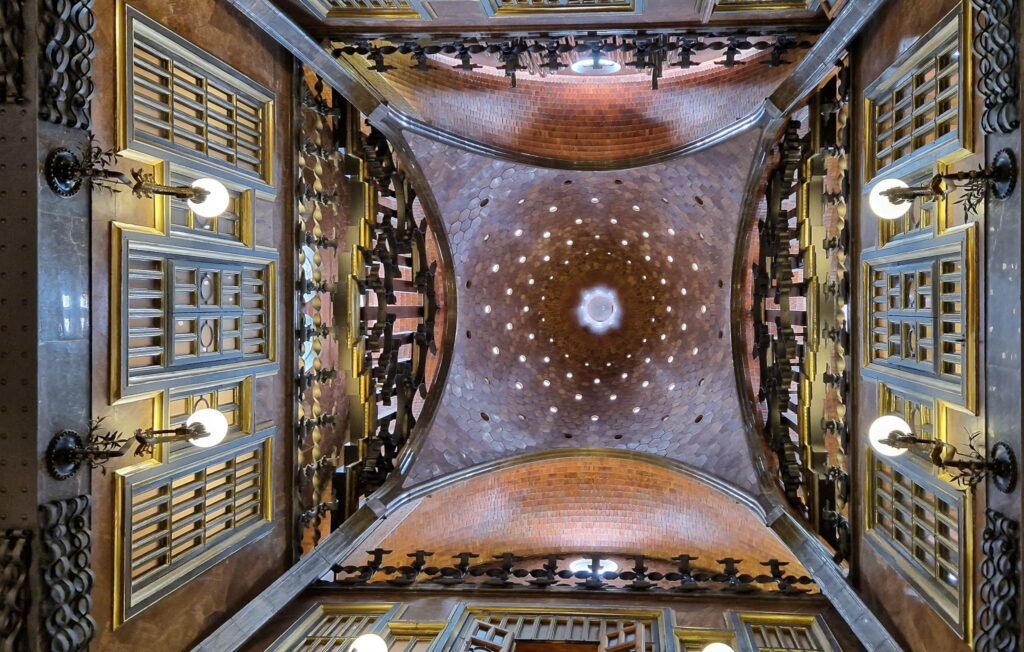
But here’s the thing: it was all intentional and dictated by the limited space to build this imposing mansion. The building sits in a tight spot in El Raval, surrounded by lots of other buildings, which is also why many people walk past it without a second glance. This limits the natural light, contributing to the dark atmosphere.
Moreover, the famous entrepreneur Eusebi Güell, who commissioned the building, wanted to entertain high society guests here, who would mainly meet in the evenings. My favorite part was the main room, which takes up the entire height of the building, culminating in a domed ceiling with small holes that make it look like a starry night.
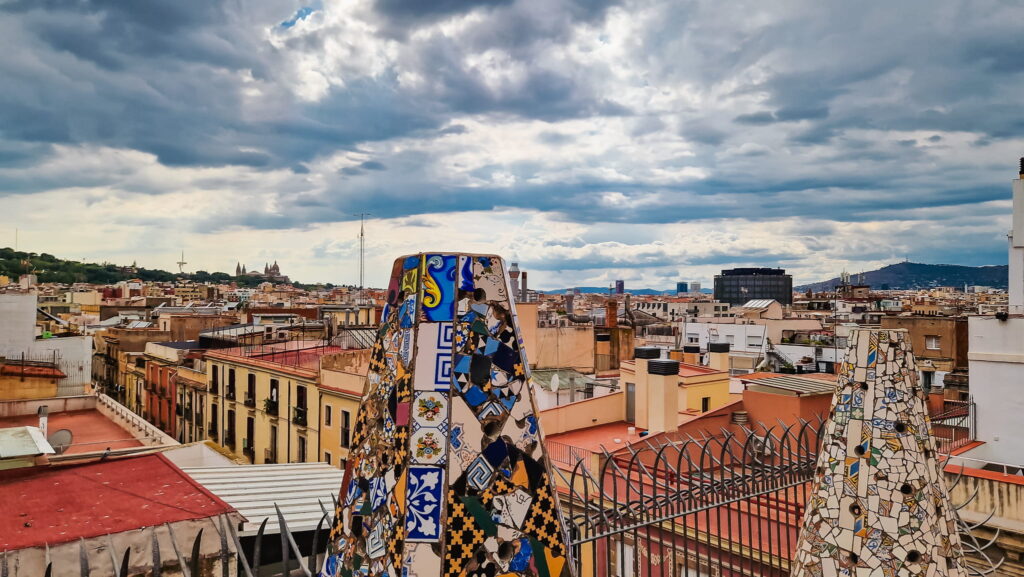
The dark gray marble, wrought-iron railings, and gold accents contribute to the dark and gloomy atmosphere. It’s a stark contrast to the bright colors and airy feel of Casa Vicens, but I loved it nonetheless. The one spot where Gaudí’s playful and colorful style stands out is the rooftop terrace with his signature colorful, tiled chimneys.
Casa Batlló
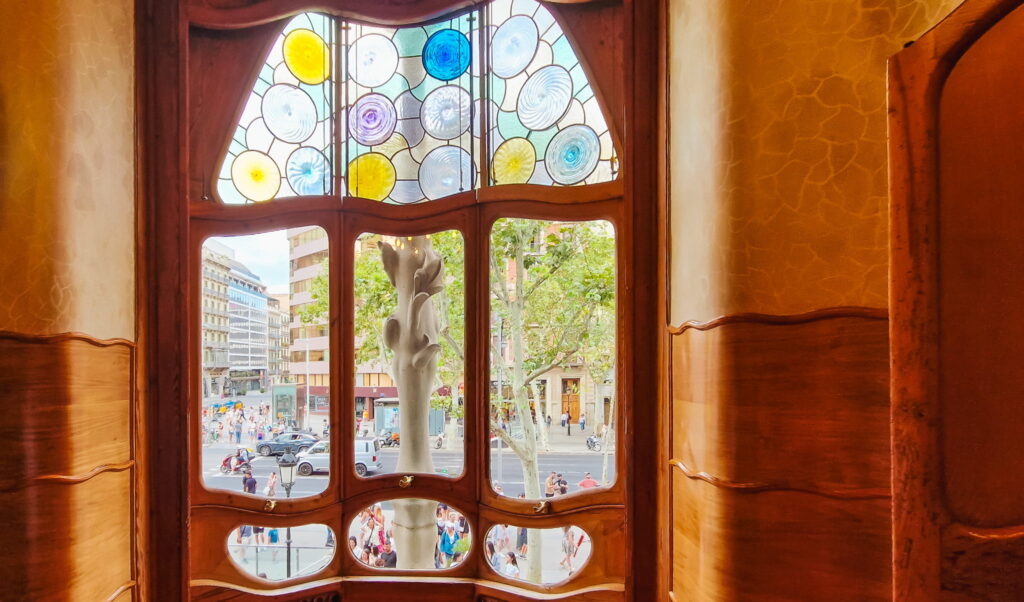
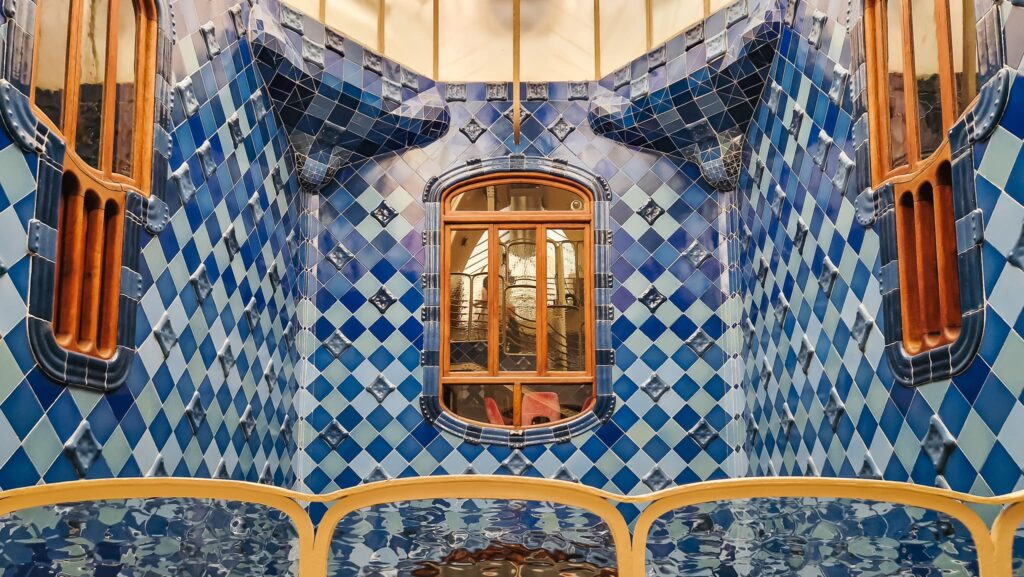
The last two Gaudí houses for the day were both on Passeig de Gràcia, within a short walk of each other: Casa Batlló and La Pedrera. I first visited Casa Batlló, which features one of the most recognizable façades in the world, with its multi-color tiles, skull-shaped balconies, and the roof resembling a dragon.
I walked past this building hundreds of times while living in Barcelona, and I always wondered what the interior would look like and whether it would be as eclectic as its façade. Well, now that I’ve seen it, I can tell you that it’s even more eccentric!
Walking through the various rooms of Casa Batlló is a bit like being in a fever dream, where everything feels distorted, as if the walls and furniture were slowly melting and changing shape. There are no sharp corners or straight lines; everything seems to be morphing into something else, frozen mid‑transformation.
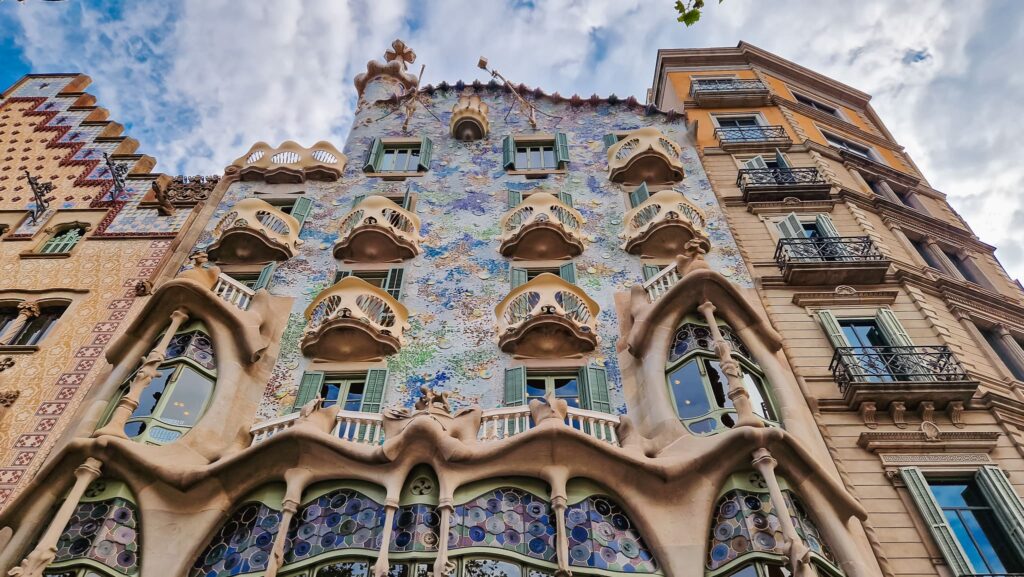
There is a clear reason behind this choice. Gaudí took inspiration from nature, and as he said: “There are no straight lines or sharp corners in nature.” This is a recurring theme that you can also see in La Pedrera, and a clear evolution from the very straight lines and sharp corners of Casa Vicens.
I also had an audio guide here, and I’m so happy I did, because it was so cool to listen to the explanation about each room and how every aspect of this house seems to hint at something in nature. This place truly blew me away and made me realize what an incredibly vivid imagination Gaudí had! This is not just a building; it’s a work of art.
La Pedrera
La Pedrera, or Casa Milà, was my last stop for the day. I visited in the late afternoon, and there were surprisingly few people for a mid-August day. As usual, I grabbed the audio guide and began exploring the building, starting from the inner courtyard.
It’s crazy to think that this residential building, now a UNESCO World Heritage Site that sees roughly one million visitors each year, still has two residents. There used to be more people living here, but most tenants were bought out, and the few remaining could only live there until their deaths, with no possibility of leaving their apartments as inheritance.
I also think it’s insane that people would mock this building when it was first built. While its façade may not be as striking as Casa Batlló, the undulating lines and wrought-iron balcony railing certainly make it stand out. I also really love the inner courtyard, which is much more colorful than the exterior.
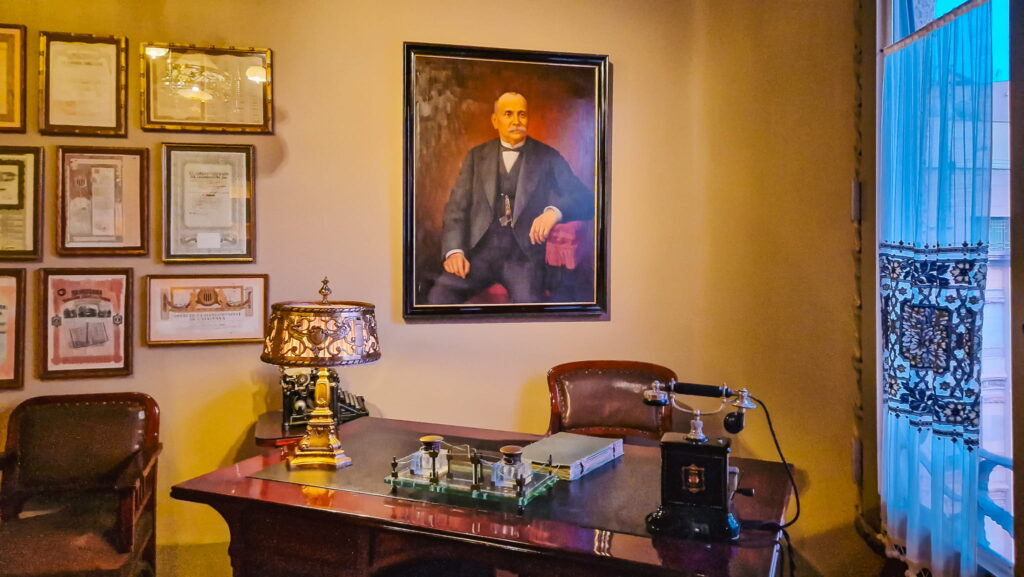
After checking out the courtyard, which I explored more thoroughly at the end of the visit, I went up to the apartment. The tour took me through various bedrooms, bathrooms, the kitchen, a studio, a dining room, and more areas that showcase how the bourgeoisie lived back in the early 1900s.
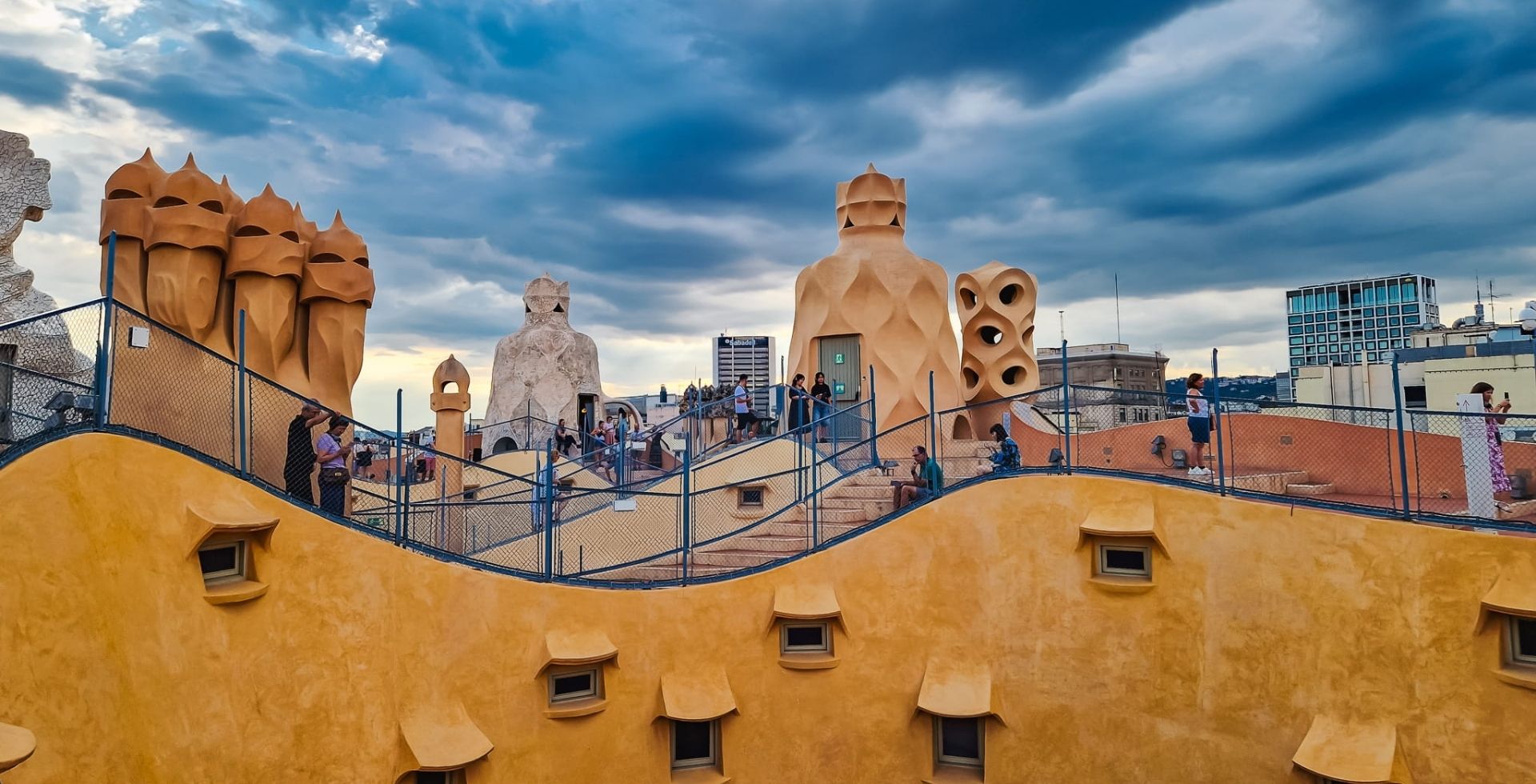
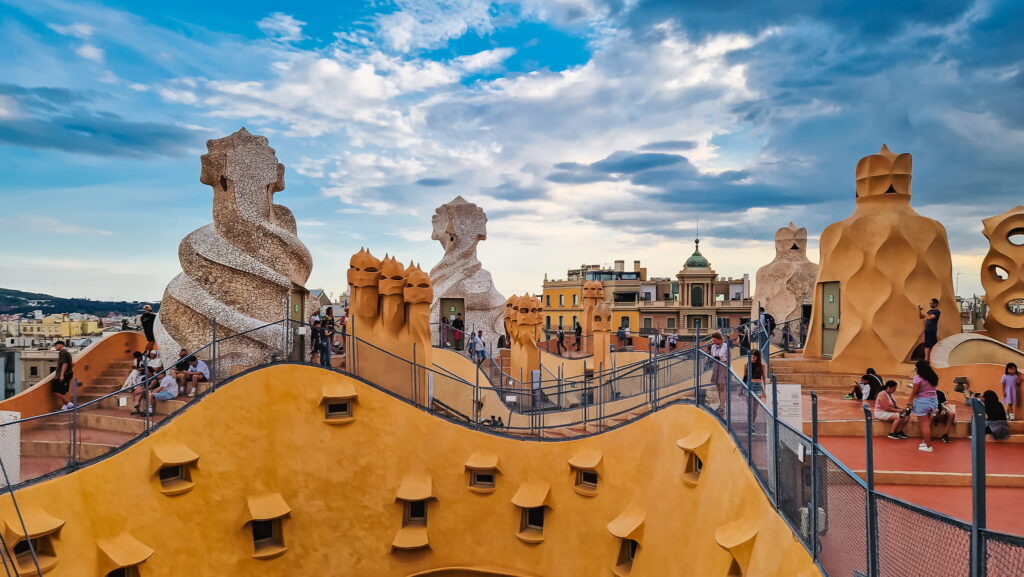
By far my favorite part of La Pedrera is the rooftop terrace, known as La Azotea de los Guerreros, or the Warriors’ Terrace. The warriors in question are a series of chimneys shaped like armored warriors overlooking the city. This spot shows its best colors at sunrise and sunset. Unfortunately, the sun set way after closing time when I visited, but I could still admire the view in the soft early evening light.
Sagrada Família
I’m a bit ashamed to say I lived in Barcelona for six months and visited on several occasions before finally entering the Sagrada Família. Unfortunately, it’s one of those places that takes planning to visit, as tickets sell out fast. Moreover, when I lived in Barcelona, tickets were not sold online, and there were incredibly long lines at the ticket office.
Anyway, I finally managed to book a slot for the cathedral access without the terrace, on an evening in August 2024. I used the audio guide through the dedicated app, which is super thorough, covering every indoor and outdoor space, describing the richly decorated façades in detail, and explaining the symbolism behind each choice.
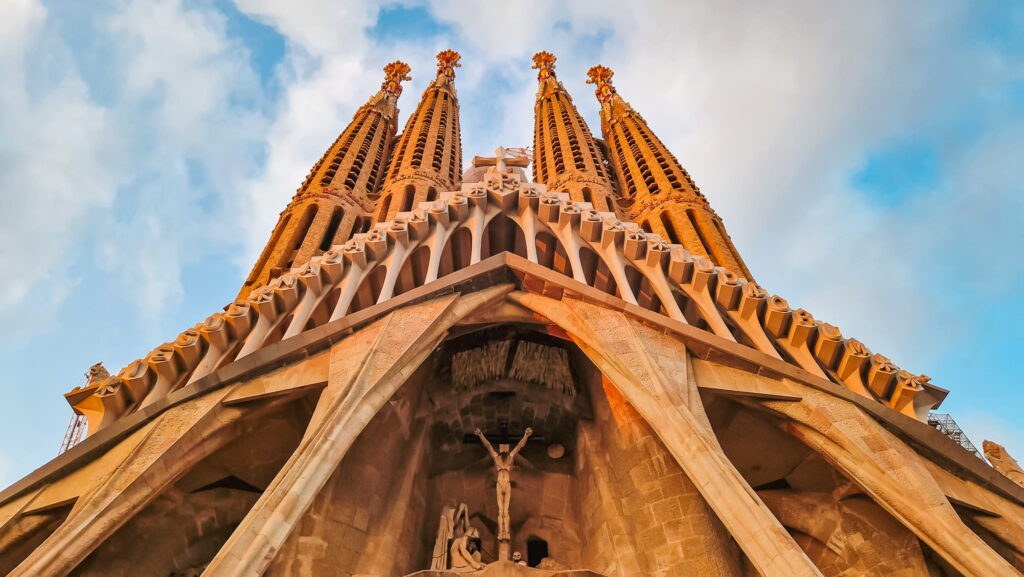
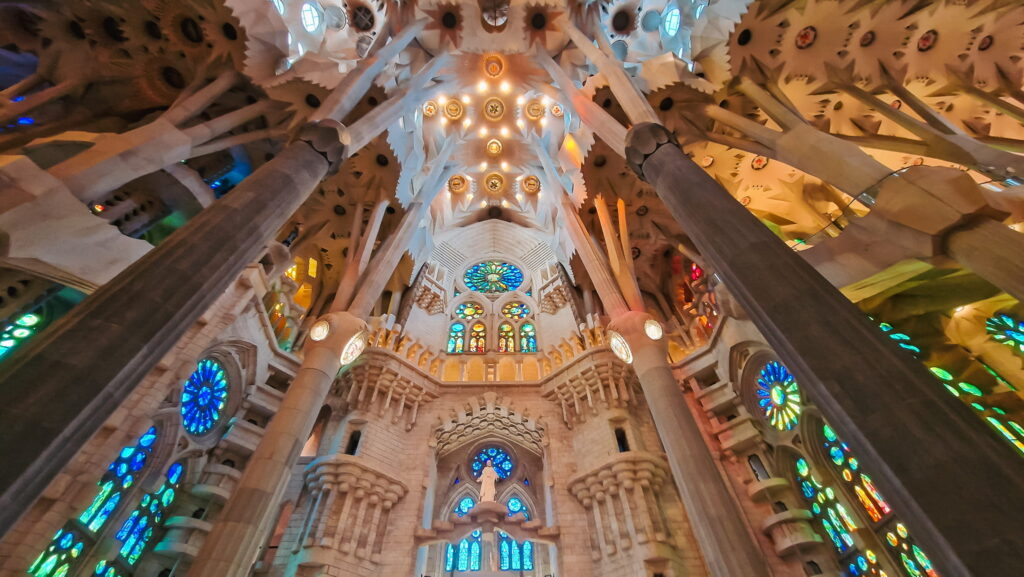
This basilica is truly like no other in the world, and it’s hard to describe its overwhelming scale. It must be experienced. I spent most of my visit craning my neck to take in its enormity, feeling so small in comparison.
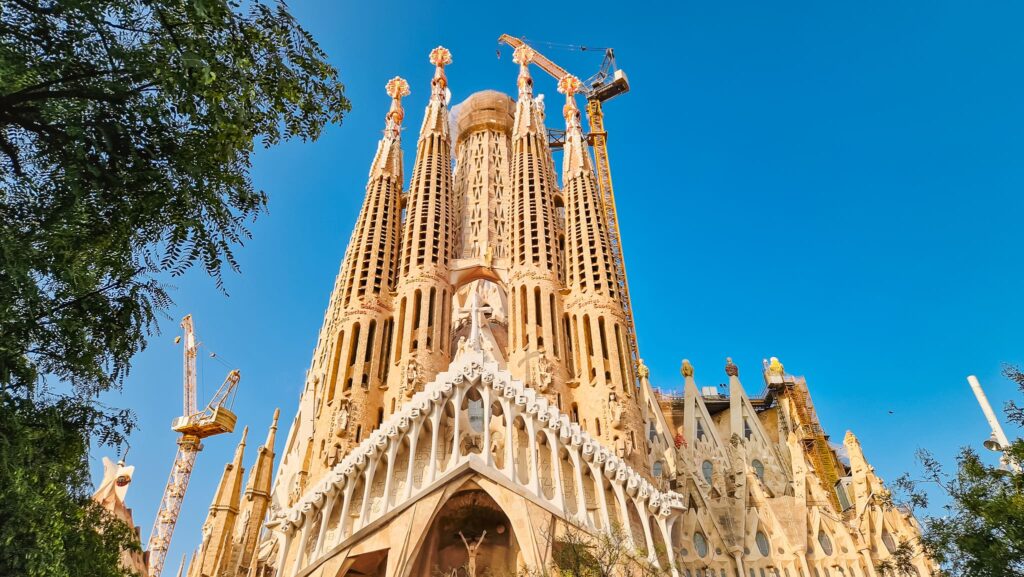
At first glance, the Sagrada Família almost looks like a chaotic mixture of architectural elements, with no clear rhyme or reason. Even so, its beauty is undeniable. But there’s a logic behind everything; nothing is random. Every detail is part of Gaudí’s vision: a place where Christian symbolism and nature-inspired forms merge into a radical yet harmonious expression of faith.
The part that surprised me the most was the central nave, with its towering columns that split at the top like tree branches. Gaudí designed them intentionally to evoke the feeling of standing in a stone forest. I could have spent hours taking in the monumental beauty of this space. It truly is Gaudí’s masterpiece.
Cripta de la Colònia Güell
Now this is a truly underrated place to visit, and not just among Gaudí’s landmarks. In fact, the only building by Gaudí here is the church, but the visit includes the entire neighborhood, which is a former industrial workers’ village built by Eusebi Güell.
I visited Colònia Güell on an afternoon in August 2024, and I only saw a few other visitors. Walking around the village almost feels like stepping back into the past, sometime in the early 1900s. I guess the lack of activity and people around contributed to that feeling.
The industrial colony revolved around the textile factory, and every building was built for the factory workers. But unlike other industrial colonies of the time, Eusebi Güell chose to commission various architects to design a series of Modernist buildings, including Gaudí.
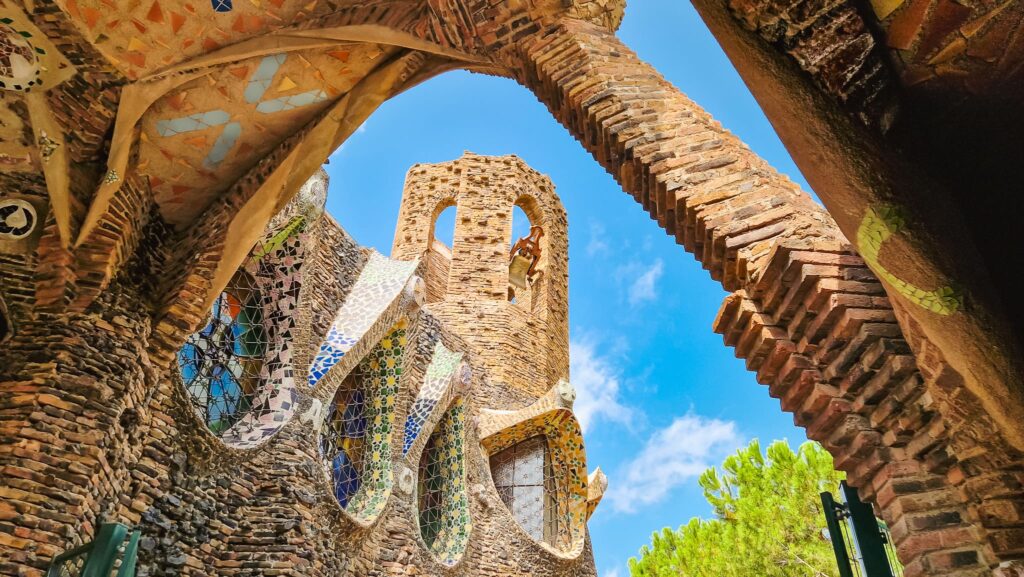
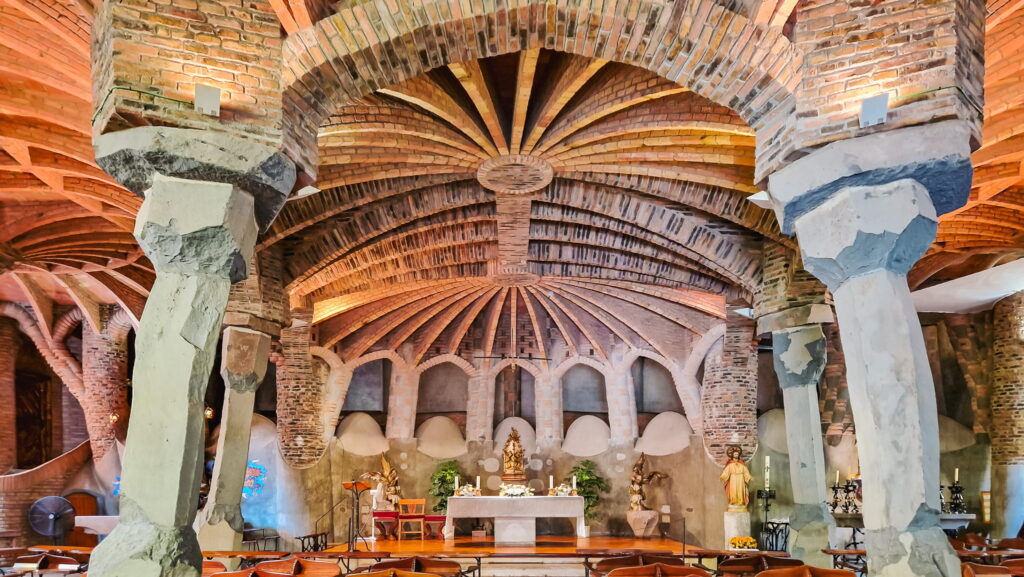
Construction of the church began in 1898, but in 1914, Eusebi Güell’s children stopped the financing. Since only the lower level was completed at the time, the church became known as the crypt. Despite being unfinished, the church is considered among Gaudì’s most influential works, and it was listed as a UNESCO World Heritage Site in 2005.
Gaudí’s style is clearly visible in the church design, which would fit perfectly in Park Güell. Having visited his house museum in the park, I recognized the church benches, a sample of which was displayed there. I love how different pieces from each building come together to tell Gaudí’s life and work through his creations.
I learned that this was a bit of an experimental workspace for Gaudí. He experimented with different techniques that he would later use for the Sagrada Família. But unlike his masterpiece, this church was pretty much empty, so I could sit down and admire the unique design in complete silence and solitude.
Torre Bellesguard
I hadn’t even heard about Torre Bellesguard until 2025. But since I once again spent a month house-sitting in Barcelona, I immediately took the opportunity to visit what is known as Gaudí’s least visited building. And honestly, it’s one of my favorites, maybe precisely because it doesn’t get so many visitors.
One of the reasons Torre Bellesguard is not so popular is that it’s far away from the city center, in the residential neighborhood of Sarrià‑Sant Gervasi, in the hilly area of northwestern Barcelona. It also just opened to visitors in 2013, after being privately owned for over a century.
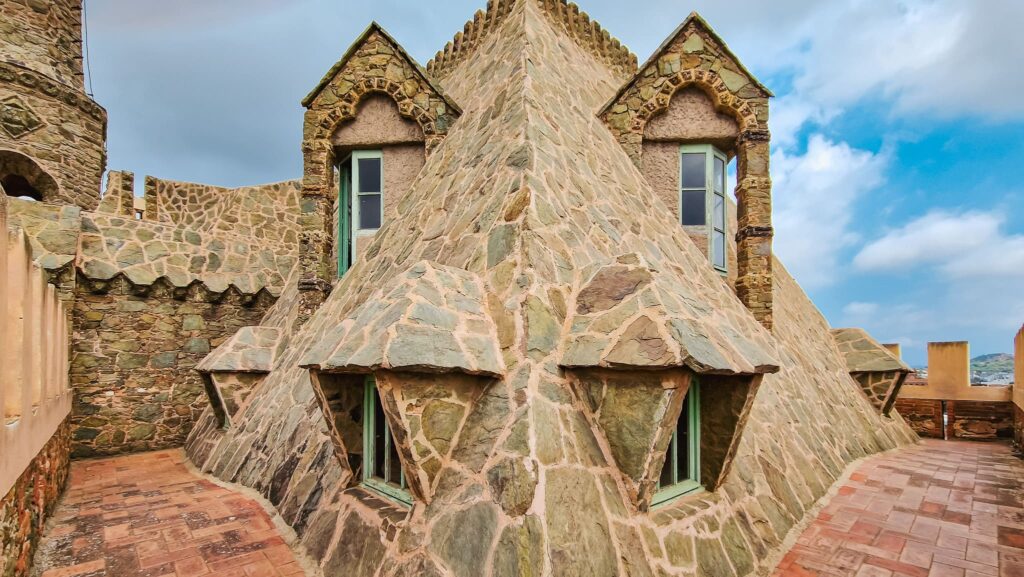
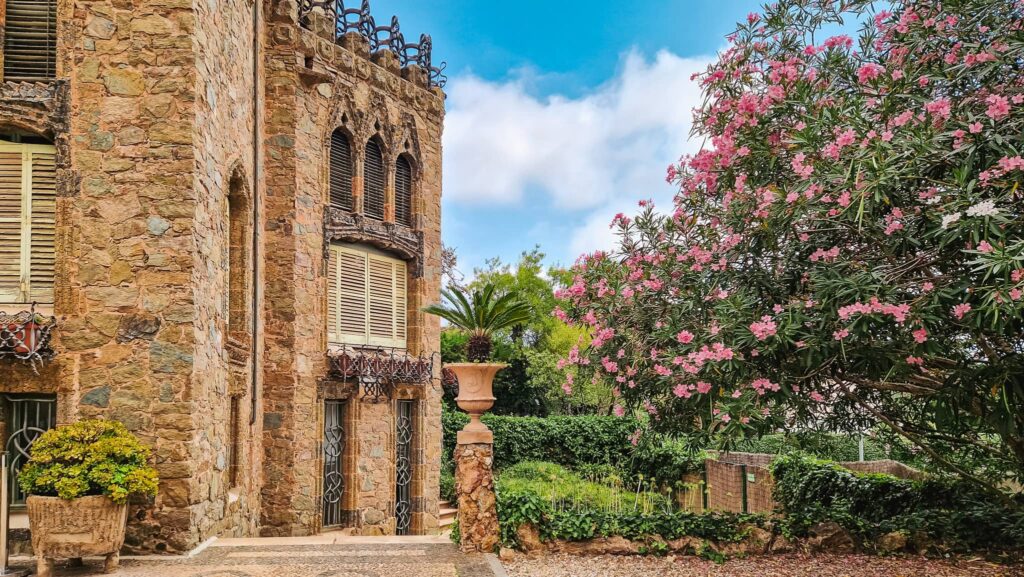
I immediately noticed that this building is quite different from most of the others I’d visited, with straight lines and rectangular shapes rather than the undulating lines of his later works. It resembles Casa Vicens more than La Pedrera or Casa Batlló, though it lacks the Moorish influence, leaning toward Neo-Gothic instead, while still preserving elements of Modernisme so typical of all Gaudí’s works.
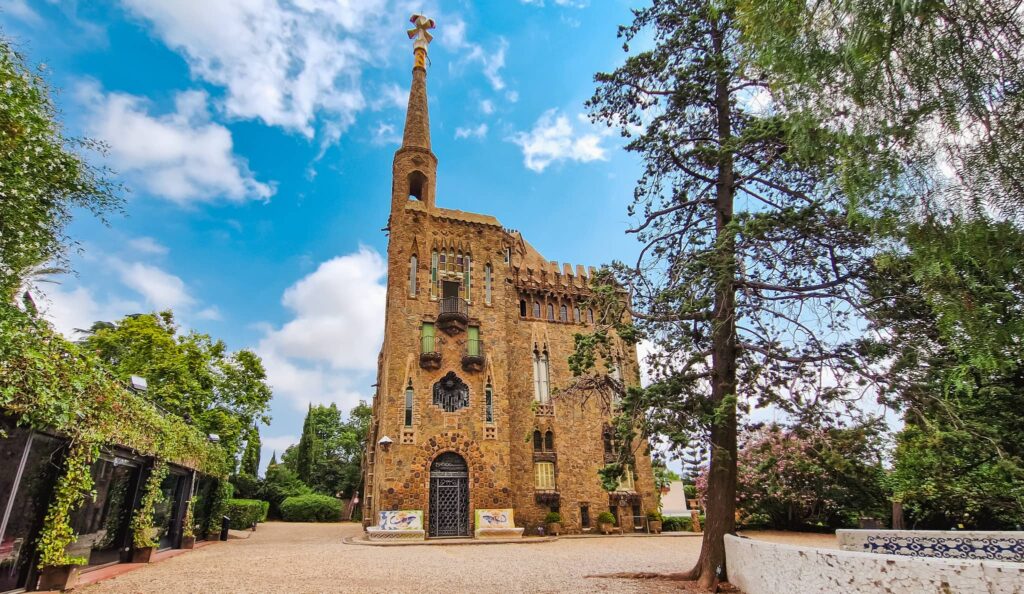
The name of the place is quite literal, as Bellesguard in Catalan literally translates to beautiful view. And I understood why when I reached the rooftop and admired the 360° view of the surroundings, comprising the entire city of Barcelona, the Tibidabo, and Serra de Collserola.
Aside from the stunning view from the rooftop terrace, which also features a dragon (a recurring theme in Gaudí’s buildings), I loved the peaceful gardens surrounding the house. I visited around noon on a late August day, and there were only a handful of other people, all of whom left before me, so I had the place to myself for a while. The lack of crowds and peaceful surroundings truly made this one of my favorite Gaudí visits.
My thoughts about Gaudí’s works in Barcelona
The cool thing about visiting every Gaudí building in Barcelona is that you can piece it all together and see how each work influenced the next, all while his vision kept evolving. It becomes a kind of architectural treasure hunt: you start noticing how his fascination with natural forms deepened over time, how certain symbols reappear, and how his confidence grew as he pushed further into his own imagination.
From the early works to his ultimate masterpiece, the Sagrada Família, you can trace a clear transition: from grounded, almost “traditional” structures to increasingly surreal, fluid, and unconventional creations. It feels as if he was slowly shedding the conventions and expectations of his era to step fully into his genius.
I may be biased because I love quirky, unconventional buildings; I love when things seem chaotic yet somehow make perfect sense; and I love symbolism and nature woven into architecture. To me, Gaudí embodies all of these things. And if any of this resonates with you, I think you should embark on this journey too, if you ever get the chance.
Ultimately, Barcelona is the city we know today in great part thanks to the vision of this one artist. Ildefons Cerdà may have drawn the grid, but Gaudí gave the city its soul.
Practical Information
I wanted to keep this post as short as possible and only focus on my experience and impressions. I have a dedicated post with all the practical information for visiting each site. You’ll find everything from entry fees to my thoughts on which buildings are absolute musts and which are optional.
However, if you just want the links to book your tickets for each site, here they are:
Thanks for reading this article. You can find all my Spain travel guides here, including my article on the best free things to do in Barcelona.