If you travel to Armenia, go beyond Yerevan and explore the country’s quaint and lovely cultural hub. Here are the best things to do in Gyumri.
This page contains affiliate links. If you buy through these links, I may receive a small commission, at no additional cost to you. I only recommend products or services I have tried and/or find useful and reliable.
- Top Things to Do in Gyumri
- Vardanants Square & the Kumayri Historic District
- Cathedral of the Holy Mother of God
- St. All Saviors Church
- Gyumri’s Statues & Street Monuments
- Central Park
- Mother Armenia Monument
- The Black Fortress (Sev Berd)
- Hovhannes Shiraz House-Museum
- The Gallery of Mariam and Eranuhi Aslamazyan Sisters
- Museum of National Architecture and Urban Life
- Shuka Market
- Ponchik Monchik
- Bonus: The Iron Fountain
- Practical Tips for Visiting Gyumri
On my 2-week trip to Armenia in the fall of 2024, I wanted to explore beyond Yerevan, so I decided to spend a couple of days in Gyumri. Armenia’s second-largest city is known for its unique black tuff buildings with apricot accents and its artistic heritage. The city has been home to many writers, painters, and filmmakers.
I didn’t have any expectations from this city when I embarked on the train journey from Yerevan. I knew it wasn’t a very touristy city, but other than that, I didn’t know much about it. It was a delightful surprise to explore its quaint streets and visit charming little museums.
I discovered Gyumri has a sad yet inspiring history, one that speaks of the resilience of its citizens. The 1988 Spitak earthquake that shook the region caused extensive destruction and decimated the population of Gyumri, then known as Leninakan. Entire neighborhoods collapsed in seconds, and tens of thousands of people lost their lives across the region.
The collapse of the Soviet Union just a couple of years later, and the economic hardship throughout the country, affected recovery efforts, which took decades. In fact, some of the destroyed buildings were never rebuilt. But while the effects of the catastrophic event are still visible, the city stands proud and strong, a symbol of strength, rebuilding, and remembrance.
In short, Gyumri is the perfect city to visit if you enjoy a slower pace and a more local, even reflective, atmosphere compared to Yerevan. It’s an underrated yet beautiful discovery that I’m sure you will enjoy. Now, let’s get into the top things to do in Gyumri.
Top Things to Do in Gyumri
Gyumri is fairly easy to explore on foot, and most of the places I mention in this article are within walking distance. You can easily explore the main sights in a day, but staying overnight allows you to explore the city at a slower pace and check out more museums. Also, most of these things to do are free, and those with an entry fee are still very affordable, which makes Gyumri a budget-friendly city.
Vardanants Square & the Kumayri Historic District
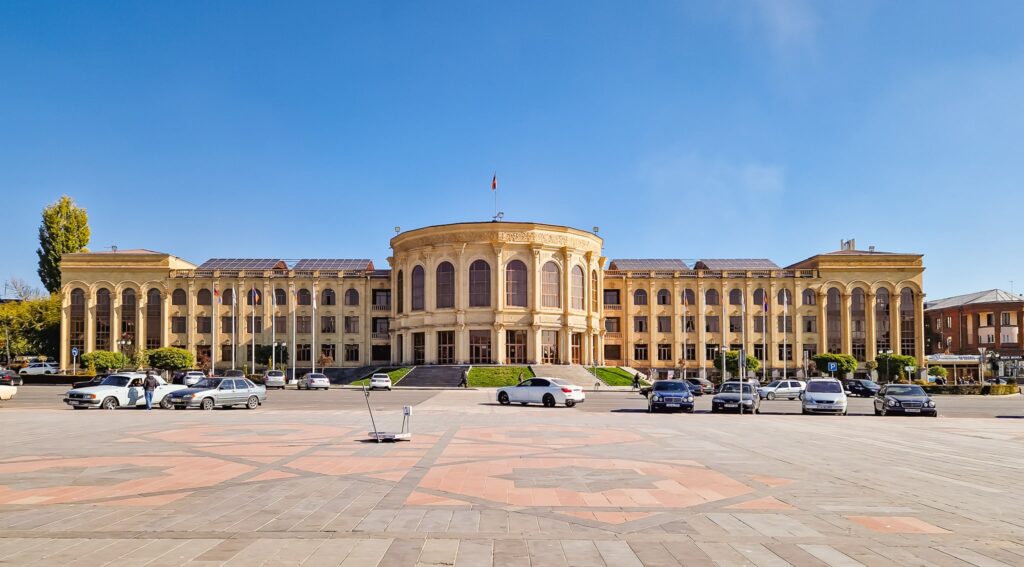
Vardanants Square is at the heart of Gyumri, a large open space where various streets converge. This is the best spot to begin exploring the city’s historic district. I’ll cover some specific buildings around the square in the next sections, but start by walking around and checking out the various streets that all merge into the central square.
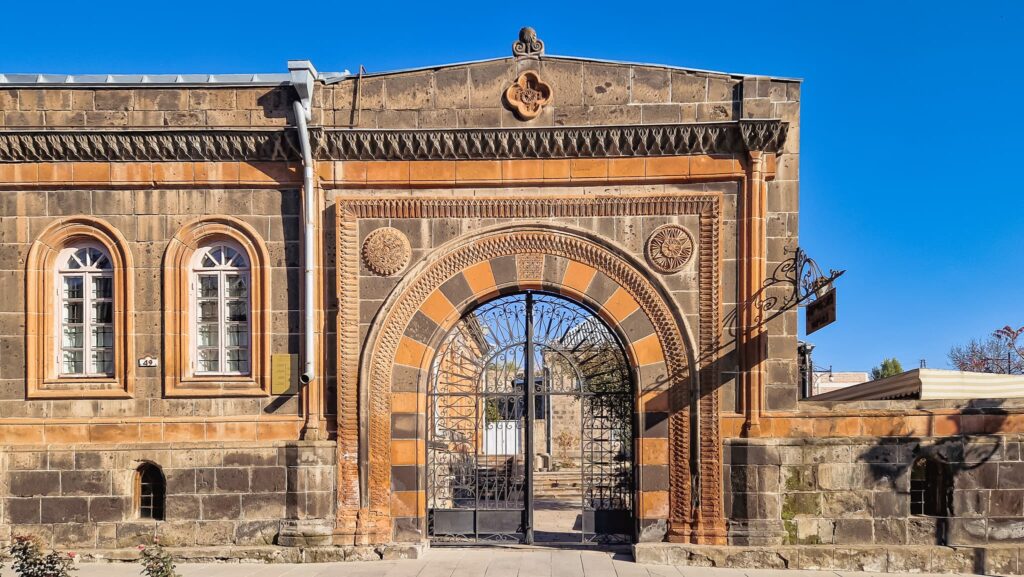
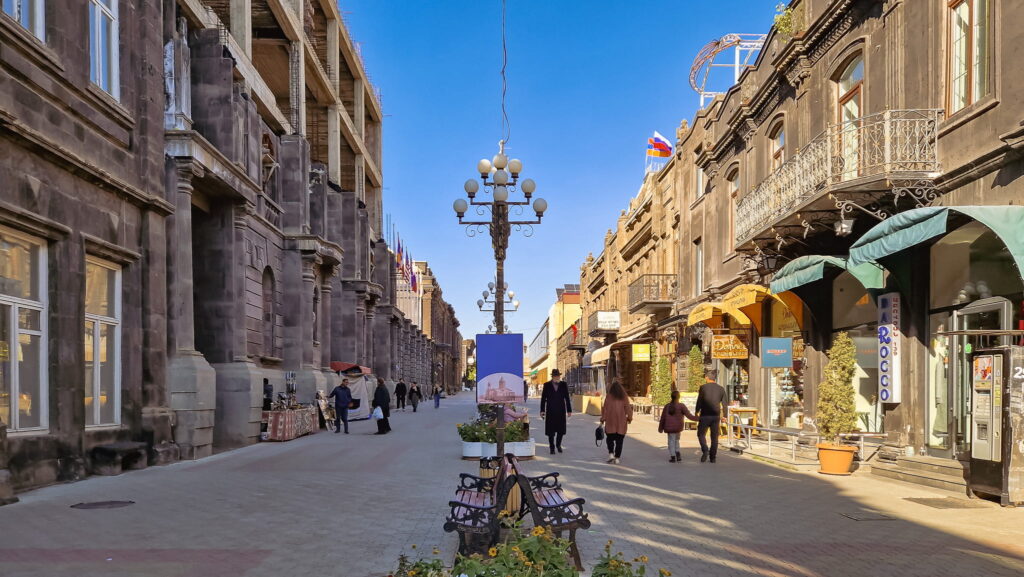
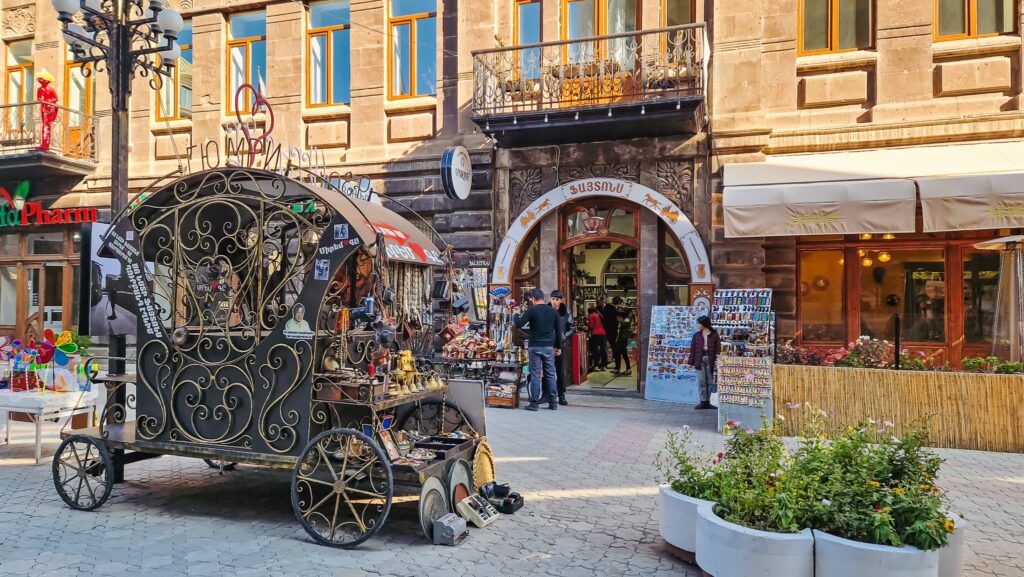
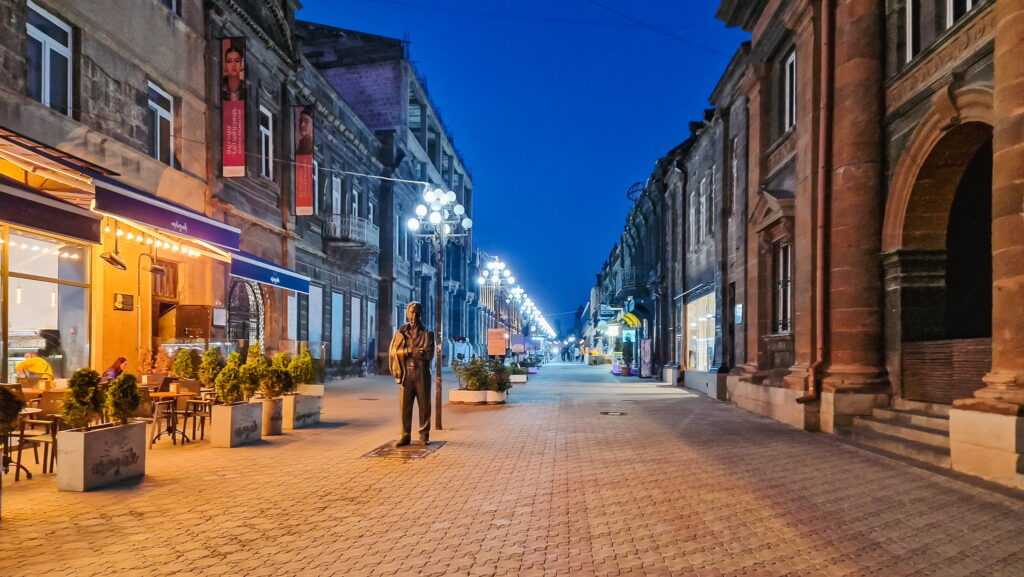
Abovyan Street is one of the most iconic streets in Gyumri, lined with historical buildings, museums, and shops. The street, named after the Armenian writer Khachatur Abovian, reflects the city’s artistic soul, while also preserving the memory of the earthquake in some of its buildings.
As you wander around the city center, observe the black-and-apricot tuff buildings, the quaint side streets, and the small details, like the plaques on historical buildings or charming balconies. I visited in November, so the city was probably quieter than during the high season, but I got a sense of tranquility wandering around its streets.
Aside from Abovyan Street, check out the residential Gorki Street, with its preserved 19th-century buildings, Rustaveli Street, which highlights the coexistence of past and present with its mix of restored and partially damaged buildings, and Rijkov Street, with its lively cafés and restaurants.
Cathedral of the Holy Mother of God
Standing on the northern side of Vardanants Square, the Cathedral of the Holy Mother of God, also known as Our Lady of Seven Wounds, is one of Gyumri’s most important churches.
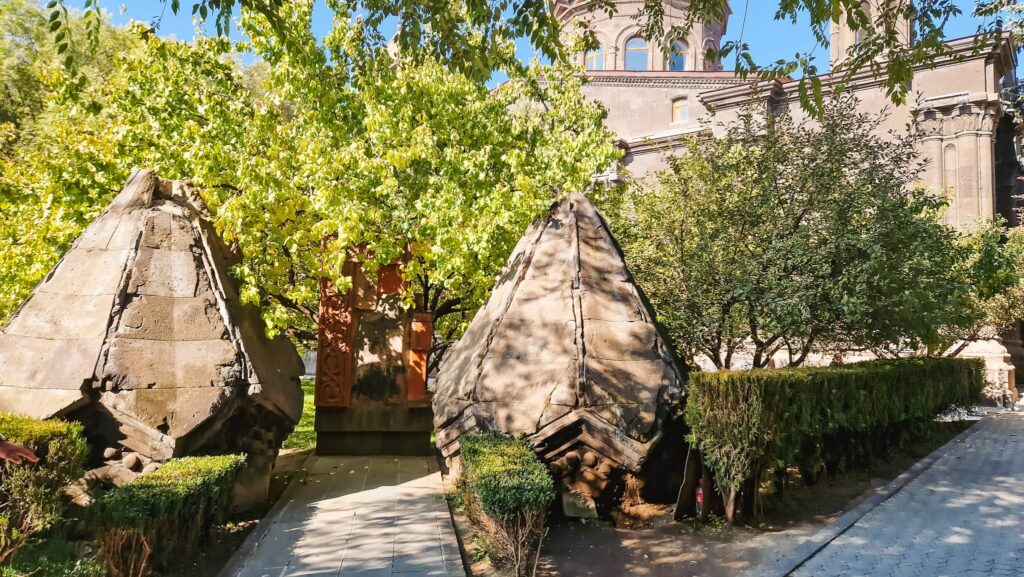
Built at the end of the 19th century, the church was one of the few that remained active during the Soviet rule. The church has spiritual and symbolic significance for locals. During the 1988 earthquake, two minor domes fell and are now preserved in the churchyard.
Admire the beautiful church from the outside, explore the small churchyard, and enter the church to check out the beautifully decorated interior.
St. All Saviors Church
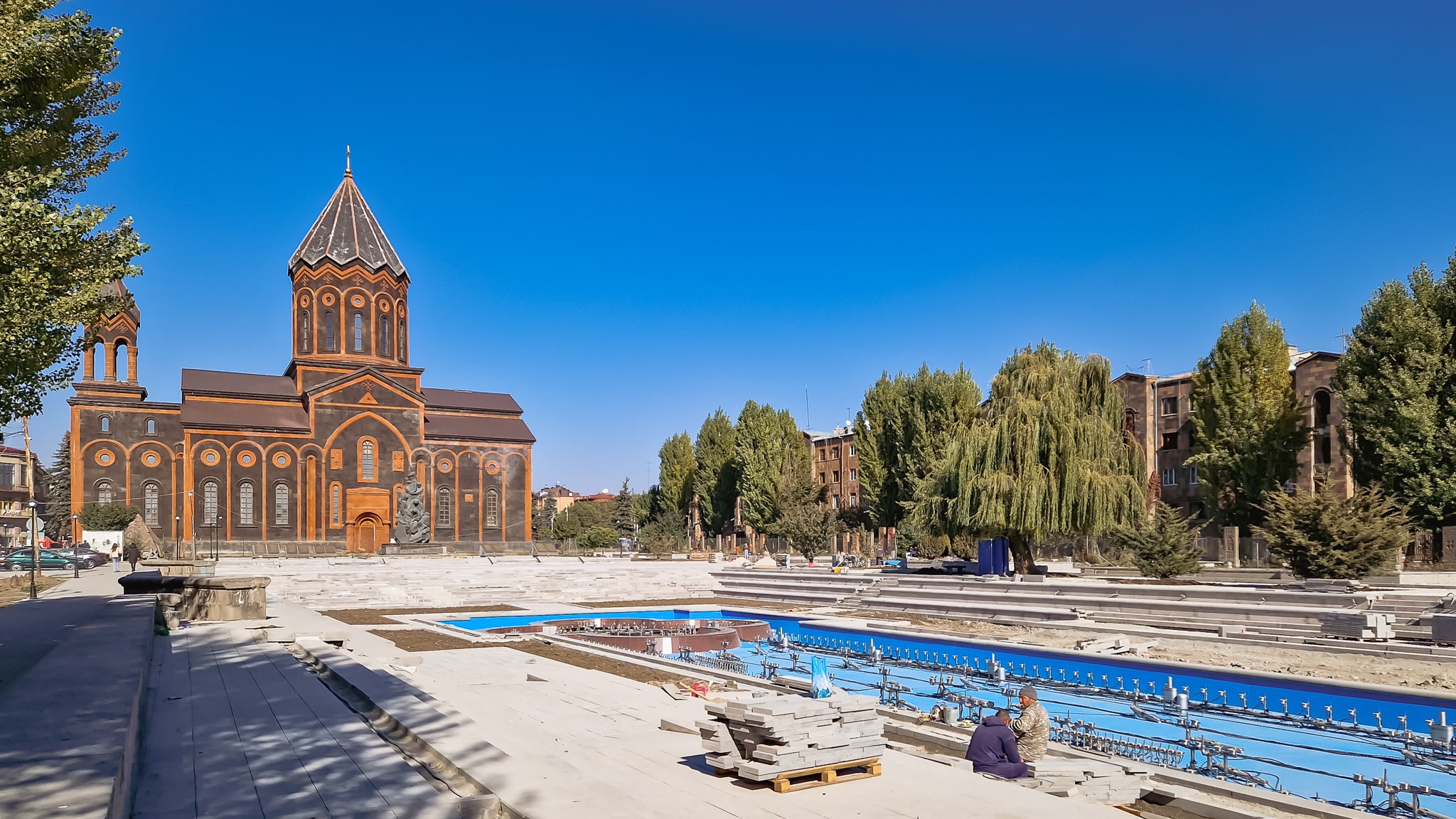
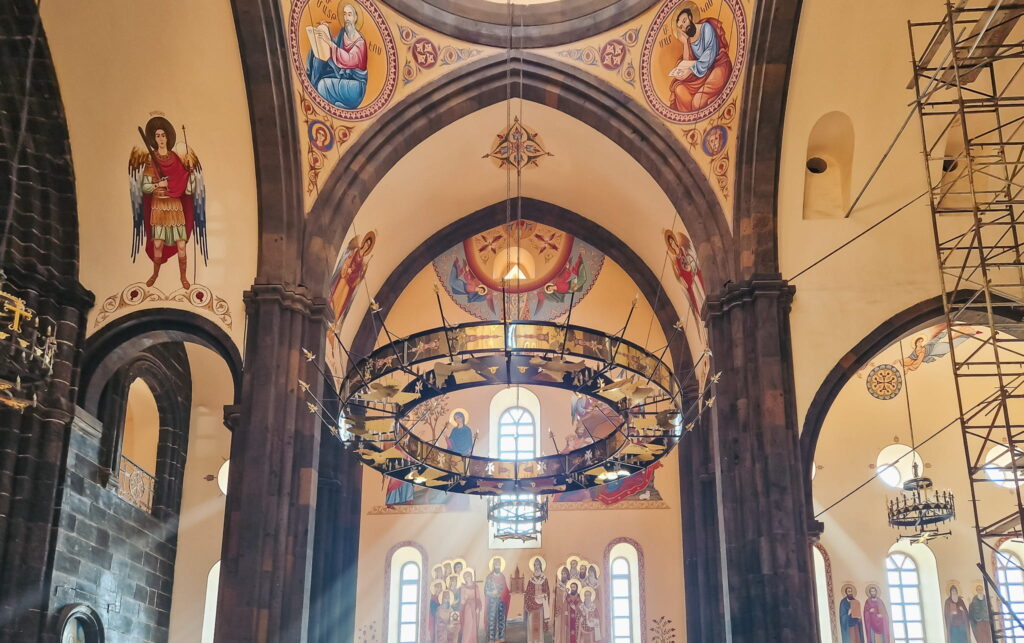
Even older than the Cathedral of the Holy Mother of God, St. All Saviors Church is the perfect example of the typical Gyumri architecture with the black tuff and apricot accents. Built between 1858 and 1872, the church occupies the southern side of Vardanants Square.
This church was heavily damaged during the 1988 earthquake, and renovation only began in 2002. When I visited in November 2024, the finishing touches were being added to the interior. Re-consecration only took place in December 2024.
The church is beautiful from the outside, but the interior is also stunning. Being recently renovated, you can admire the brightly painted icons on the walls and the imposing black tuff columns and arches.
Behind the church, there is now a new fountain and a vast public space for a stroll. The fountain wasn’t finished yet when I visited, but it is as of 2025. Light and music shows take place in the evenings, though I don’t know and couldn’t find the schedules online, so check when you get there.
Gyumri’s Statues & Street Monuments
One thing I noticed while wandering around Gyumri is that there are lots of beautiful statues all over the city center. As you explore the various streets and squares, make it a game to spot these statues and check out who they represent. They are typically notable local figures like artists and writers.
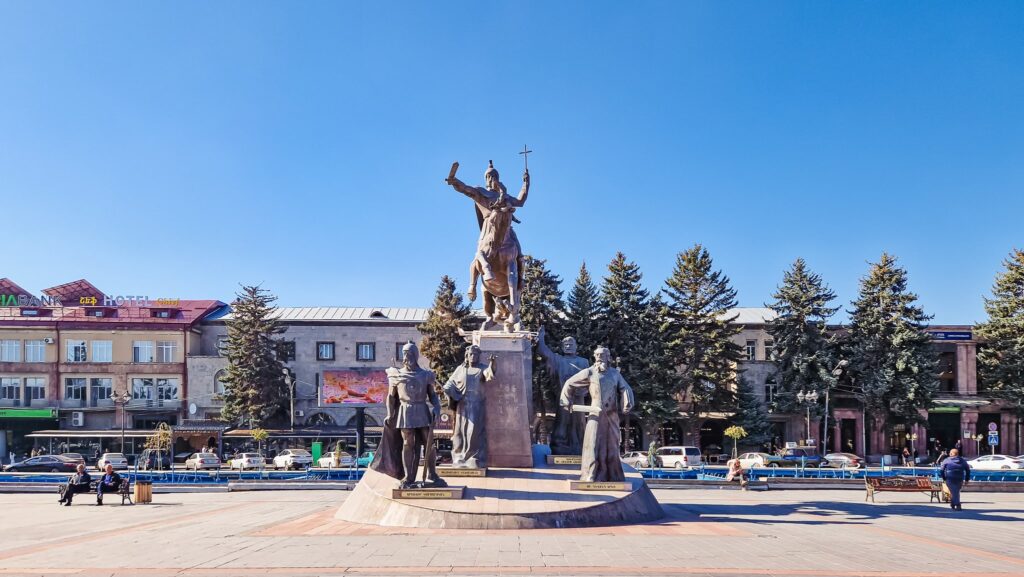
Some of the most notable statues are those of the film actor Frunzik Mkrtchyan and the poet and actor Avetik Isahakyan, both in front of the Vardan Ajemyan Drama Theater. Charles Aznavour Square features a statue of the renowned singer, while at the center of Vardanants Square, you can find the equestrian statue of the Armenian military leader Vardan Mamikonian surrounded by other notable figures.
Besides these notable statues, you’ll find many more scattered across the city. Just wander around and keep an eye out for them.
Central Park
Gyumri’s Central Park, unlike *that* Central Park, is a small green oasis just a short walk from Vardanants Square. This is not at all a tourist spot; you’ll mostly find locals hanging out and children playing, but it’s the perfect spot for a relaxed stroll and people-watching.
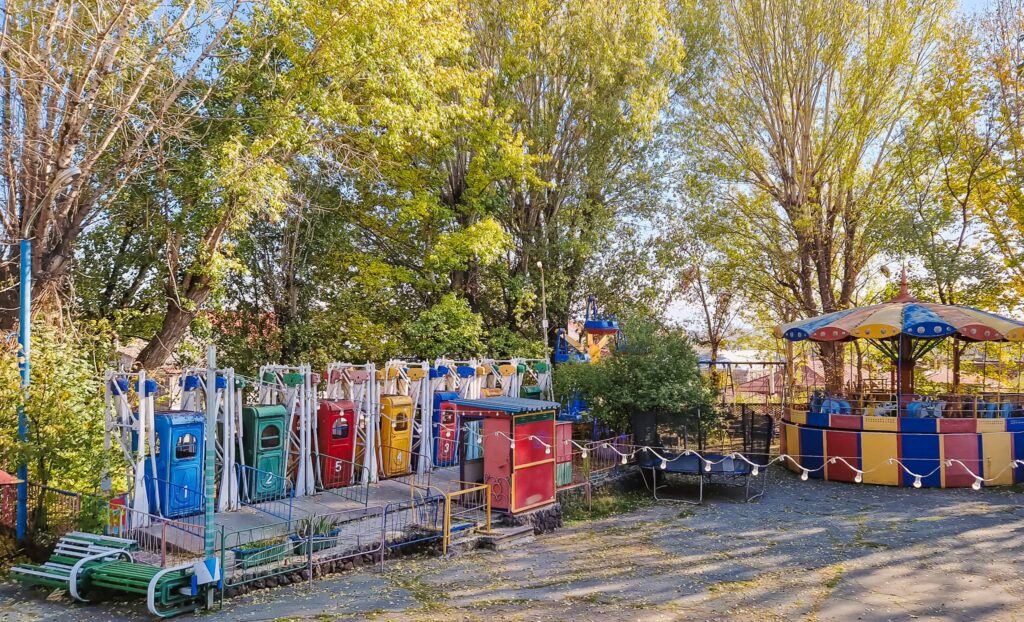
My favorite part of Central Park is the Soviet-era amusement park. It was a cold November afternoon when I wandered around the park, so the amusement park was deserted, which gave off an eerie vibe. But, coming from an ex-communist country myself, these things bring back childhood memories and trigger a hint of nostalgia.
Also, just outside the park, make sure to check out the balcony featured in the Armenian film Tango of Our Childhood. You’ll find it saved like that on Google Maps.
Mother Armenia Monument
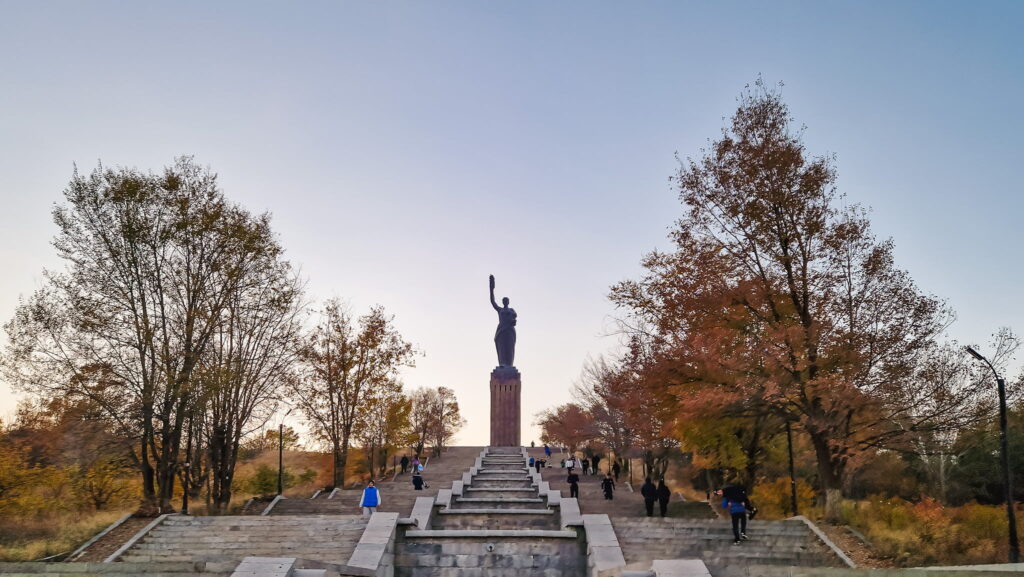
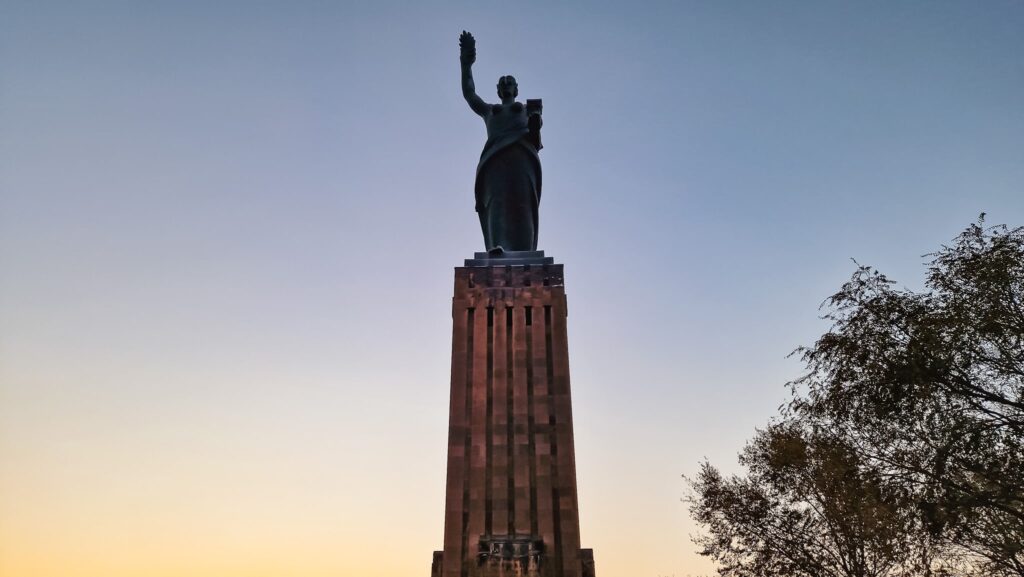
A little bit farther away from the city center, but certainly worth the walk, you’ll find the monumental Mother Armenia. Not unlike the one in Yerevan, this statue is the female personification of the nation, a symbol of strength and protection. Both statues date to the Soviet era and are placed in elevated points of the cities.
Gyumri’s Mother Armenia was installed in 1975, a few years later than the one in Yerevan. Unlike the statue in Yerevan holding a sword as a symbol of defense, the one in Gyumri adopts a more peaceful posture, holding a palm branch in one hand and a column capital inspired by the 7th-century Zvartnots Cathedral in the other.
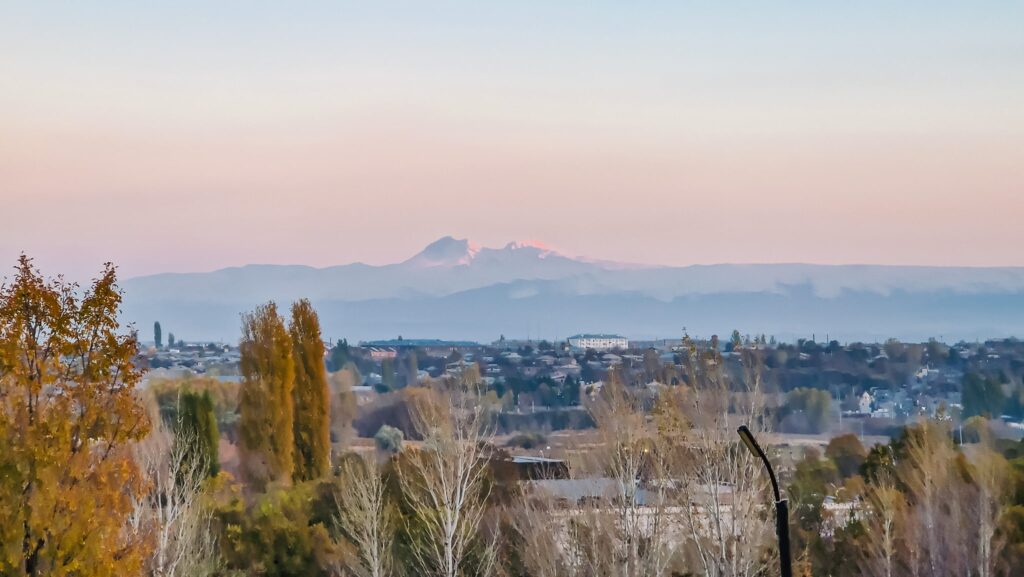
Mother Armenia stands on a hilltop a bit outside the city center. There’s a long staircase you’ll have to climb, but once you reach the top, you’ll be rewarded with panoramic views of Gyumri and the shape of Mount Aragats in the distance.
The Black Fortress (Sev Berd)
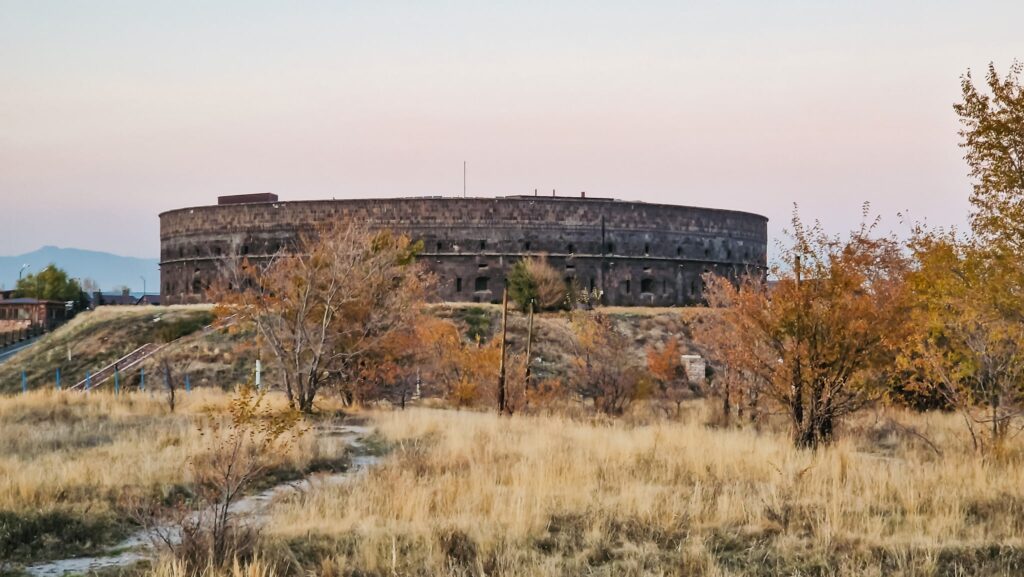
Not far from Mother Armenia, you can visit Gyumri’s Black Fortress, or Sev Berd. As the name suggests, the 19th-century fortress is made of black tuff, which is nothing unusual around here.
What is unusual is that the fortress, built as a defensive stronghold during the Russo-Turkish War, never underwent a siege. Nowadays, it’s a national cultural heritage monument.
I didn’t get the chance to visit the fortress as it was already late when I climbed up to Mother Armenia, but you can check out the interior. The fortress is open daily from 9 am to 5 pm and offers free entrance.
Hovhannes Shiraz House-Museum
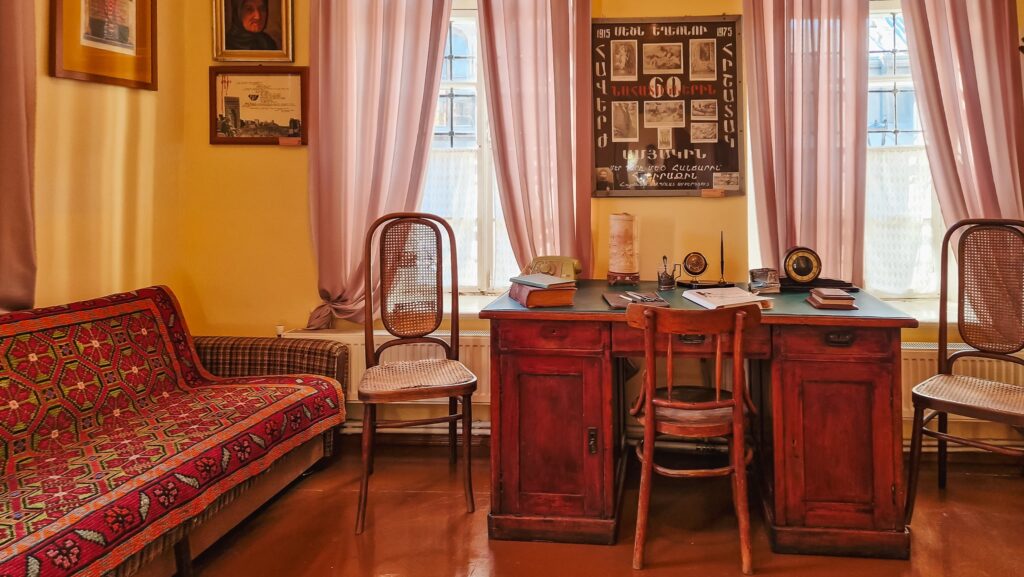
If you want to learn more about Gyumri’s artistic heritage, this house-museum dedicated to one of the city’s most beloved poets is the place to go. Shiraz wrote many patriotic and love poems, but he also explored topics banned at the time, like the Armenian Genocide.
The building housing the museum was built in 1886 and initially belonged to a wealthy merchant. Shiraz only lived in the house for one year before he died in 1984. The house later became a museum, although its establishment was interrupted by the 1988 earthquake and only opened to the public in 2003.
In the museum, you can see original furniture and artifacts alongside manuscripts, correspondence, and many of the poet’s personal belongings. You can also admire beautiful artworks by the poet’s sons, Ara Shiraz and Sipan Shiraz. The entrance fee to the museum is only 1000 AMD, so just over 2€/2.5$.
The Gallery of Mariam and Eranuhi Aslamazyan Sisters
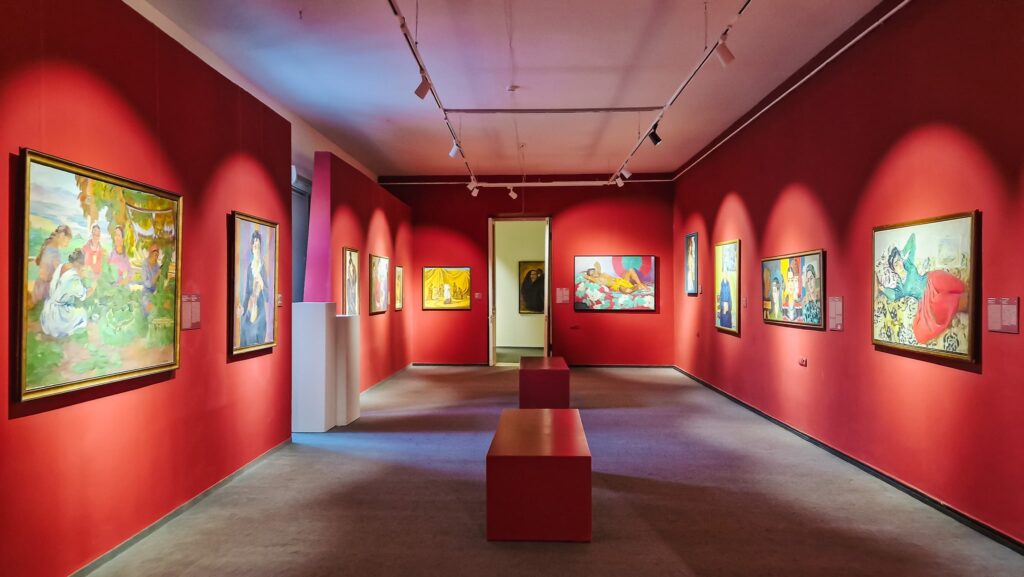
If you enjoy art galleries, then this one is an absolute gem. The museum holds the largest collection of the Aslamazyan sisters’ artworks, including paintings, prints, drawings, and ceramics.
The gallery is in a 1880 building on Abovyan Street, donated by the two sisters. The museum opened in 1987, and it houses hundreds of beautiful artworks by the two Armenian artists. I personally loved the painting collection, but the sculptures and ceramics are also incredible.
The museum closed after the 1988 earthquake, and for a time, the building housed displaced residents. It only reopened as a gallery in 2004. You can visit it daily from 11 am to 6 pm, and the entry fee is 100 AMD (€2,20/$2,60).
Museum of National Architecture and Urban Life
This is one of the few places I mention in this guide that I didn’t manage to personally visit during my trip, but I’d love to see it next time I travel to Gyumri. This museum is dedicated to traditional Gyumri homes and lifestyle, showcasing traditional local furniture, domestic items, clothing, and more.
The Museum of National Architecture and Urban Life is the ideal place to understand Gyumri’s architectural heritage and its social life and traditions of the 19th century, when the city was called Alexandropol. The museum is open daily except on Mondays, and the entry fee is 1500 AMD (around €3.30/$3.90).
Shuka Market
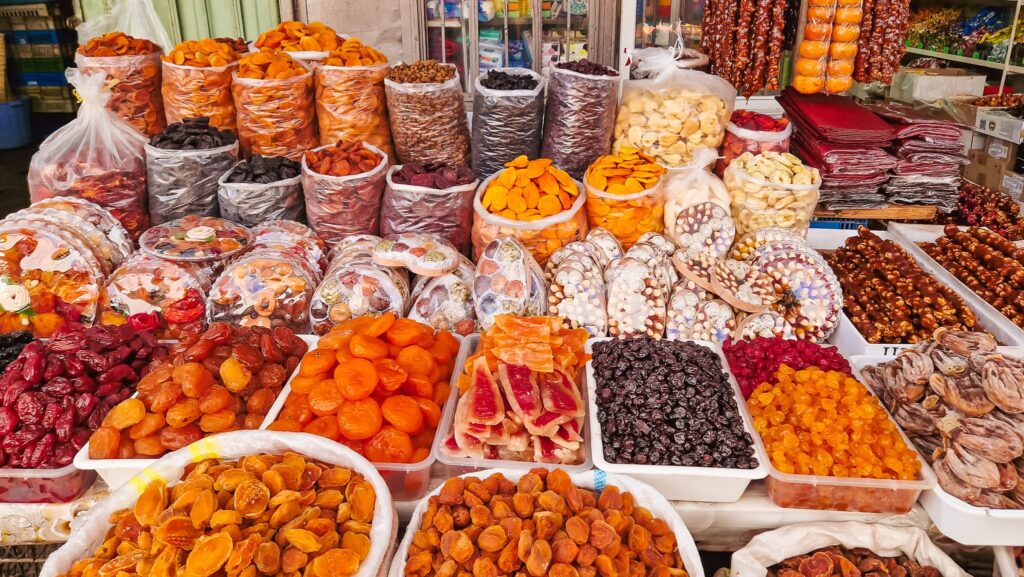
The last place you should absolutely check out in Gyumri is the Shuka Market. A short walk from Vardanants Square, the produce market is a vibrant and chaotic place, one where you can witness the daily lives of locals, immerse yourself in the regional flavors, and buy fresh produce.
Known simply as Shuka, the produce market is no tourist attraction. This is where locals come for their fruits, veggies, spices, and cheeses. But you’ll also find beautifully arranged packs of dried fruits that make for the perfect souvenir to take home!
Ponchik Monchik
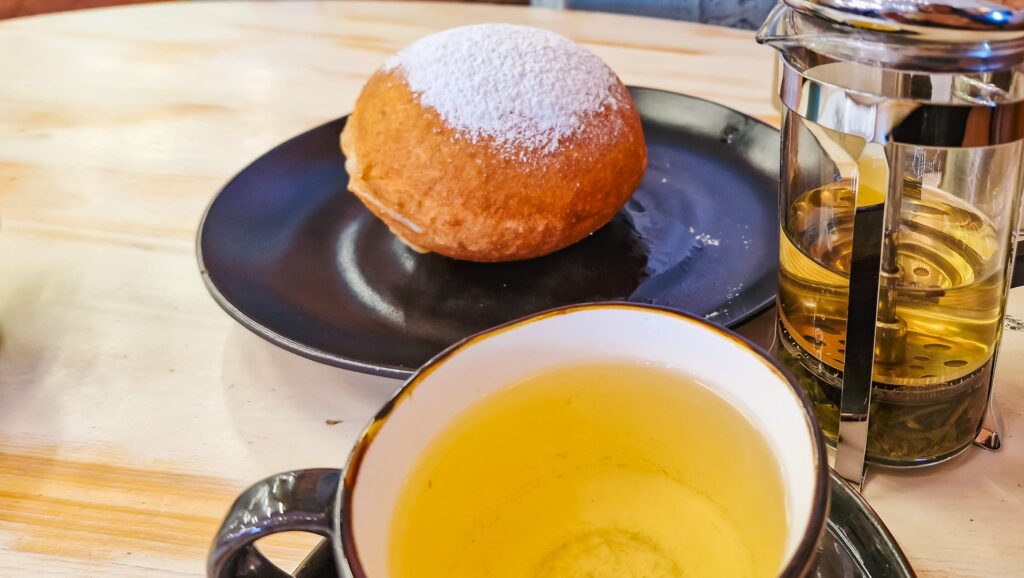
Finally, after much wandering and sightseeing, you should absolutely treat yourself to a ponchik. What’s that, you ask? Well, simply put, it’s an Armenian doughnut. Except, it’s different. The fried ball of dough is really thin, less sweet than Western doughnuts, slightly crispy, and traditionally filled with vanilla custard cream.
Ponchik Monchik is Gyumri’s iconic spot for ponchik and a warm tea or a fresh drink if you’re visiting in the summer. The café is right in Vardanants Square, and it has a cozy atmosphere. Ponchiks are always freshly made, and the drinks are also great!
Honestly, your trip to Gyumri would be incomplete without a stop by Ponchik Monchik. Not to mention that a ponchik will only set you back a few hundred dram, usually under 1€/1$. Aside from vanilla custard, they also have ponchik with Nutella and strawberry jam.
Bonus: The Iron Fountain
This is another spot I didn’t manage to see on my short stay in Gyumri, but I read a lot about it, and it’s in my “must-see” list. The Iron Fountain, also known as the “UFO fountain” due to its futuristic shape, used to stand in the Polytechnic University of Gyumri campus, surrounded by green areas.
The Soviet-era fountain survived the 1988 earthquake, but then fell into disuse and was never restored. Nowadays, it’s another reminder of the devastating earthquake, but also a symbol of resilience. Who knows, maybe one day it will be restored! The fountain is a bit far from the city center, so you may want to take a taxi or public transportation to get there.
Practical Tips for Visiting Gyumri
Now that we’ve covered the things to do in Gyumri, let me give you some practical tips to prepare for your trip.
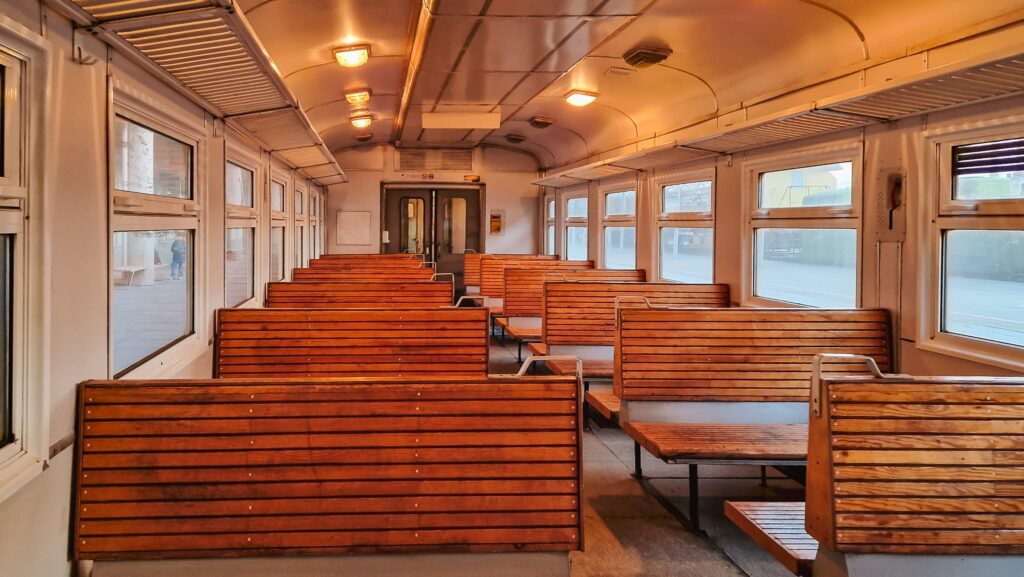
- How to get to Gyumri: The best way to travel from Yerevan to Gyumri is by train (in my opinion). There are several daily departures, and the ride takes about 3 hours and is very scenic. Marshrutkas (minibuses) are also available, and the ride may take a little less time, but I find the train more comfortable. You can find the schedules for both trains and marshrutkas on T-Armenia. You can buy train tickets online or at the train station in Yerevan. I opted for the train station because the online booking seemed a little tricky, and I didn’t want to be bothered with it.
- Getting around: You can easily walk around the center of Gyumri. For most of the attractions I mentioned, there is no need for public transportation. If you need to reach places farther away, I recommend using a ride-hailing app like GG or Yandex Go.
- Where to stay: I recommend booking a place in the city center. Accommodation is really affordable in Gyumri, so you can easily find cheap stays within a short walking distance from Vardanants Square. I stayed at Madoyan Guest House, a cozy family-owned place in a quiet location near the city center.
- How much time to stay: I recommend spending at least one night in Gyumri to explore the city properly. I spent two nights, arriving in the late afternoon and departing early in the morning two days later, which left me with 1.5 days to explore. If you’re short on time, you could also do Gyumri as a day trip from Yerevan. This group tour is a great option, allowing you to check the highlights.
- Best time to visit: Gyumri is one of those places you can visit year-round. However, summers can be pretty hot, so shoulder seasons are typically better. Winters can be quite cold, but definitely atmospheric. I visited in early November, and there were very few tourists, which I particularly enjoyed.
More from Armenia
If you came across this blog, chances are you’ll also visit Armenia’s capital. So, make sure to read my article on the best things to do in Yerevan and, if you’re planning a longer trip in the Caucasus, check out my blog post on traveling from Tbilisi to Yerevan by train.
I hope this guide will help you make the most of Gyumri! Enjoy this lovely, underrated Armenian city!
Travel Resources
Here’s a list of my go-to travel resources for Armenia, including some I’ve already mentioned throughout this article.
| Website/App | Category | Description | Book Here |
|---|---|---|---|
| Booking.com | Accommodation | My favorite website for great accommodations for different budgets. | Find a Place |
| Kiwi.com | Flights | My new favorite platform for finding affordable flights. | Find Flights |
| Omio | Transportation | You can book everything from buses and trains to ferry rides. | Transportation |
| SafetyWing | Insurance | One of the best travel medical insurances for frequent travelers. | Get Insured |
| GetYourGuide | Activities | My go-to platform for tours and experiences with lots of options. | Experiences |
| Viator | Activities | A great alternative for activities all over the world. | Experiences |
| GuruWalk | Free tours | A great platform for free walking tours (tipping is recommended). | Book a tour |
| DiscoverCars | Car rental | My go-to platform for car rental anywhere in the world. | Rent a Car |
| Airalo | eSIM | My favorite app for buying digital SIM cards when traveling abroad. | Get an eSIM |
| Saily | eSIM | A great alternative to Airalo, with cheaper plans in some destinations. | Get an eSIM |
| Xe | Currency | A currency converter showing real-time rates. Website or app. | Get Xe App |
| Maps.me | Navigation | My favorite navigation app for hiking trails and remote areas. | Get Maps |
| GG | Ride hailing | The best ride-hailing app for Yerevan, Armenia. | Book a ride |
Pin this for later!