The sulfur baths are a must-try activity in Tbilisi, the capital of Georgia. Keep reading to know what to expect and some insights from my visit to Chreli Abano.
This page contains affiliate links. If you buy through these links, I may receive a small commission, at no additional cost to you. I only recommend products or services I have tried and/or find useful and reliable.
I visited Tbilisi in October 2024, and even before my trip, I knew I wanted to experience the famous sulfur baths. Naturally, I went down a rabbit hole, researching the various bathhouses and offerings, from public baths to private ones, from the most iconic ones to the lesser-known, hidden gems.
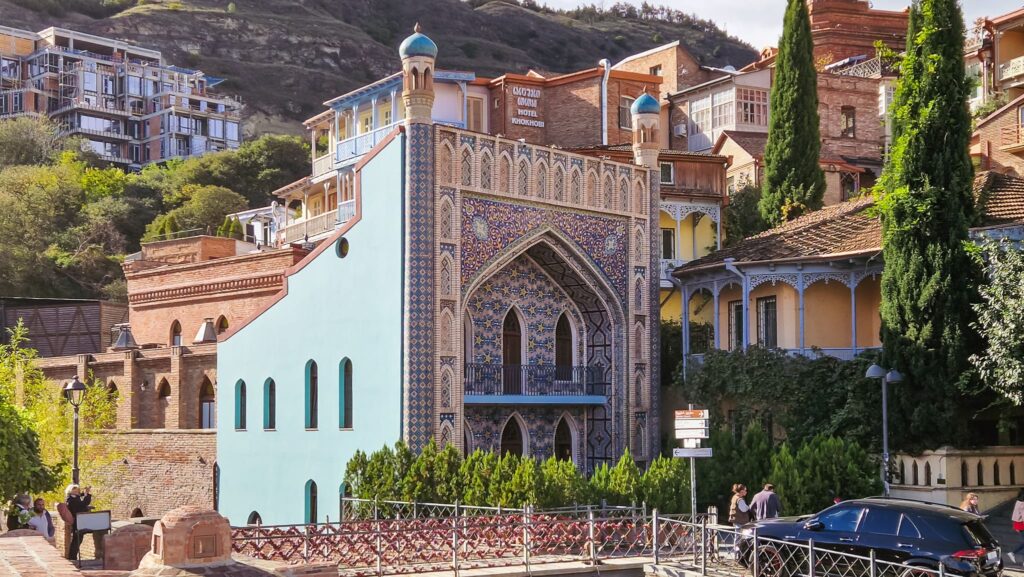
When I finally made it to Tbilisi, it took me one look at Chreli Abano to know I wanted to experience that one! The building is among the most recognizable ones in Tbilisi, with a beautifully decorated façade with Persian influences. The colorful tiles and oriental shapes make the bathhouse stand out even among the other colorful buildings of Abanotubani.
This article will focus on my experience at Chreli Abano, which I hope will be useful for your trip to Tbilisi. However, I want to give you some cool historical facts about the sulfur baths tradition in Tbilisi, and I’ll also share other bathhouses you can visit in the Georgian capital.
A brief history of sulfur baths in Tbilisi
I learned the first notions of Tbilisi’s history on a free walking tour I joined on my first day in the city. I wanted to start my week-long visit with an overview of Old Town Tbilisi, and a walking tour seemed like a great idea. I booked this tour on GuruWalk, but there are several other options.
The natural hot springs in the area inspired the name of the city. Tbilisi literally translates to “place of warmth”, from the Georgian word tpili, which means warm. In fact, the original name was Tpilisi until 1936, when the Soviet Union changed it to Tbilisi.
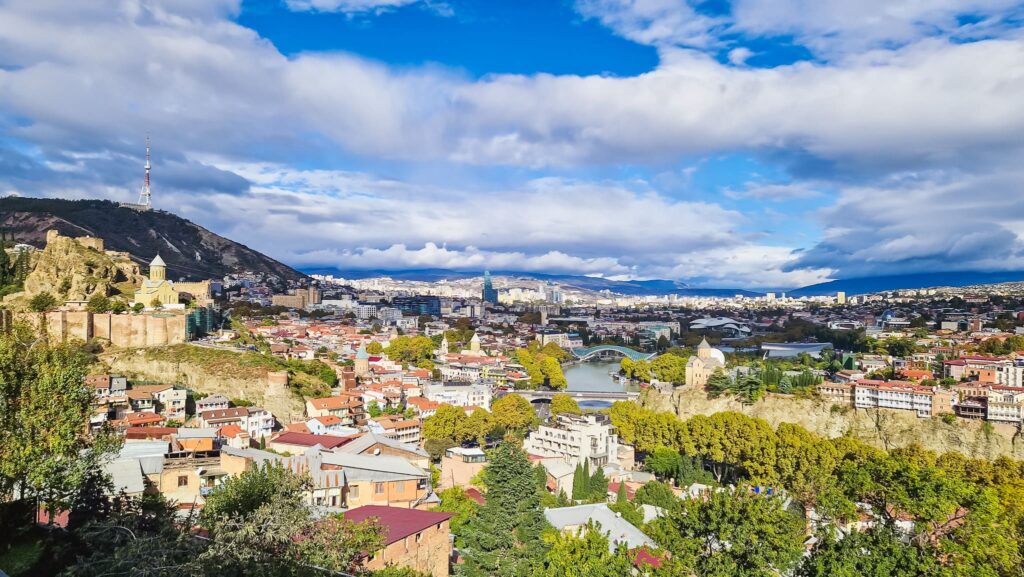
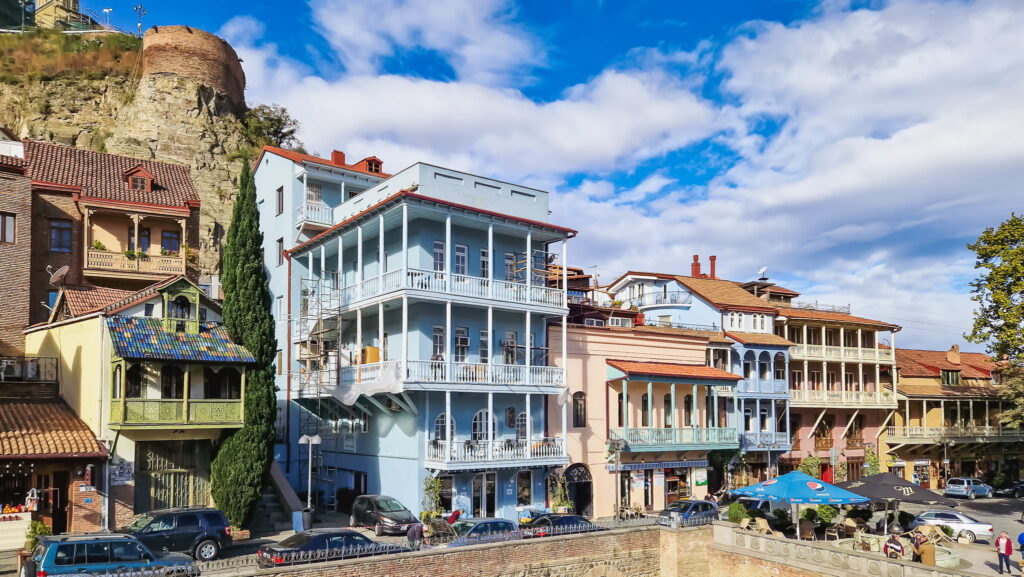
Most bathhouses are in the district of Abanotubani, which unsurprisingly translates to “bath district” (abano means bathhouse, and ubani means district). Abanotubani is Tbilisi’s historic neighborhood, linked to the foundation of Tbilisi in the 5th century.
Two different legends surround the foundation of Tbilisi, both involving King Vakhtang I Gorgasali. According to one version, he discovered the area when his falcon, while chasing a pheasant, fell into a hot water spring. Another version has him on a hunting trip and shooting a deer that fell in a hot spring and miraculously healed. The conclusion remains the same: the king orders a city to be built there, naming it Tbilisi.
By the 13th century, there were 65 sulfur baths in Abanotubani. Even Marco Polo described them in his book, The Travels of Marco Polo, mentioning their therapeutic properties. But besides the therapeutic aspect, they served as social hubs where citizens would meet and chat.
Some bathhouses still operational today date to the 17th and 18th centuries, including Chreli Abano and King Erekle’s Bath. Over the centuries, many notable figures visited them, including Alexander Pushkin, Alexandre Dumas, and Anton Chekhov.
What to expect at a Tbilisi sulfur bath
The first thing to know about sulfur baths in Tbilisi is that there are two types: public and private baths. As you can imagine, public baths are cheaper than private ones, but it also means you need to be comfortable being naked (or nearly) in the common areas. They are, obviously, sex segregated.
Only a couple of public bathhouses are still operational in Tbilisi, so the majority offer a variety of private rooms ranging in size and comfort. Public baths are as cheap as 5 lari/hour (€1.55 or US$1.85), while the smallest private rooms start at around 70 lari/hour (€22 or US$26). You can also book larger private rooms if you’re traveling with a group or family.
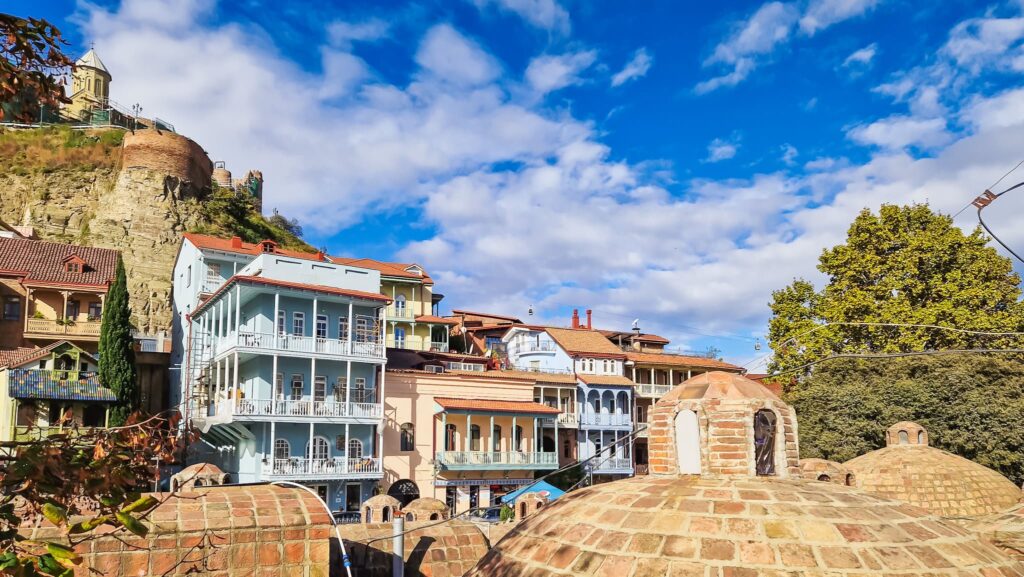
The sulfur baths in Abanotubani have unique architecture, with dome-shaped, brick structures rising from the ground. Take a stroll around the neighborhood to admire these structures that allow the light to enter and the steam to exit.
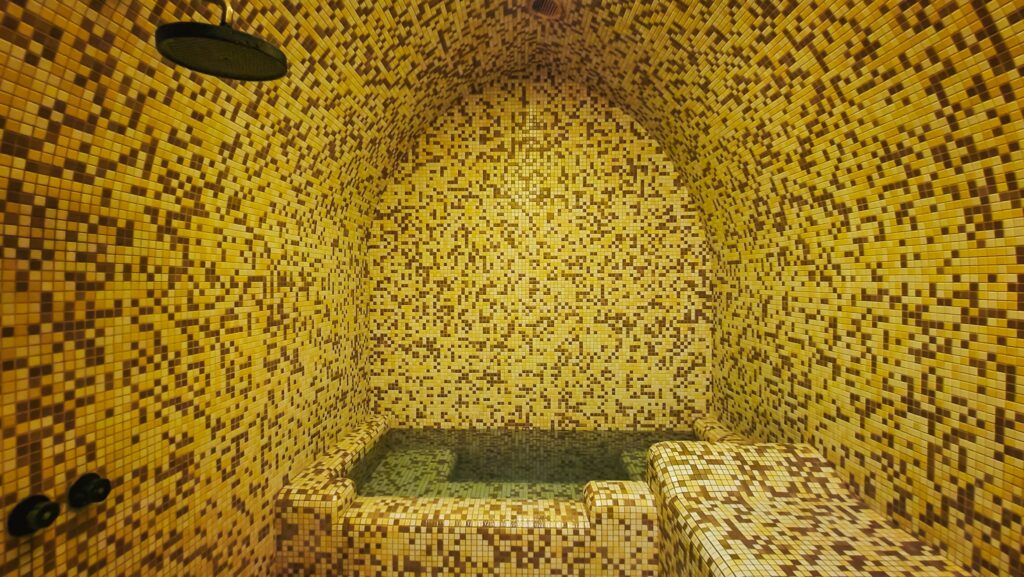
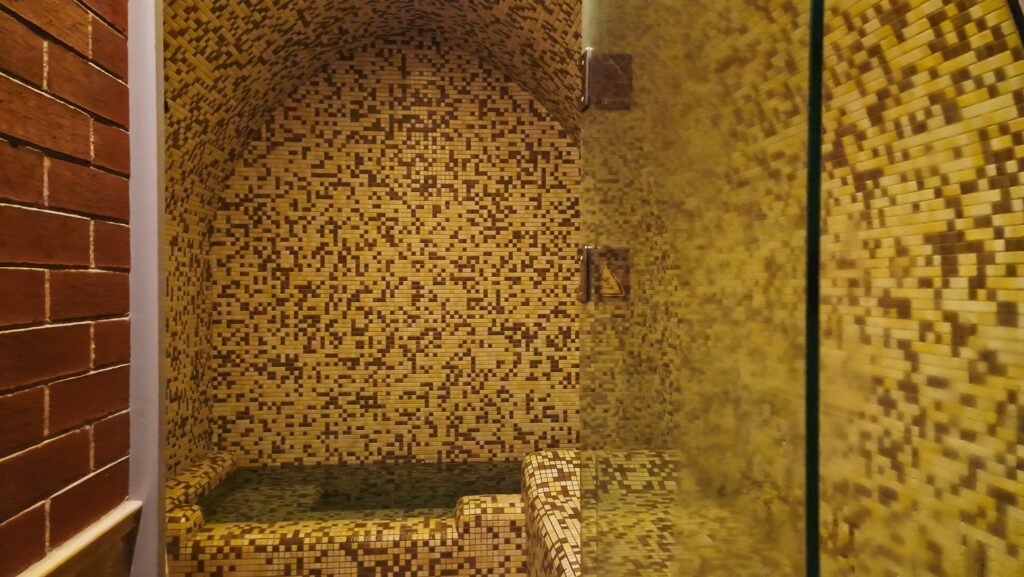
The private rooms offer various features, from the most basic ones, including only a shower, hot pool, and stone bed for the scrub, to the lavish, luxury rooms with a cold plunge, Finnish and/or Turkish sauna, and a sitting area.
All bathhouses offer the option to have a kisi (or kisa) scrub, which costs 10/20 lari, always to be paid in cash to the Mekise, aka the person performing the scrub. This vigorous scrub removes dead skin and leaves your skin soft and smooth. However, it is pretty intense! But I’ll tell you more about that in a minute.
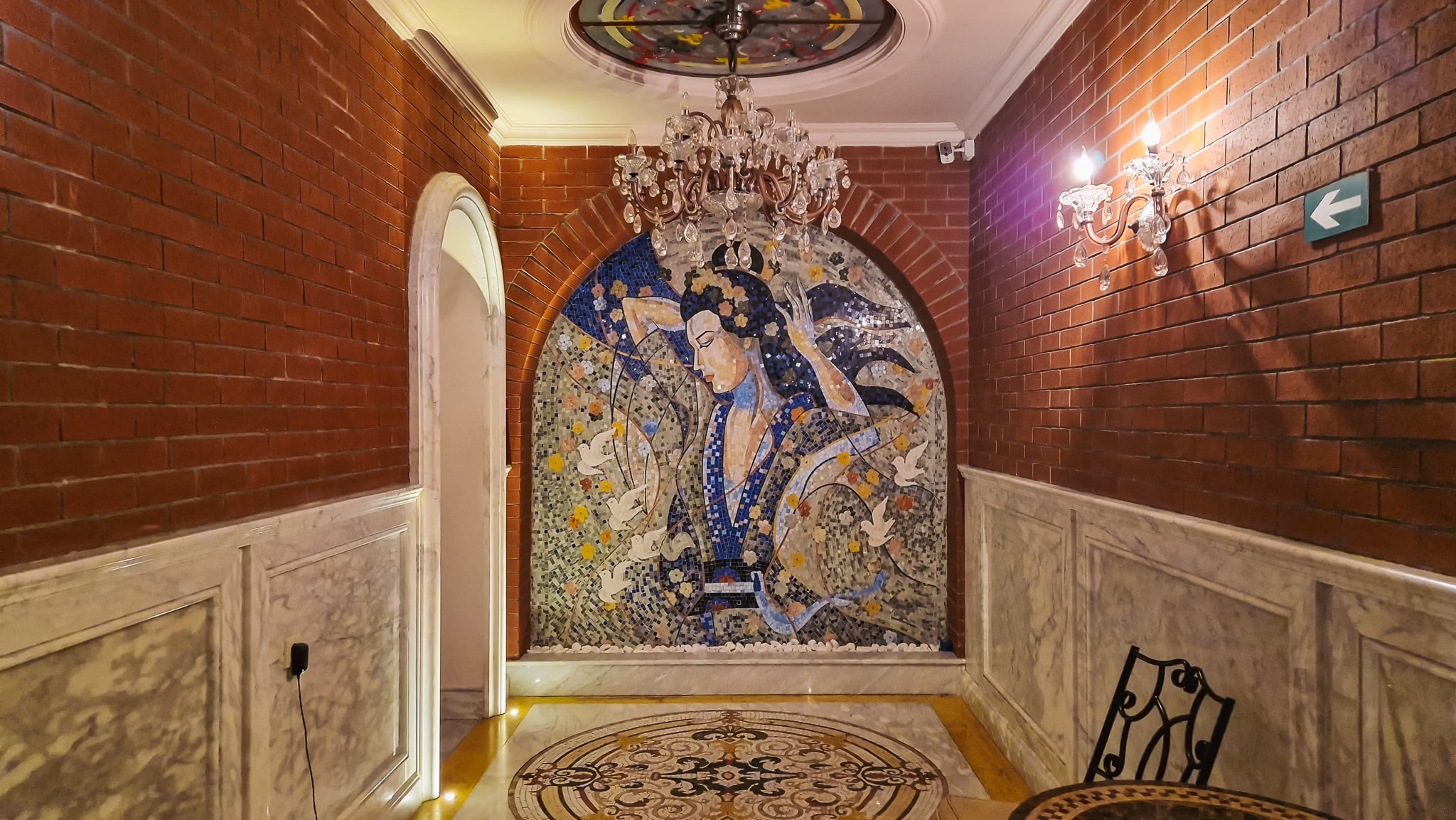
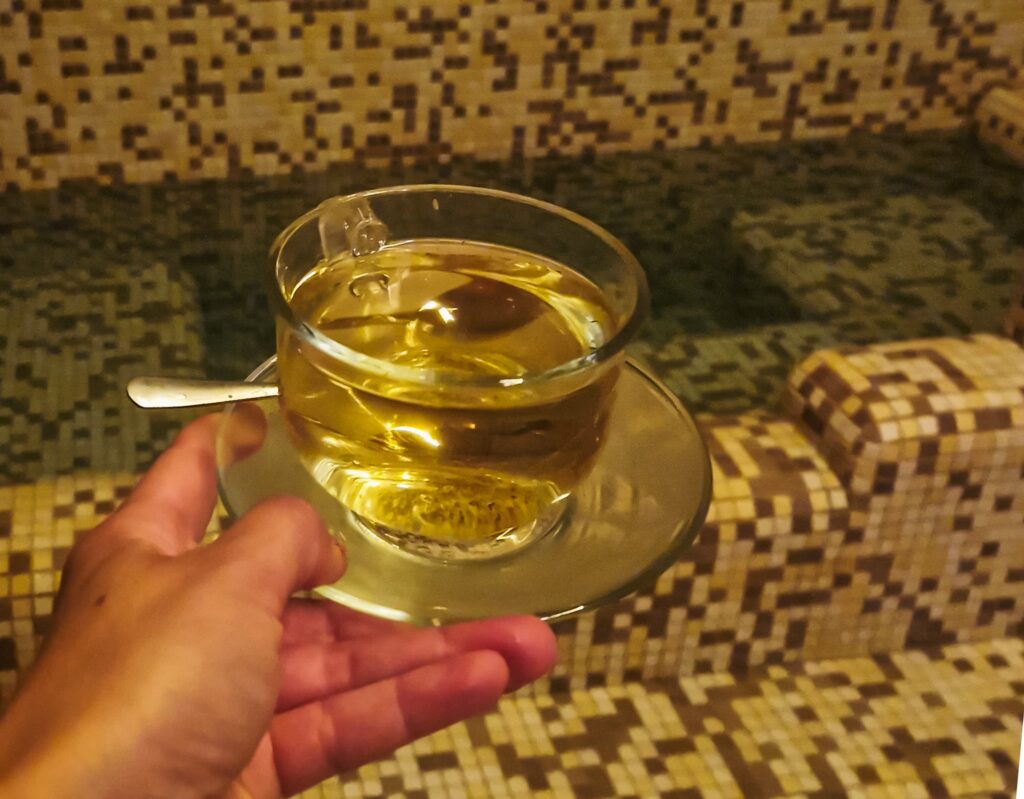
Lastly, bathhouses often have marble floors and beautiful decorative mosaics, which add to the atmosphere. Pair that with the steamy rooms, and it’s a beautiful and cozy environment to spend an hour or two. It’s even better on a cold fall or winter day.
Experiencing the sulfur bath at Chreli Abano
Now, let’s talk about Chreli Abano and my experience here. As I mentioned, the bathhouse dates to the 18th century and is right at the heart of Abanotubani. The colorful tiled façade is impossible to miss and a testament to its name, which translates to Colorful Bath.
The bathhouse, also known as Orbeliani Baths, was renovated and reopened in 2017. In addition to the sulfur baths, it has a spa section offering different kinds of massages.
I booked my experience at Chreli Abano online on the official website a couple of days before. I was in Tbilisi in October, and it wasn’t too hard to find an available spot, but it’s worth booking a few days in advance, so you can choose your preferred time.
I opted for one of the small rooms for one or two people since I was on my own. I also ordered a cup of tea and signed up for the kisa scrub. I was determined to have the full experience. I only booked the room for one hour, and it was okay, though maybe two hours would be even better, especially if you’re with other people.
The room I chose was 100 lari, and I paid extra for the tea, single-use scrub glove, and the kisa scrub that is always paid in lari directly to the Mekise. In total, I spent around 150 lari, so about €47 or US$55. However, I saw that now the room prices start at 130 lari. It’s still worth it in my opinion! After all, it’s not something you get to experience anywhere.
The kisa scrub
Although I enjoyed soaking in the sulfur-rich water, the kisa scrub was the highlight of this experience. A woman knocked at the door about twenty minutes in and ordered me to lie on the stone bed. She then grabbed the scrubbing glove and proceeded to vigorously scrub every inch of my body, the dead skin gathering in little clumps all over.
After thoroughly scrubbing me, front and back, she grabbed what looked like a pillowcase, added some water, which produced lots of foam, and covered me in it. Finally, she ordered me to sit up and went on to rinse me. Once I was squeaky clean and smooth as a newborn, I gave her the 20 lari, thanked her with a “Madloba,” and off she went. (Madloba means thank you in Georgian, write that one down ;))
I soaked in the sulfur water a little longer, with a cold rinse every now and then to contrast the overheating and lowering blood pressure, then the phone rang. It was the reception, informing me I only had 10 minutes left. It was time to shower and abandon my little steamy bubble and return to reality.
I must say, even with the vigorous and quite invasive scrubbing, I really enjoyed the sulfur bath. Once I was back out in the crisp autumn air, I was already craving another soak in the warm water and enveloping steam. There’s at least one reason to go back to Tbilisi.
Practical tips for visiting a sulfur bath in Tbilisi
I hope I’ve convinced you to experience Tbilisi’s sulfur baths. Now I want to give you some practical tips so you can make the most of this experience.
- Booking: The popular baths, like Chreli Abano, can get busy, so it’s worth booking in advance. Book online when possible or call ahead.
- Best time to go: I went in the evening to relax after a day of work and sightseeing. I think that’s the best option. Fall and winter are great seasons as you get to escape the cold, but you can enjoy the baths in any season.
- Duration: Most people stay one hour and that’s usually enough. Maybe book two hours if you’re with a group of friends.
- What to bring: You can rent or purchase pretty much everything, but I recommend bringing a towel, flip-flops, and a swimsuit (though you can be naked in private rooms, it’s worth having briefs/bikini bottoms for the kisa scrub).
- Health note: Sulfur is said to help circulation, skin, and joints, but the baths are not recommended if you have blood pressure issues or heart conditions. They’re also not recommended during pregnancy.
- Jewelry: Sulfur may damage jewelry, particularly silver, so remove everything before entering the pool (or even better, leave it in your room).
- Cost: Private rooms start at around 70 lari/hour, while public baths start at 5 lari/hour. Some places allow you to pay for the room online, but you will pay any extras when you arrive. Most importantly, you ALWAYS need to bring cash for the kisa scrub (exact change is preferred, so inquire in advance, typically between 10 and 20 lari). For simplicity, remember the ratio is roughly 3 lari for 1€.
Other sulfur bath options in Tbilisi
I would have loved to try more bathhouses, and that is one of the main reasons why I want to return to Tbilisi. Aside from Chreli Abano, here are the other options you can try:
- Gulo’s Thermal Spa
- King Erekle’s Bath
- Bohema Bath
- Royal Bath-House
- Sulphur Bathhouse №5 (Public bath)
What else to do in Tbilisi
Trying the sulfur baths is only one of the many activities to try in Tbilisi. Georgia’s capital has lots of attractions and activities to offer, from exploring Old Town Tbilisi to sampling Georgian wine and visiting landmarks like the Chronicle of Georgia and Mother of Georgia.
I have a detailed article with 30 things to do in Tbilisi, including lots of free landmarks and activities. There are enough options to fill a full week in the city. Not to mention the amazing day trips you can take from Tbilisi (blog coming soon).
After visiting Tbilisi, I highly recommend spending a few days in the smaller but delightful Kutaisi. I spent a week there and loved it! I have a couple of articles for that too:
Lastly, if you’re looking for some affordable or mid-range hotel recommendations in Tbilisi, here are some cool options in central areas:
BUDGET
Cheap beds in hostels
MID-RANGE
Comfy private rooms
Or just browse more hotels on the map below:
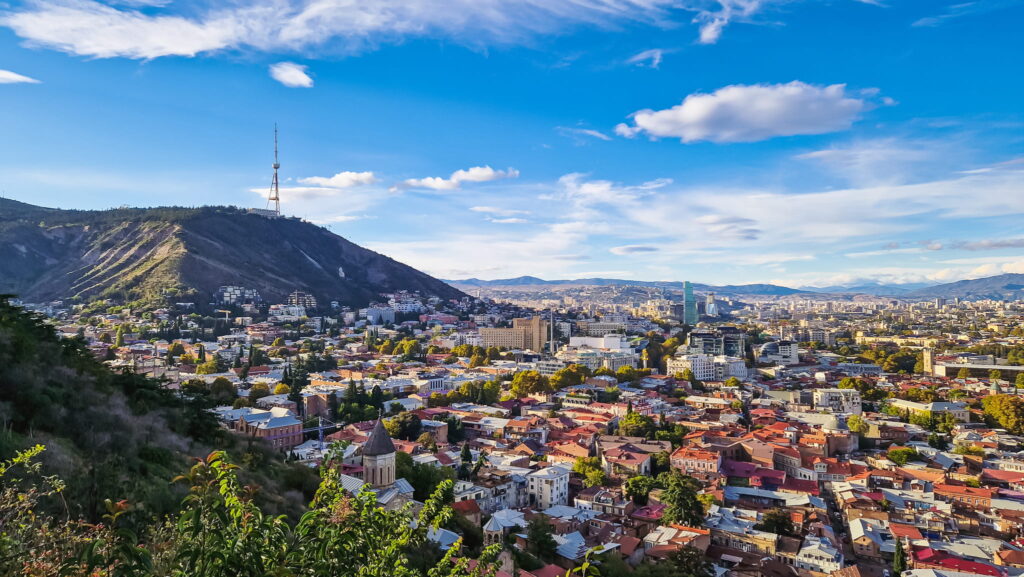
That’s about it! I truly hope you’ll get to explore this wonderful city and enjoy its iconic sulfur baths. Now, it’s time to start planning your trip to Tbilisi!
Travel Resources
I’ll leave you with a list of my favorite travel planning tools! Enjoy Tbilisi’s sulfur baths!
| Website/App | Category | Description | Book Here |
|---|---|---|---|
| Booking.com | Accommodation | My favorite website for great accommodations for different budgets. | Find a Place |
| Kiwi.com | Flights | My new favorite platform for finding affordable flights. | Find Flights |
| Omio | Transportation | You can book everything from buses and trains to ferry rides. | Transportation |
| SafetyWing | Insurance | One of the best travel medical insurances for frequent travelers. | Get Insured |
| Manawa | Activities | A great platform to book activities and adventures with local hosts. | Find Activities |
| GetYourGuide | Activities | My go-to platform for tours and experiences with lots of options. | Experiences |
| Viator | Activities | A great alternative for activities all over the world. | Experiences |
| GuruWalk | Free tours | A great platform for free walking tours (tipping is recommended). | Book a tour |
| DiscoverCars | Car rental | My go-to platform for car rental anywhere in the world. | Rent a Car |
| Airalo | eSIM | My favorite app for buying digital SIM cards when traveling abroad. | Get an eSIM |
| Saily | eSIM | A great alternative to Airalo, with cheaper plans in some destinations. | Get an eSIM |
| Xe | Currency | A currency converter showing real-time rates. Website or app. | Get Xe App |
| Maps.me | Navigation | My favorite navigation app for hiking trails and remote areas. | Get Maps |
Pin this for later!