If you visit Tbilisi, Georgia, a wine tour to the Kakheti wine region is a must! Read on to find out how to book and what to expect. Plus some cool facts about Georgian wine.
This page contains affiliate links. If you buy through these links, I may receive a small commission, at no additional cost to you. I only recommend products or services I have tried and/or find useful and reliable.
The winemaking tradition is so deeply rooted in Georgian culture that you simply cannot travel to Tbilisi and not learn about it. There are plenty of opportunities to do so through guided tours and wine tastings within Tbilisi, but a day trip to a wine region is an even better option.
Kakheti is Georgia’s most iconic wine region and among the easiest to visit on a day trip from Tbilisi. You can choose from countless available tours to explore the wine region, learn about Georgia’s winemaking history, and sample traditional wines.
I joined a tour through GetYourGuide, and it was an affordable and well-paced trip. While it was one of those popular tours that stop in the same spots as about a dozen others, it served as an amazing introduction to Georgian wine. Plus, it was a great opportunity to make some new friends with whom I later explored more of Tbilisi.
If I were to go back, I’d look into a smaller tour, possibly with some lesser-known, local producers. But for a first timer in Georgia traveling on a budget, it was amazing! The exact tour I joined is no longer bookable through GetYourGuide, but below you can find a few options with a similar itinerary.
Why visit Kakheti in Georgia?
Georgia has several wine regions, the most renowned being Kakheti, which takes up the eastern part of the country and stretches from the border with Russia to the north to the border with Azerbaijan to the east and south. Other notable regions are Kartli, Imereti, Racha-Lechkhumi, Adjara, Meskheti, and Samegrelo.
The tradition of winemaking in Georgia is said to have originated precisely in Kakheti around 8000 years ago. That means Georgia has been making wine way longer than Italy and France, which often take the stage when discussing famous wines. But while a Chianti or a Bordeaux may be known even to the most inexperienced of wine drinkers, way fewer have ever heard of Saperavi or Rkatsiteli.
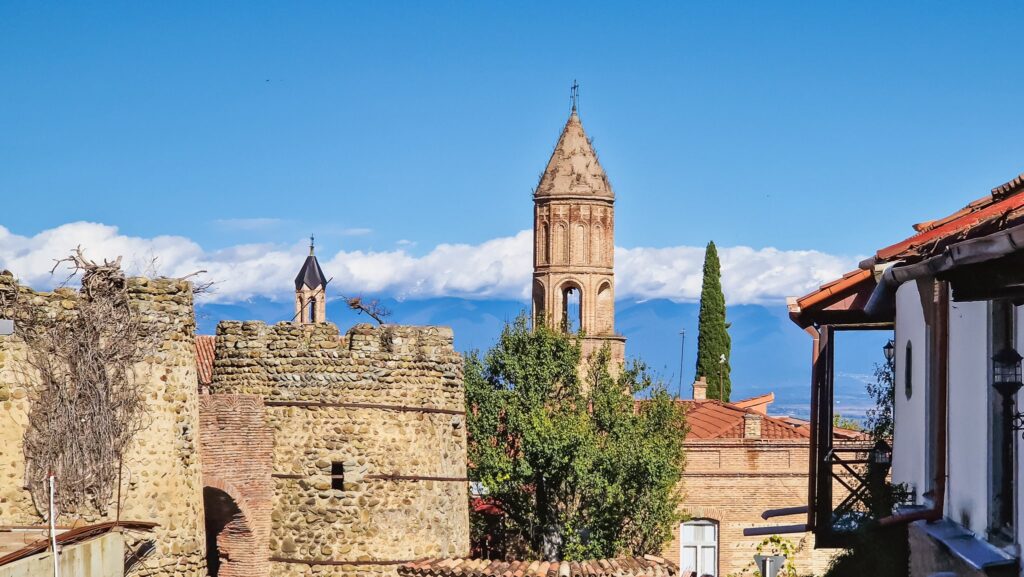
Georgia is the most underrated destination for wine lovers, but one that will certainly fascinate even those less experienced in the noble art of wine savoring, like myself. While I’ve learned a fair bit about wine for reasons unrelated to travel, I don’t nurture a passion for the drink. To be fair, I have little love for any alcoholic beverage, but I do love to learn about the culture of the places I visit. And if wine is a part of it, you bet I’ll be the first in line to take a sip while listening to the history of qvevri, Mtsvane, and other wine-related tongue twisters.
So is a visit to Kakheti a must? Absolutely. Whether you are a wine enthusiast or just enjoy traveling to new places, you should absolutely take a trip to Georgia’s famed wine region. Aside from the wine tasting and lessons, you’ll admire incredible landscapes, stop by beautiful monasteries, and visit charming little villages. This trip is as much a feast for the eyes as it is for the palate.

About the Kakheti wine tour from Tbilisi
Like I said, there are countless day trips from Tbilisi to Kakheti. If you’re traveling on a budget and want to meet some people, a tour through GetYourGuide or Viator is the ideal option. The tours are affordable and well-paced, and they typically start early in the morning and end in the evening.
Each tour typically includes transportation in a van, a professional guide who will share cool facts along the way, wine and chacha tastings, and demonstrations of churchkhela and traditional bread making. You may also try other traditional delicacies like honey and cheese.
Tours are usually in small groups, although many stop in the same places along the way, so some spots will inevitably be a little crowded. However, it’s a stress-free way to explore multiple stops along the way.
Stops & highlights of the Kakheti day trip
Different tours may have slightly different itineraries, but they typically include the same things. I’ll tell you about my tour’s itinerary, so you can know what to expect.
I woke up early to head to the meeting point near the Opera and Ballet Theater, where I met my guide and the rest of the group. We drove for just over an hour before our first stop near the small village of Badiauri. That’s where we kicked off with the first wine and chacha tasting of the day at only 10.30 AM. If you’re not familiar with it, chacha is a very strong liquor. What a way to start the day!
In the same spot, we attended a little churchkhela-making workshop. Churchkhela is a traditional Georgian dessert made with walnuts placed on a string and dipped in thickened grape juice. They call it Georgian Snickers, but I think it’s even better! And if you’re up for it, you can even take a shot at making one yourself.
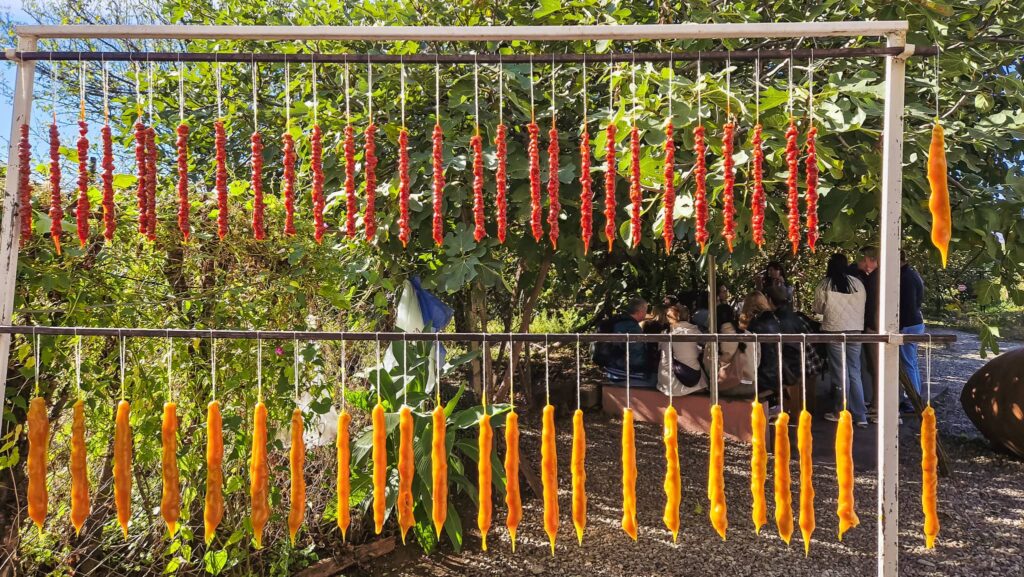
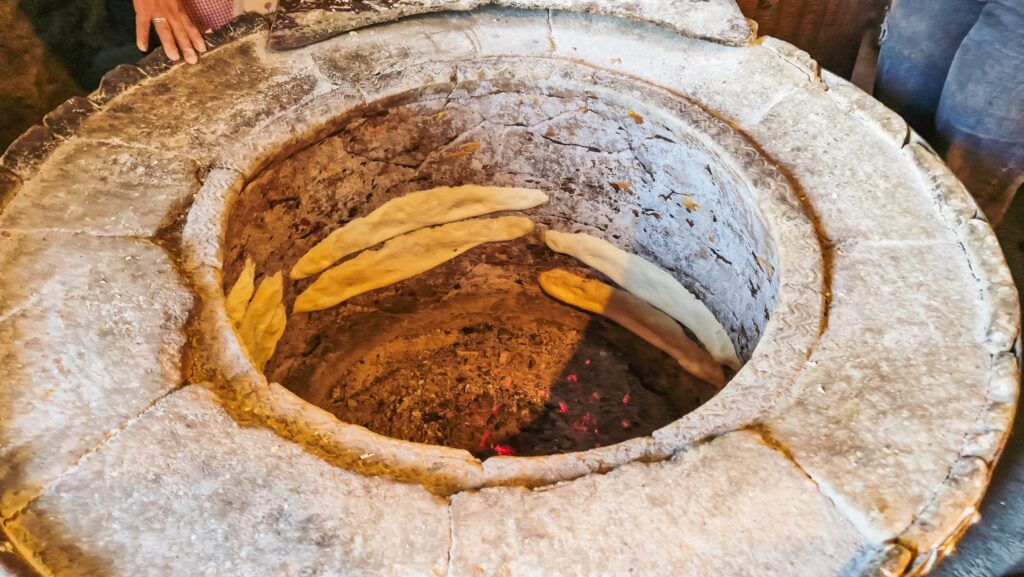
We then stopped in a couple more spots to try more churchkhela, sample local honey, and watch shotis puri (mother’s bread) being baked in a deep, circular clay oven. I’m telling you, this plain bread has no business being this good! If that’s included in your tour, be sure to buy one! It’s only a couple of lari, so less than 1€/1$. In the same spot, you could also try local cheese.
After sampling churchkhela, wine, chacha, honey, bread, and cheese, we hopped back in the van and drove to the next location: Monastery of St. Nino at Bodbe. The 9th-century Orthodox offers stunning views over the surrounding landscape. We stopped there for about half an hour, then headed to our lunch stop.
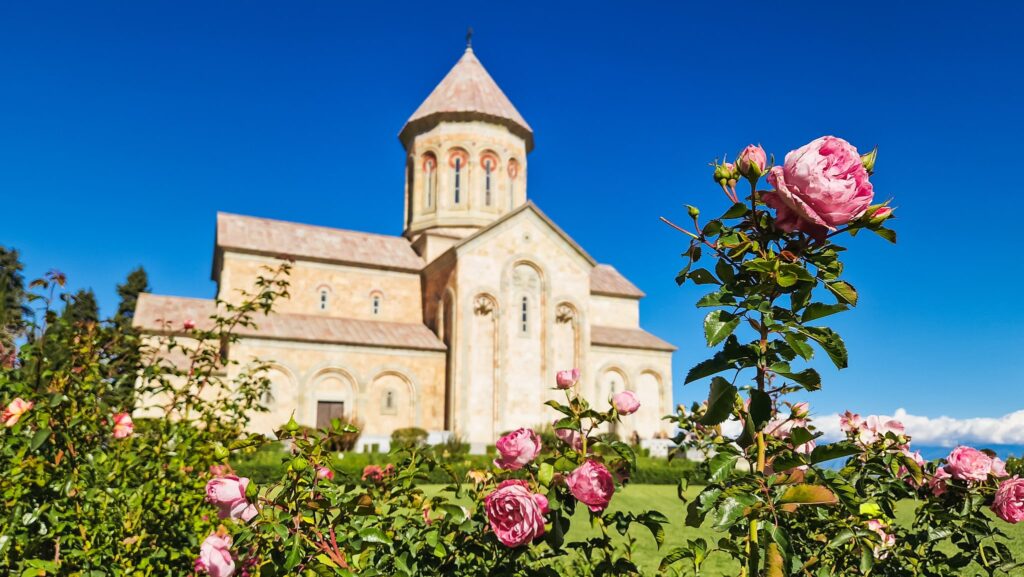
The next stop was the charming town of Sighnaghi, where we stopped at a local restaurant for lunch, followed by another wine tasting. At this one, we learned a lot about winemaking, understanding the distinction between the traditional Georgian method in a qvevri and the so-called European method. More on that in a bit.
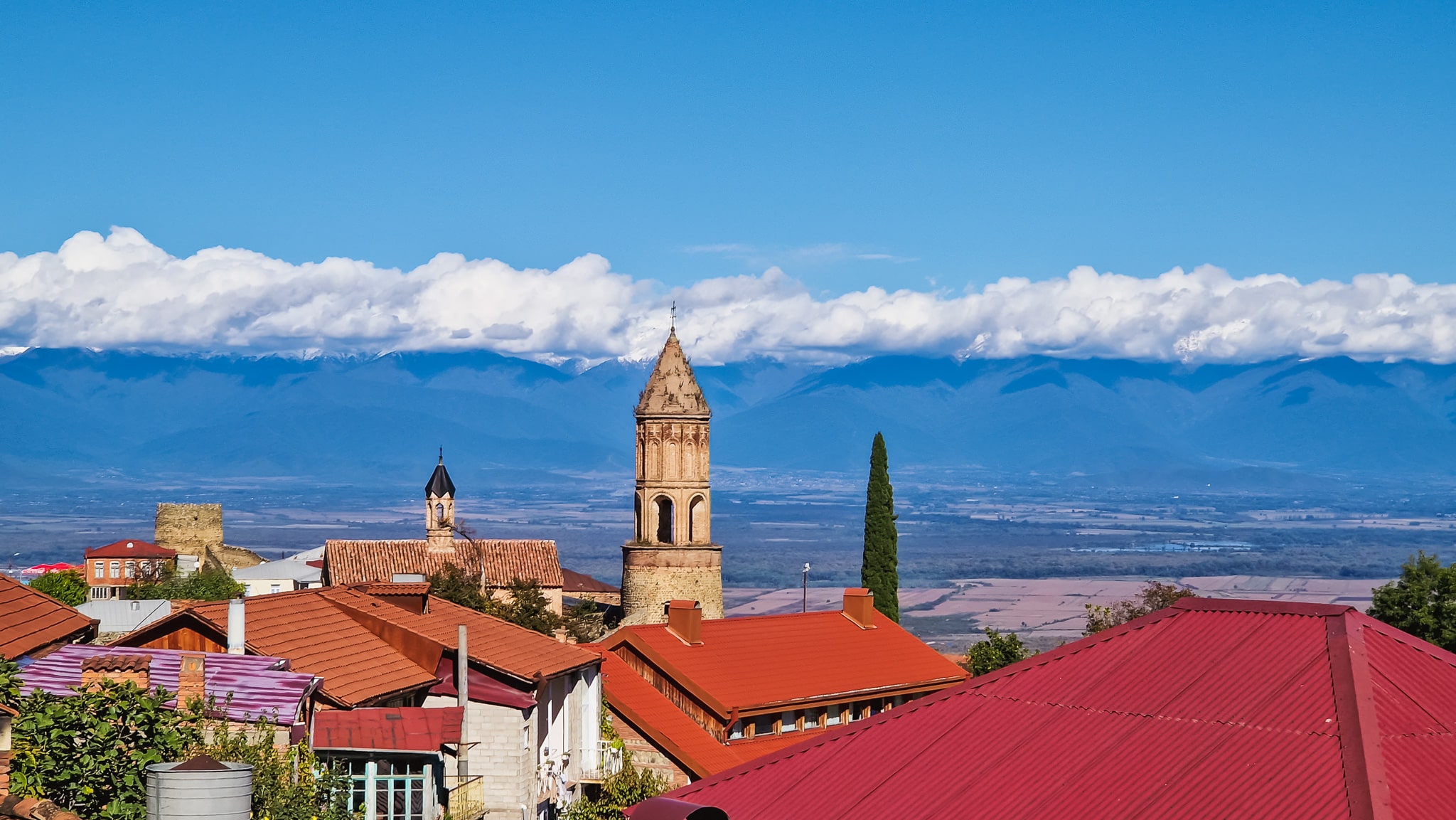
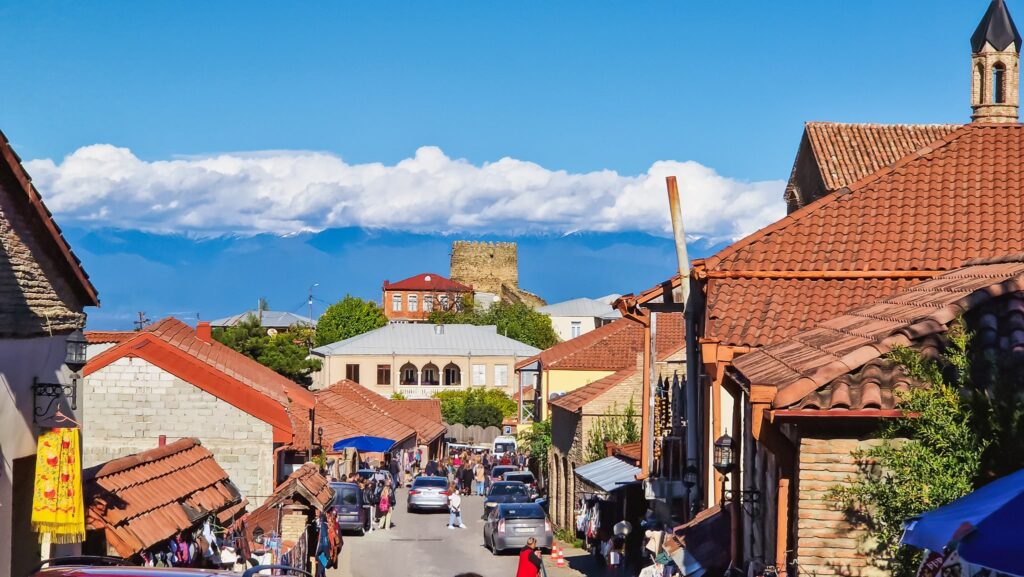
After the wine tasting, which also included various types of chacha, we explored the town for a little while and walked along the old city wall. The 18th-century fortification offers spectacular views over the Alazani Valley and the Greater Caucasus Mountains in the distance.
For our last stop, we drove to the lovely Telavi, the main city in the Kakheti region. With its colorful houses with traditional balconies, narrow streets, and beautiful squares, the city is a must-see in Georgia. Of the whole tour, this was the one part that felt rushed, as I would have loved to spend more time exploring the city. That definitely goes on my must-see list for my next trip to Georgia.
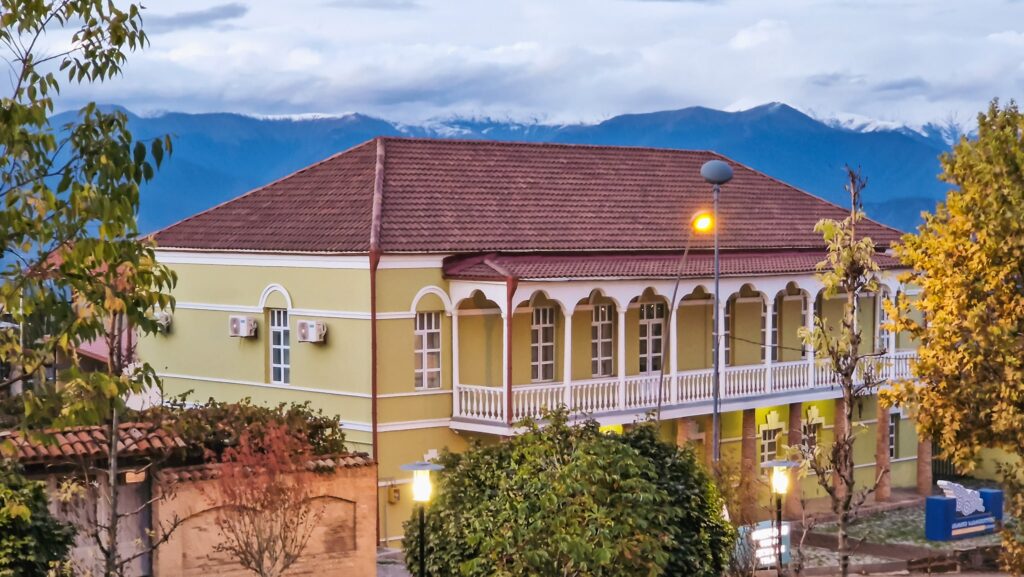
We only went for a brief walk and stopped by the Giant Plane Tree before hopping back in the van to return to Tbilisi. It was a long and intense travel day, but it was certainly one of the highlights of my stay in Tbilisi.
What makes Georgian wine special?
Kakheti wine, and Georgian wine in general, is special because it follows an ancient tradition dating back 8000 years. The traditional method consists of placing the crushed grapes with the skin inside the qvevri, a clay vessel buried underground, where the grapes are left to ferment for around six months without touching them.
Georgians still use the traditional method for a portion of the wine production, though they have also adopted the “European” method in steel tanks or oak barrels. Usually, the traditional method is used for dry wines, while the European method is used for all types of wine. During the tasting, we tried different wine varieties made with both methods.
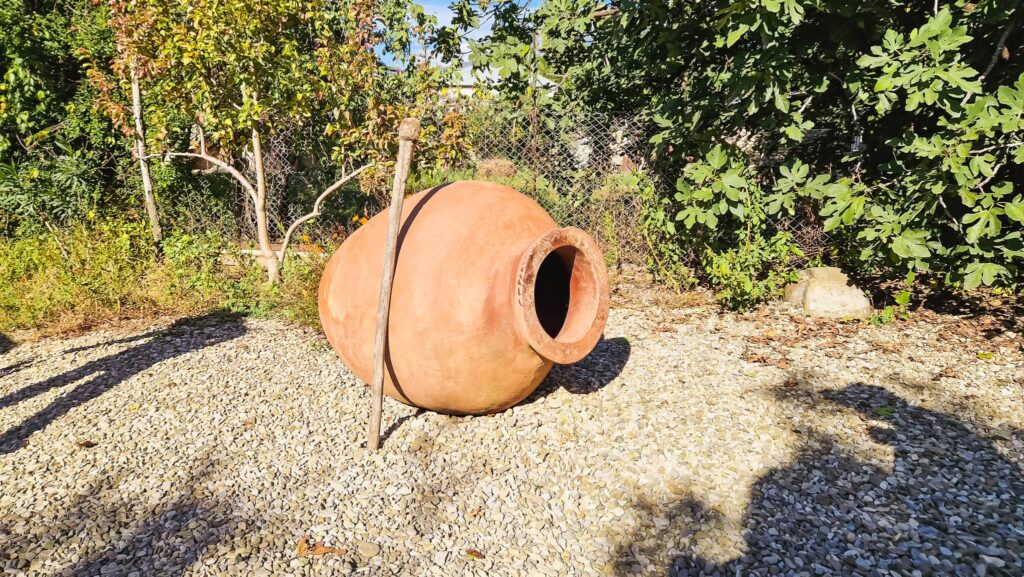
A unique feature of Georgian wine made in the qvevri is its amber color. This is also known as orange or amber wine. The color is due to the long fermentation with skin contact in the qvevri.
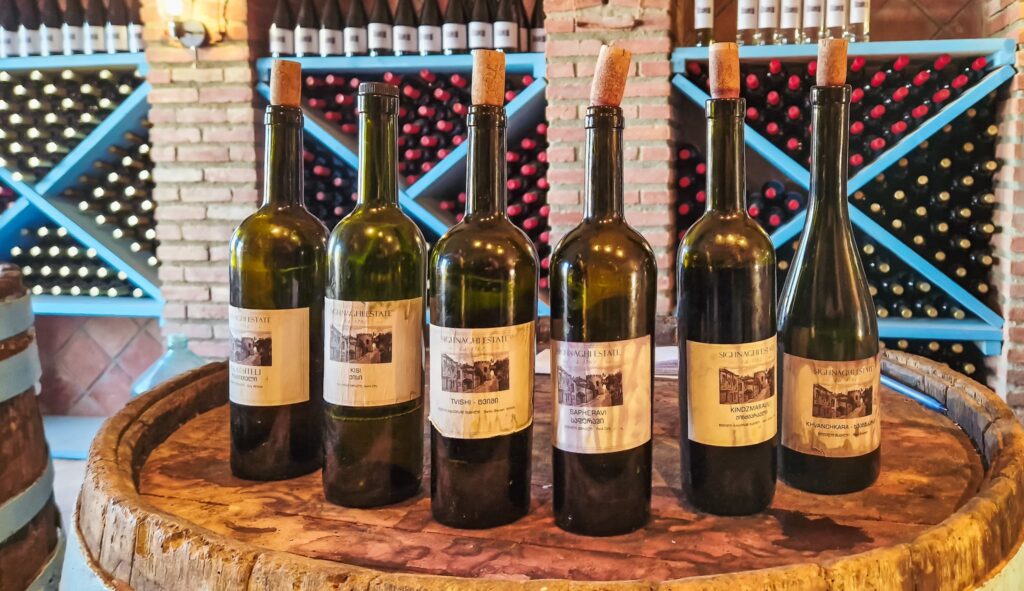
During the tour, we got to try a variety of red and white wines, both dry and sweet or semi-sweet. From Kakheti, we tried Rkatsiteli, Saperavi, Kisi, and Kindzmarauli. The latter is a semi-sweet wine from a micro-zone in Kakheti and was my favorite red.
While most wines were made with grapes from the Kakheti region, we also tried a couple of varieties from Racha-Lechkhumi, particularly the Khvanchkara and Tvishi. This is a much smaller region in north-western Georgia that only produces a small quantity of wine. The semi-sweet Tvishi was another of my favorites.
Practical tips for your wine tour to Kakheti
I’m no wine expert, so I’m not the right person to go more in-depth into the wine history and culture in Georgia. But if you’re like me and are curious to learn more about Georgia’s wine regions, I hope I’ve convinced you it’s worth making the trip!
To conclude, let’s go over a few tips for booking and making the most of your wine tour in Kakheti, Georgia.
- Best season to visit: You can do a tour year-round, but the best time is from late spring to early autumn. The autumn harvest, known as Rtveli, is especially festive and takes place between September and October, depending on the region.
- What’s included: Most tours include transportation, several wine and chacha tastings, a churchkhela making demonstration, and a few snacks along the way. You’ll also typically get free water.
- What to bring: I recommend bringing some water, cash (especially small change) to buy things like homemade bread, and a scarf to cover your head when entering the churches (for the ladies).
- When to book: You’ll usually find plenty of tours available for booking, even the day before, so there’s no need to book too early. I recommend checking the weather forecast and booking a couple of days before.
- Where to book: You have plenty of choices, from booking platforms like GetYourGuide and Viator to your accommodation in Tbilisi. I booked through GetYourGuide and had a great experience. Just make sure to check what is included and what is not, and factor in the extra expenses (for instance, lunch wasn’t included in my tour).
- Average cost: While you may find really cheap tours online, around 15€/20€ per person, these often don’t include lunch and some small activities. I’d say you should expect to pay between 35€ and 60€ (40-70 USD) for a small group tour.
I’ll share the most popular GetYourGuide tours below again. These all have very similar itineraries to the one I joined.
What else to do in Tbilisi
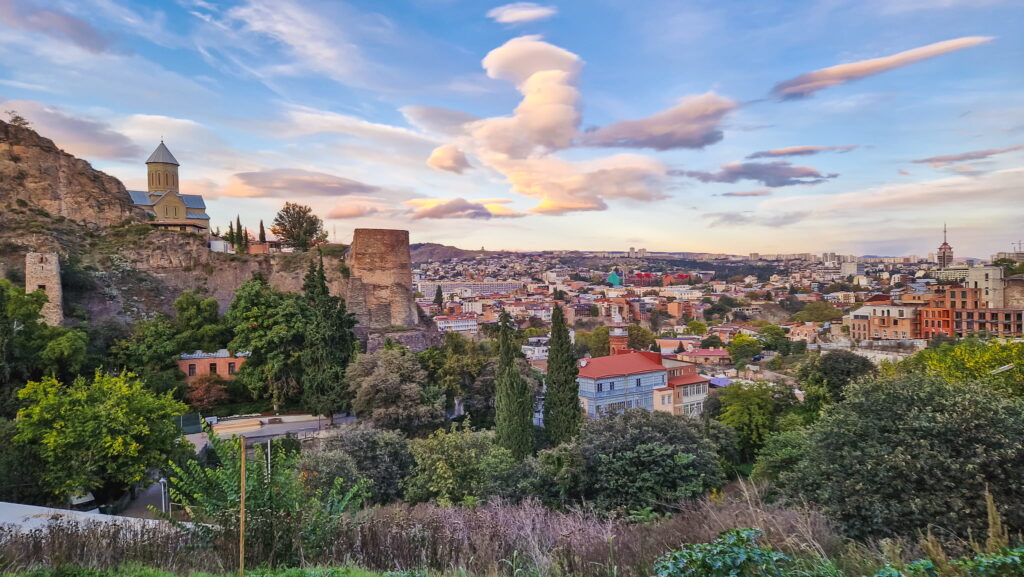
Tbilisi is an incredible city with lots of things to do, so you can easily spend a few weeks without running out of activities. I spent a full week in Georgia’s capital, and I feel like I barely scratched the surface. Even so, I think I managed to explore a lot of the city and its must-see spots, so I wrote an article with 30 things to do in Tbilisi, including lots of free activities!
Besides the wine tour, you can also join other day trips from Tbilisi. One I really loved is to Kazbegi, a mountainous region in northern Georgia, close to the Russian border. I’ll have a dedicated article for that soon, but in the meantime, you can check this tour.
Lastly, I recommend also visiting the lovely Kutaisi. This much smaller city is amazing and also offers lots of opportunities for day trips to the Imereti region. I have two articles to help you explore Kutaisi:
From Georgia, I continued my trip to Armenia. There is an overnight train connecting Tbilisi to Armenia’s capital, Yerevan. If you’re interested in doing the same, check out my blog about the overnight train from Tbilisi to Yerevan.
Flying to and staying in Tbilisi
When I visited Georgia, I flew into Kutaisi, since there are lots of low-cost options available from many European cities. However, you can also find lots of affordable flights to Tbilisi. The Shota Rustaveli Tbilisi International Airport is only 17 kilometers from the city center and is connected by bus line 337, taxi, or ride-sharing (I recommend Bolt).
Here you can browse flights to Tbilisi:
As for accommodation options in Tbilisi, I highly recommend staying somewhere around Old Tbilisi, ideally within walking distance from Liberty Square, which is a central spot in the city. I stayed in the Sololaki district and loved it, so I highly recommend it. I also chose a few great accommodation options you may want to check out:
BUDGET
Cheap beds in hostels
MID-RANGE
Comfy private rooms
Alternatively, you can browse for more options below:
Travel resources
I’ve already mentioned some of the tools and platforms I use during my trips throughout the article. Below is a list of my go-to websites and apps. I use these on all my trips:
| Website/App | Category | Description | Book Here |
|---|---|---|---|
| Booking.com | Accommodation | My favorite website for great accommodations for different budgets. | Find a Place |
| Kiwi.com | Flights | My new favorite platform for finding affordable flights. | Find Flights |
| Omio | Transportation | You can book everything from buses and trains to ferry rides. | Transportation |
| SafetyWing | Insurance | One of the best travel medical insurances for frequent travelers. | Get Insured |
| Manawa | Activities | A great platform to book activities and adventures with local hosts. | Find Activities |
| GetYourGuide | Activities | My go-to platform for tours and experiences with lots of options. | Experiences |
| Viator | Activities | A great alternative for activities all over the world. | Experiences |
| GuruWalk | Free tours | A great platform for free walking tours (tipping is recommended). | Book a tour |
| DiscoverCars | Car rental | My go-to platform for car rental anywhere in the world. | Rent a Car |
| Airalo | eSIM | My favorite app for buying digital SIM cards when traveling abroad. | Get an eSIM |
| Saily | eSIM | A great alternative to Airalo, with cheaper plans in some destinations. | Get an eSIM |
| Xe | Currency | A currency converter showing real-time rates. Website or app. | Get Xe App |
| Maps.me | Navigation | My favorite navigation app for hiking trails and remote areas. | Get Maps |
Pin this for later!