If you’re wondering whether or not to visit Brasov in Romania, I have quite a few reasons for you. Read on to discover what this beautiful city in Transylvania has to offer.
This page contains affiliate links. If you buy through these links, I may receive a small commission, at no additional cost to you. I only recommend products or services I have tried and/or find useful and reliable.
- Story of my life
- A little history
- Getting to and staying in Brasov
- Getting around Brasov
- 1. Less popular than Bucharest, so less touristy
- 2. Located in Transylvania, Europe's most fascinating region
- 3. Dracula's Castle is just a half-hour drive away
- 4. The beautiful old town
- 5. The Black Church
- 6. Peles Castle, one hour away from the city center
- 7. Cantacuzino Castle, Netflix's Wednesday filming location
- 8. Tampa: a mountain in the very heart of the city
- 9. Home of the first Romanian school
- 10. Schei, the ethnically Bulgarian neighborhood
- 11. Rope Street is the narrowest street in Romania
- 12. Beautiful skiing locations: Poiana Brasov and Predeal
- 13. Awesome views from the top
- 14. Rasnov Citadel and its legend
- 15. Amazing yet cheap food
- 16. Stunning hiking locations right outside the city
- More info for your visit to Brașov
Many people have heard of the historical and legendary region of Transylvania, but a lot fewer are familiar with one of the main cities of the region: Brașov (read Brashov). This is undoubtedly one of the most beautiful cities in Romania. It so happens that it’s also my hometown, so I might be a little bit biased here; forgive me. Still, I want to give you a few reasons to visit Brașov, my lovely hometown.
Story of my life
I moved abroad when I was fourteen, and I’ve traveled all over the world in the past decade or so. I’ve had a lot of conversations with new people who would ask where I’m from. The conversation usually goes something like:
- Them: Where are you from?
- Me: Romania
- Them: Oh, cool. Where from in Romania? Bucharest?
- Me: No, Brașov.
- Them: Ah, I see. *puzzled face*
- Me: Transylvania
- Them: Aaaaaah, Transylvania! Dracula!!!
Story of my life. At least I got to spread the knowledge a little bit. Now every person who’s met me knows about Brașov. And they know it’s the best city to visit in Romania.
A little history
First of all, it’s pronounced: Brashov. It’s also called Kronstadt in German or Corona in Latin. That means Crown City, and it’s probably derived from the old coat of arms of the city. Etymology apart, Brașov is a very old city, with the oldest traces of settlements dating back to 9500 BCE. The construction of the city itself is said to have begun in 1023, with the first walls being built.
Many settlers came to Brașov, leading to many ethnic groups living here even nowadays, in different areas of the city. There have been mostly Germans, Hungarians, Czechs, and Bulgarians. Even nowadays, the old neighborhood of Șchei is ethnically Bulgarian. That is where the first Romanian school was established, back in the 15th century.
Getting to and staying in Brasov
Until 2023, the easiest way to get to Brașov was to fly to Bucharest and go there by bus, car, or train. This is still a great option, with plenty of transport services that will pick you up at the airport and drop you at your hotel, all for around 20-25 euros one way. The alternative is to take a bus or a train from the center of Bucharest.
In June 2023, the Brașov-Ghimbav International Airport finally opened. Available flights are still limited but are expected to increase over the coming months. Check Kiwi to find affordable flights from your chosen location to either Bucharest or Brașov.
As far as accommodation goes, there is a great variety in Brașov. I generally use Booking.com to book accommodation as they provide a vast range of options for every budget. Plus, you can often find discounts. Do a quick search in the box below.
Getting around Brasov
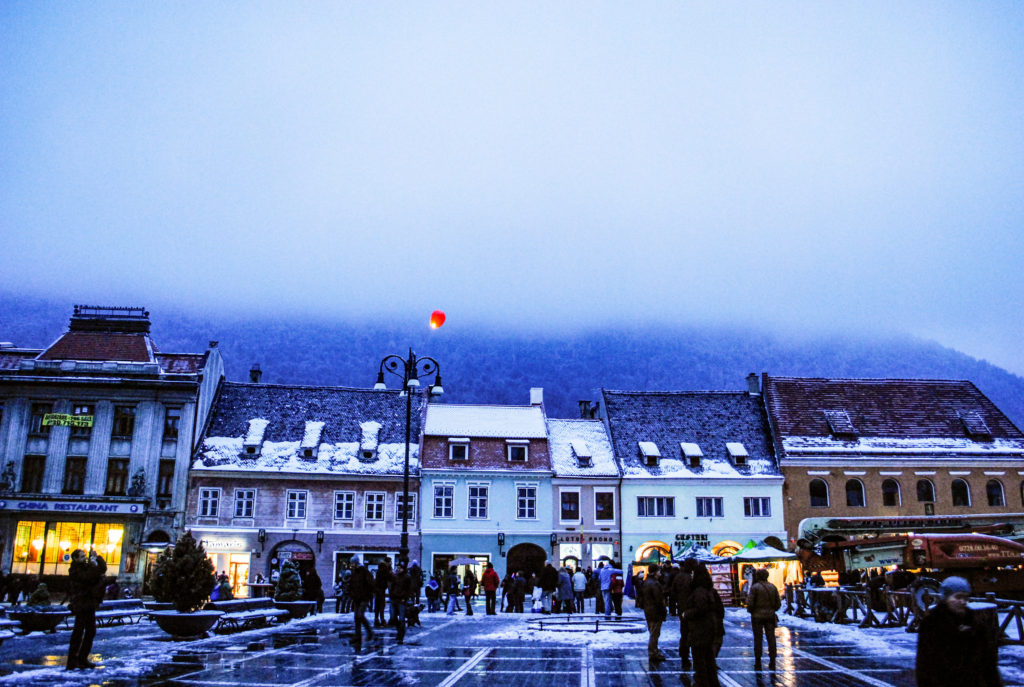
The historic center is relatively small, making it easy to explore on foot. It’s a delightful experience to walk around the cobblestone streets lined with bars and restaurants. The temperature is pleasant in the summer, and the streets are often covered in snow during the winter.
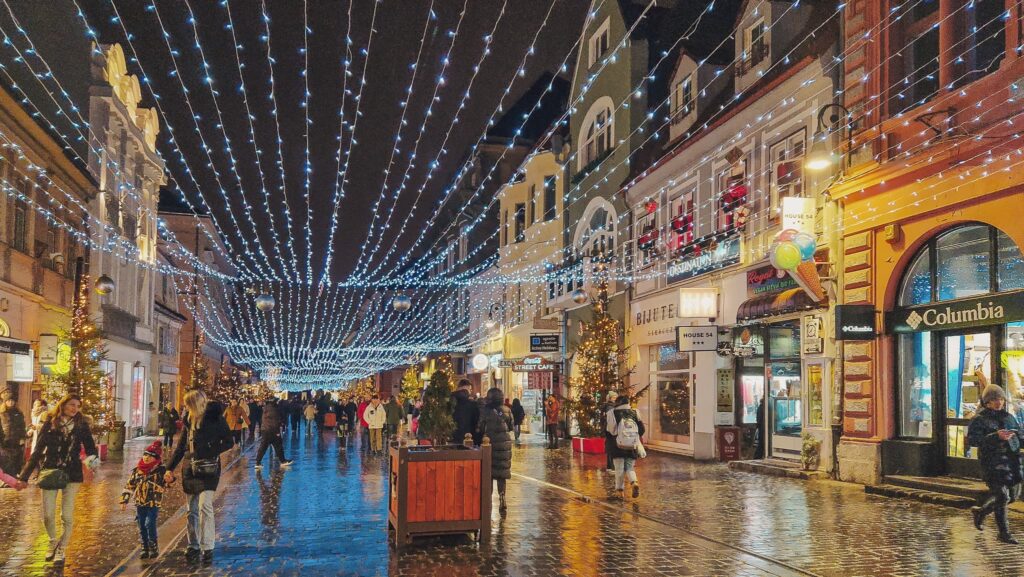
Nevertheless, and this is something I love about my hometown, public transportation is incredibly efficient. It is made up of buses and trolleybuses, but they always run on time, you get regular updates and schedules at every bus stop, and some even provide free wifi on board. In less than 30 minutes, you can go from one side of the city to the other. So feel free to book your accommodation a little outside the city center.
Find more about local transportation on the official website.
16 reasons to visit Brasov
So now it’s time to get to the point. If you aren’t part of the lucky few who have already been to Brașov, here are 16 reasons why you should consider it for the next holiday or even just a weekend getaway. And even if you have already visited, you may find some reasons to go back.
1. Less popular than Bucharest, so less touristy
Maybe it’s because most people don’t know much about it yet, but Brașov has considerably fewer tourists than Bucharest. In my opinion, it makes it even better because you can get a more local feel and avoid huge crowds. You might still find many people in some really well-known spots, but it’s manageable. If you’re not a fan of huge crowds and queues, you will be happy here.
2. Located in Transylvania, Europe’s most fascinating region
You might not know Brașov, but you surely have heard of Transylvania. The mysterious region is home to the mythological figure of Dracula. It was a historical figure, Vlad the Impaler, who inspired this myth. He was the ruler of Wallachia back in the 15th century and was known for his cruel punishments, such as impaling his enemies. Also, his father’s name was Vlad Dracul, which, in Romanian, would translate to Vlad the Devil. This name clearly contributed to his reputation.
So, history aside, the region of Transylvania is living up to its reputation, with stunning castles and beautiful nature all around. It’s located in the center of the country and surrounded by the Carpathians, the third-longest European mountain range.
3. Dracula’s Castle is just a half-hour drive away
You can reach it by car or by bus, only 30 kilometers away from Brașov. Its name is actually Bran Castle, but it is known as Dracula’s Castle.
In reality, Vlad the Impaler had little to do with the castle, as he only passed by Bran on his way to attack Brașov in 1459. The castle is connected to the figure of Dracula mostly due to Bram Stoker and his description of the castle, which somewhat matches Bran Castle.
There is, in fact, another castle where Vlad the Impaler lived and ruled, but it is now completely in ruins. This is the Poenari Castle, about 3 hours away from Brașov and near the scenic road of Transfăgărășan. Yes, the one with all the bears.
If you can’t make it to Brasov (really, what are you even doing in Romania then?), I wrote an entire article on how to visit Bran Castle from Bucharest.

4. The beautiful old town
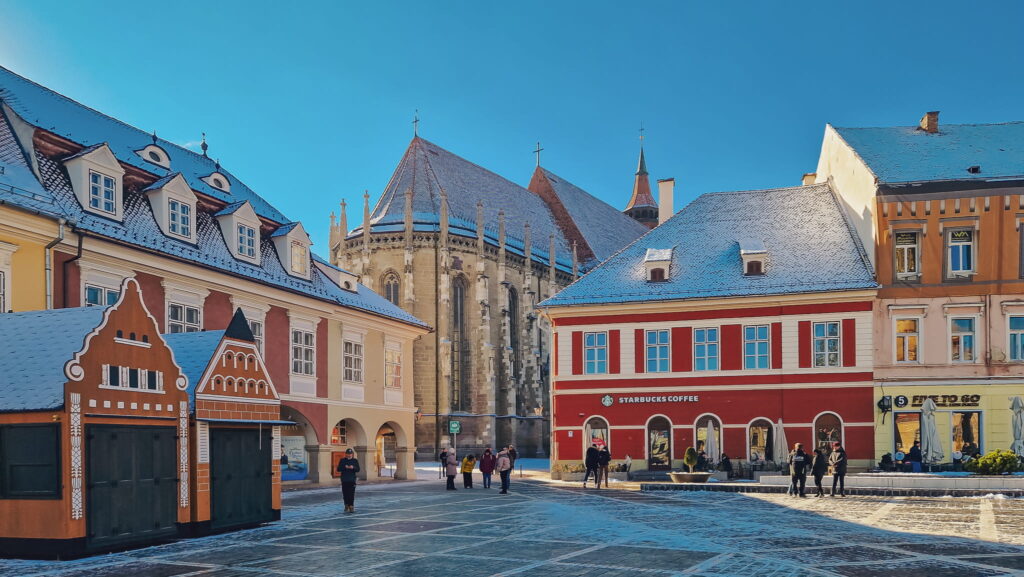
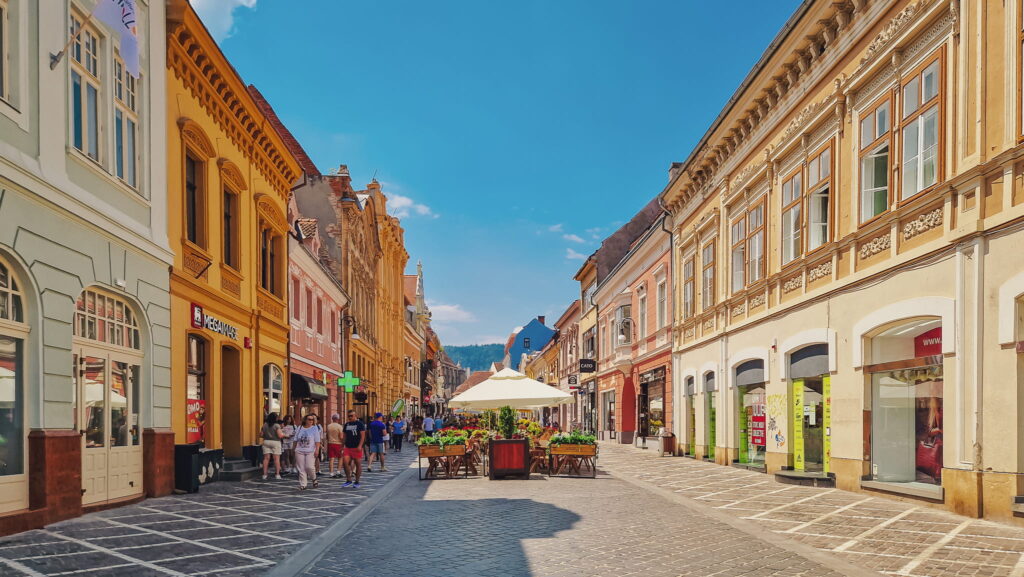
Brașov’s old town is located at the feet of the mountain Tâmpa, right in the center of the city. It is one of the seven walled citadels populated by the Saxons of Transylvania, and you can still find the walls of the citadel surrounding the center. The architecture in the old town is mostly Gothic, Baroque, and Renaissance.

The center is occupied by Council’s Square (Piața Sfatului), historically the square where weekly and annual markets took place. Depending on the period you are visiting, you might find a traditional market going on here. This is probably the most well-known and characteristic spot in town where all sorts of events take place.
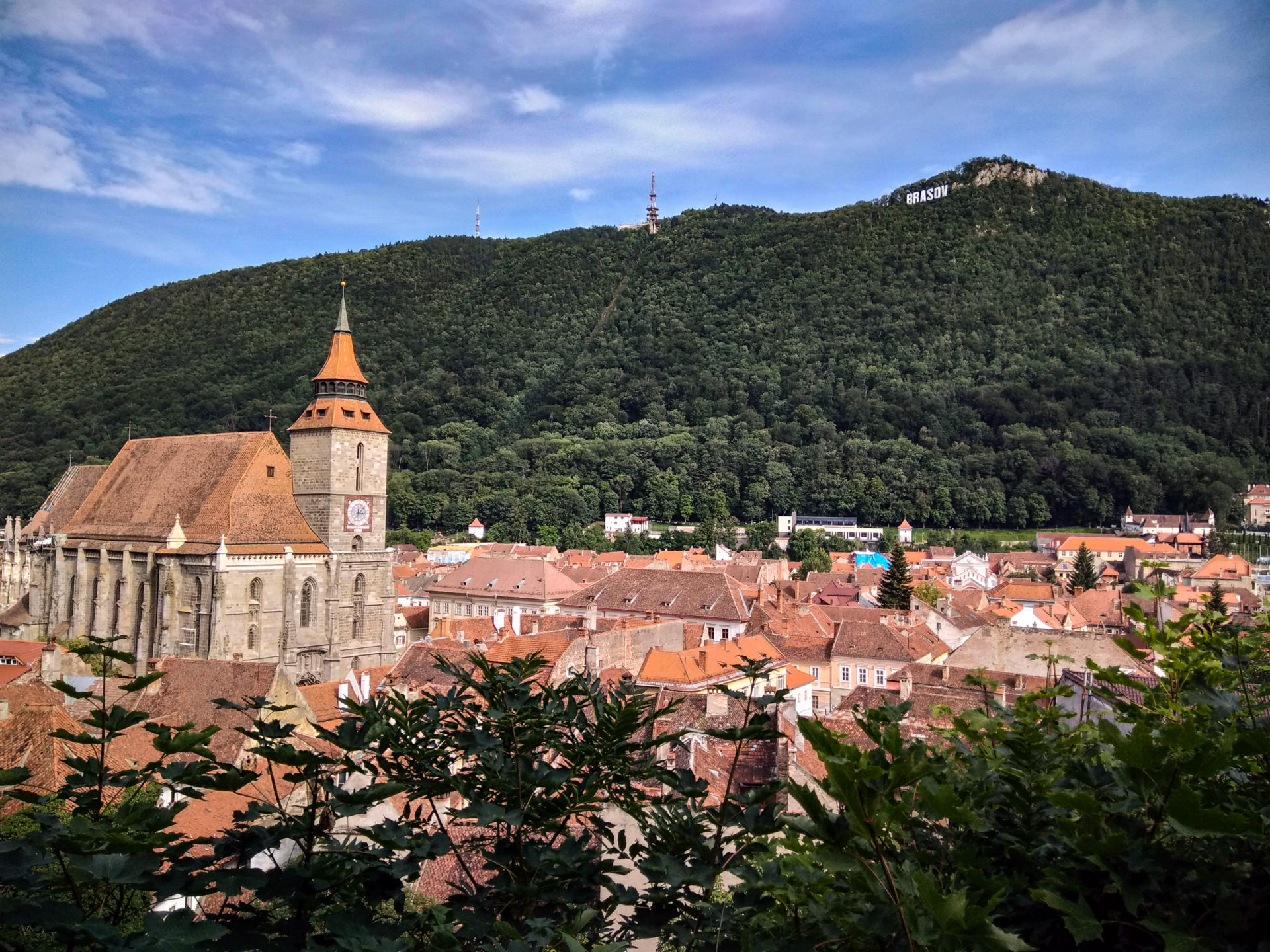
5. The Black Church
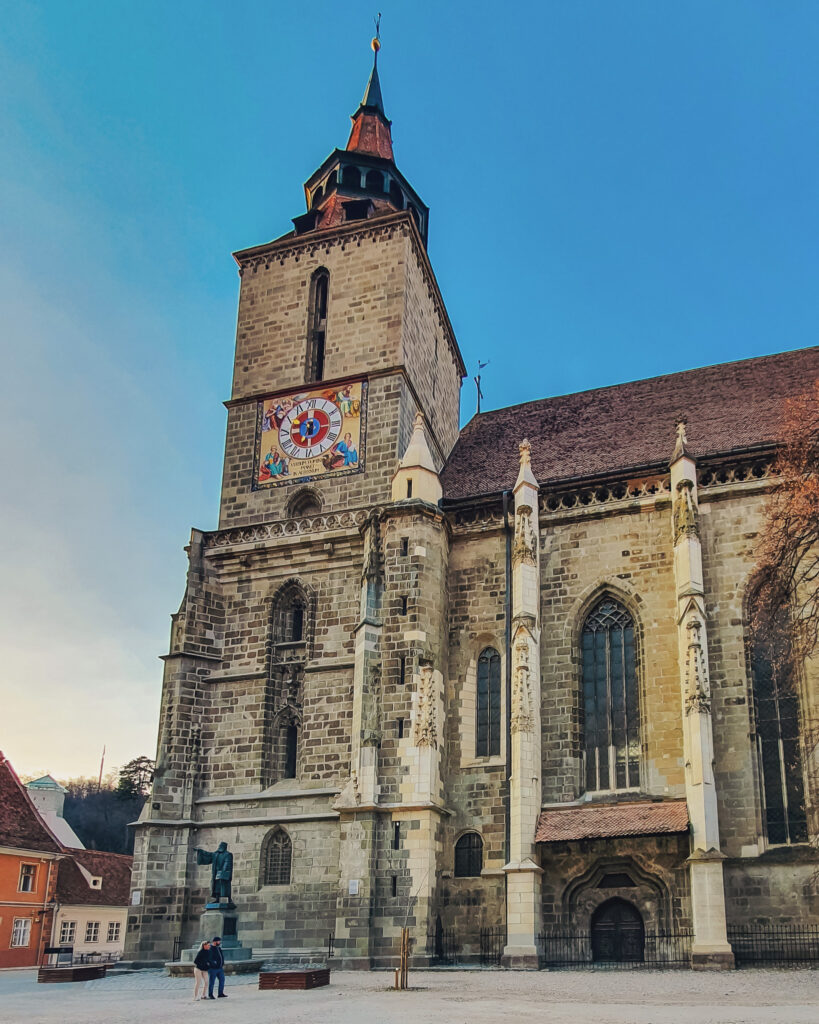
This is the biggest church in Romania and the best example of Gothic architecture in the country. Originally called the Church of Saint Mary, it got its current name after a big fire that took place in 1689 and destroyed most of the old town. The walls of the church were blackened due to the fire; therefore, it became known as the Black Church.
Due to its size, it was titled the biggest church between Vienna and Constantinopolis. You will notice it from far away, towering over the nearby Council’s square.
6. Peles Castle, one hour away from the city center
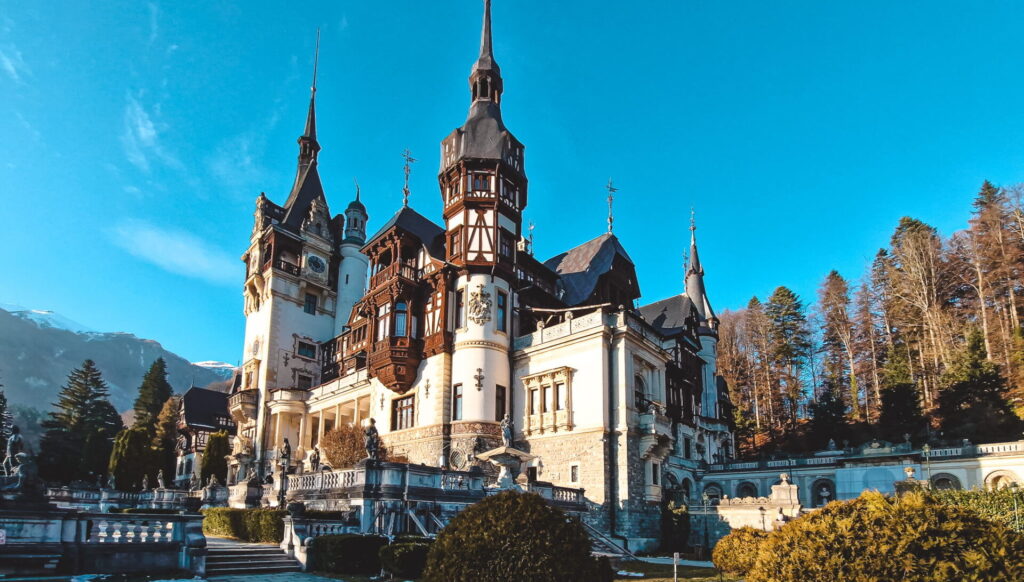
Peleș Castle is a Neo-Renaissance castle in the Carpathian Mountains, near the town of Sinaia. It takes around one hour by car or train from Brașov city center to get there, but it’s totally worth the ride. Honestly, no trip to Brașov would be complete without a visit to the Peleș Castle. You can also get a Tour with An Expert Guide or join a full-day trip to visit Peleș, Bran, and Cantacuzino Castle.
The castle was built between 1873 and 1914 at the order of King Carol I, who wanted it as a summer retreat. Its style is comparable to the famous Schloss Neuschwanstein in Bavaria, with clear Saxon influences. The interior is mostly in the Baroque style, but it has several different rooms, each decorated in its own particular way.
Nowadays, the castle receives up to half a million visitors per year. You can visit it from Wednesday to Sunday; the castle is closed on Monday and Tuesday. The castle closes for a couple of weeks each year for maintenance and cleaning. The closing period always varies, so check the website before your trip.
7. Cantacuzino Castle, Netflix’s Wednesday filming location
Speaking of castles, Cantacuzino Castle is another easy one to explore on a day trip. Trains from Brașov to Bușteni run frequently during the day and only cost between 4€ and 8€ for a round trip, depending on the train. The ride takes roughly one hour.
Catnacuzino Castle may have become famous as the filming location for Wednesday, but there are many other reasons to visit it. The castle grounds offer beautiful views of the surrounding area and, if you get a guided tour of the interiors, you can learn about the castle’s fascinating history. Unfortunately, the guided tour is in Romanian, but you can get an audioguide in English.
Cantacuzino Castle can also be fairly inexpensive compared to other castles. There are various ticket options, and you can get a package complete with a guided tour and art exhibition for 15€. Read my article on Cantacuzino Castle for more information about this awesome place.
8. Tampa: a mountain in the very heart of the city
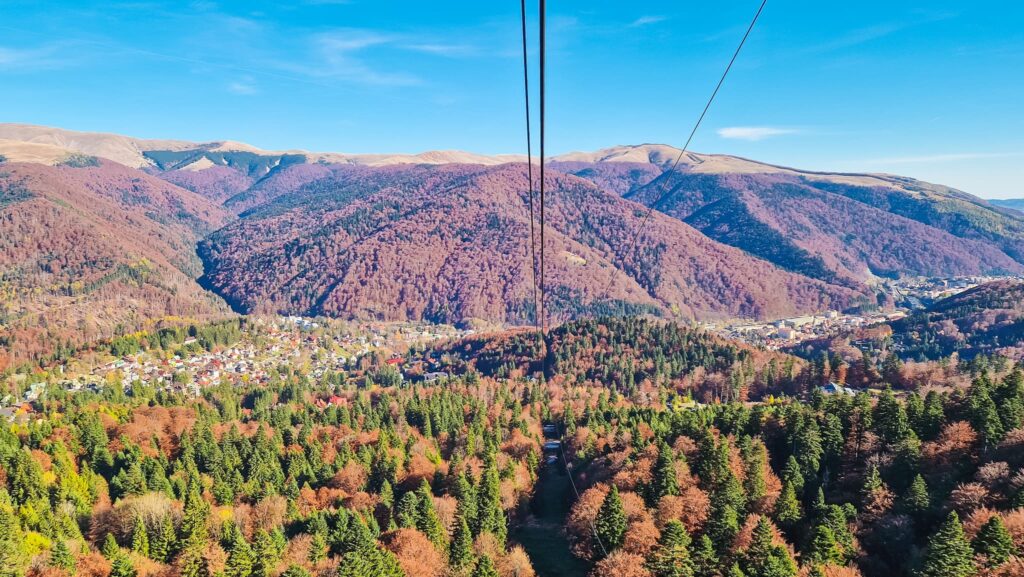
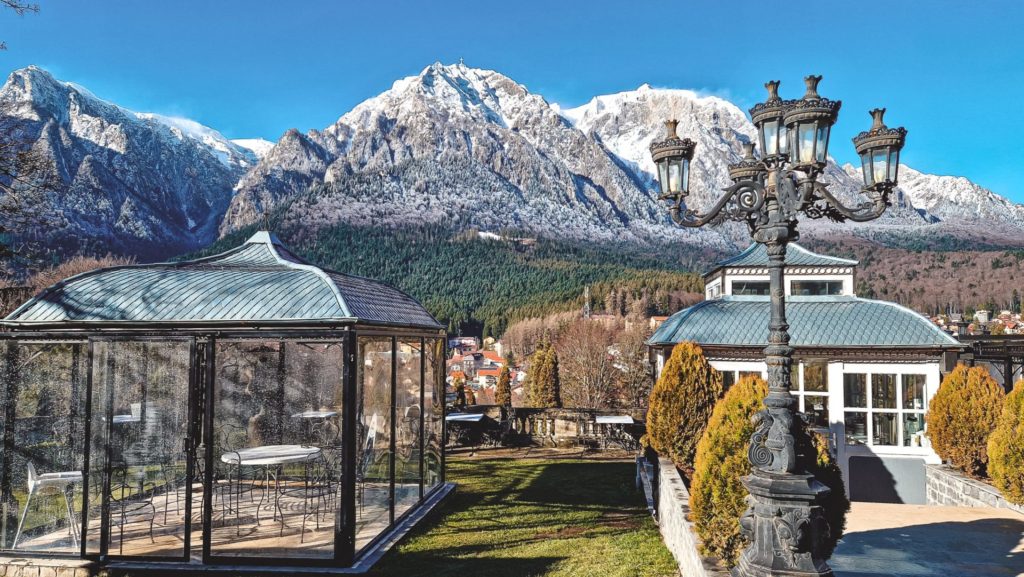
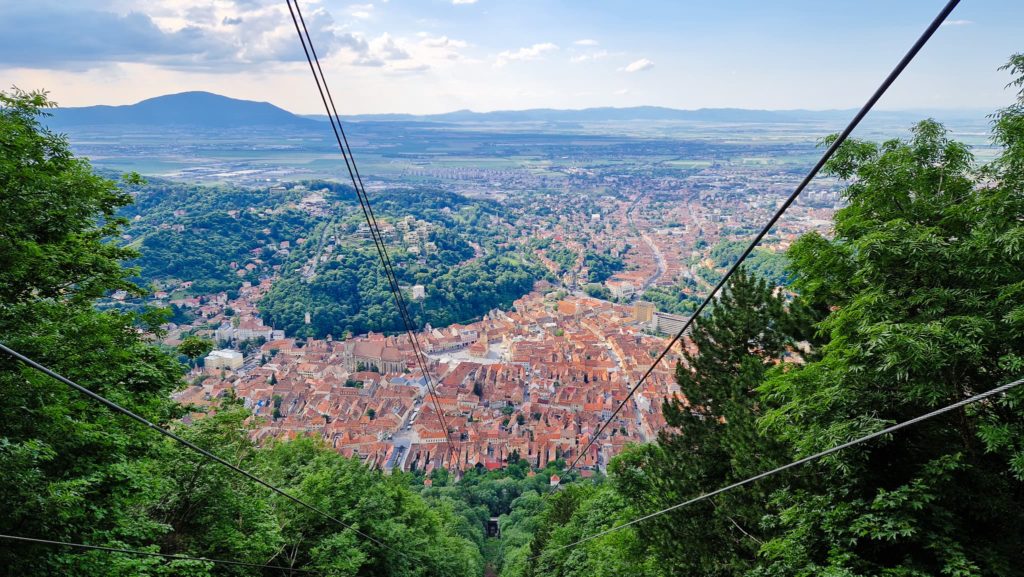
Tâmpa is a mountain situated right in the center of Brașov, rising 900 meters above sea level. This has always been one of my favorite spots in the city, even when I was a child. You can climb up on foot if you’re feeling fit or take the cable car up.
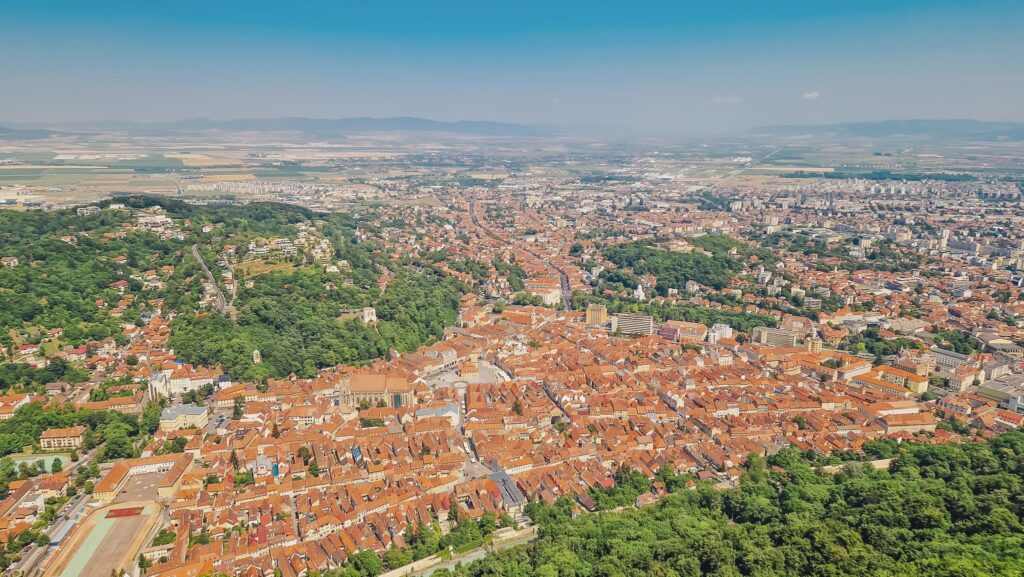
The view from the top is simply breathtaking. You can see the whole city, with narrow streets and tiny red rooftops all across the old town and the more modern buildings farther away.
There used to be a citadel at the top of Tâmpa back in the 13th century, but it’s now completely in ruins. In the 18th century, a chapel was built and destroyed shortly after, giving the name of Chapel Hill to the mountain. Nowadays, you will find a small bar at the exit of the cable car and, since 2006, a Hollywood-style sign with the name Brașov.
Note: The cable car is currently closed for renovation and is set to reopen on October 19th, 2025.
9. Home of the first Romanian school
Brașov is home to the first Romanian school to be built, back in 1495. This is also the first place where lessons in Romanian were taught in 1583. For a long time, it was the only school in the country, and students from many different villages came to study here. Each village would pay for one student to attend the school and then go back and teach the rest of the village what they learned.
The school was in use until 1850. Nowadays, it’s a museum containing early Slavic and Romanian books, the first Romanian Bible, and the first Romanian printing press. You will find the museum in the neighborhood of Şchei.
10. Schei, the ethnically Bulgarian neighborhood
This neighborhood is a little bit up from the old town, at the feet of Tâmpa mountain. It has a village-like feel, with small houses and narrow cobblestone streets. Until the 17th century, people living in Şchei could only enter Brașov at certain times and had to pay a toll to sell goods in town. Back then, Catherine Gate was the only entrance for the Romanians, and it’s the only gate still standing from medieval times.
Researchers found that the neighborhood was originally populated by Bulgarians who later adopted the Romanian language and ethnic identity. To this day, it is considered an ethnically Bulgarian neighborhood. The church of Saint Nicholas dominates the neighborhood, right next to the first Romanian school.

11. Rope Street is the narrowest street in Romania
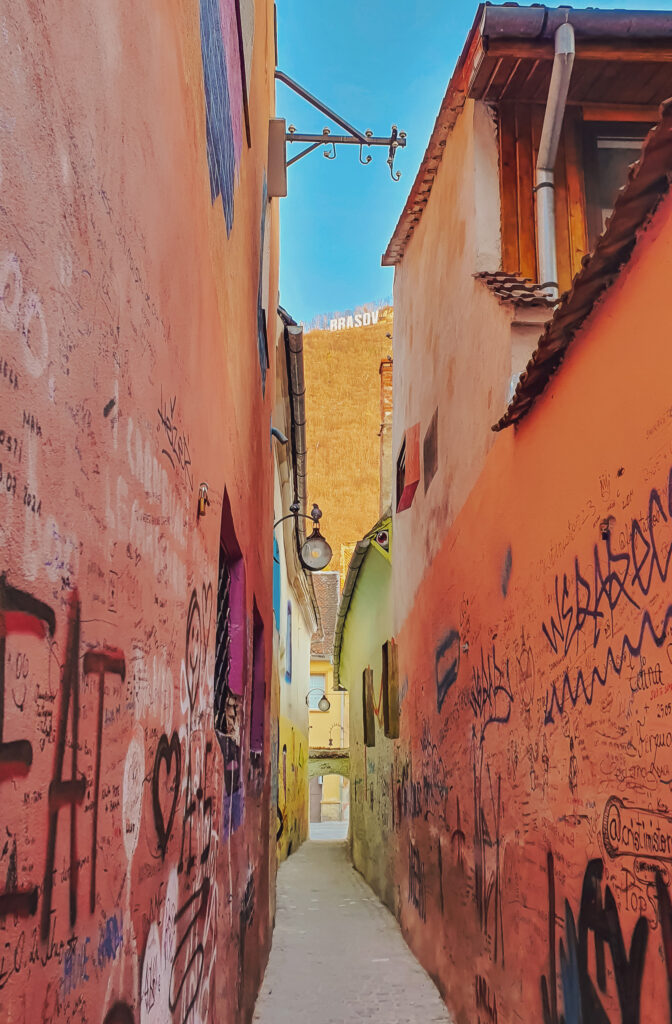
This is probably one of the most curious things in town, and it’s attracting quite a few people. You can find Rope Street (Strada Sforii) near Şchei Gate. The street is between 111 and 135 cm wide, and aside from being the narrowest street in town, it’s also one of the narrowest in the world.
This was initially built as access for firefighters. Check it out on your tour around the old town. You can’t even fully spread your arms. Try it out. But don’t write on the walls, please! They regularly clean and repaint the walls, but unfortunately, as you can see, it doesn’t last long.
12. Beautiful skiing locations: Poiana Brasov and Predeal
These are two of the most visited skiing locations in Romania. You can reach Poiana Brașov within a 30-minute bus ride from the Old Town (departing from Livada Poștei). Predeal is about 40 minutes away by train.
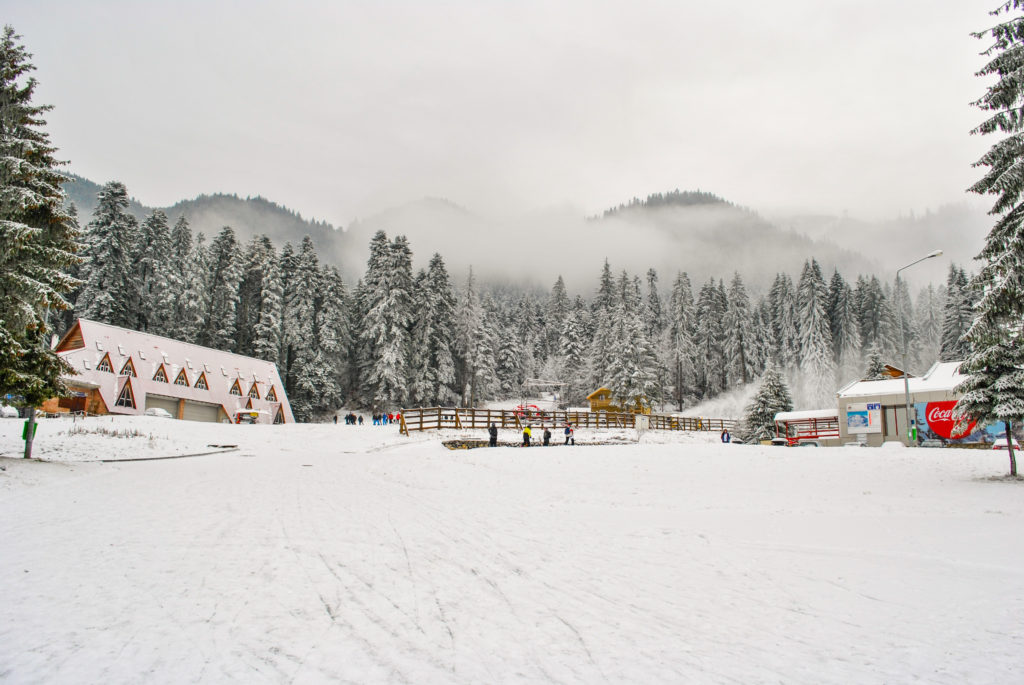
Poiana Brașov is about 1000 meters above sea level and has seven main ski and snowboard slopes. In winter, it’s like a small fairytale village covered in snow. However, it’s an enjoyable place also in the summer. The road to get there also offers amazing views of Brașov from the top.
Aside from Poiana Brașov, there’s also Predeal, a resort town about 40 minutes south of Brașov. It’s at a slightly higher altitude than Poiana Brașov and has five major ski runs. Go there to breathe some pure mountain air and enjoy nature.
13. Awesome views from the top
Apart from Tâmpa, which offers undeniably the best view of the whole city, there are a few other places where you can go to enjoy a view from the top.
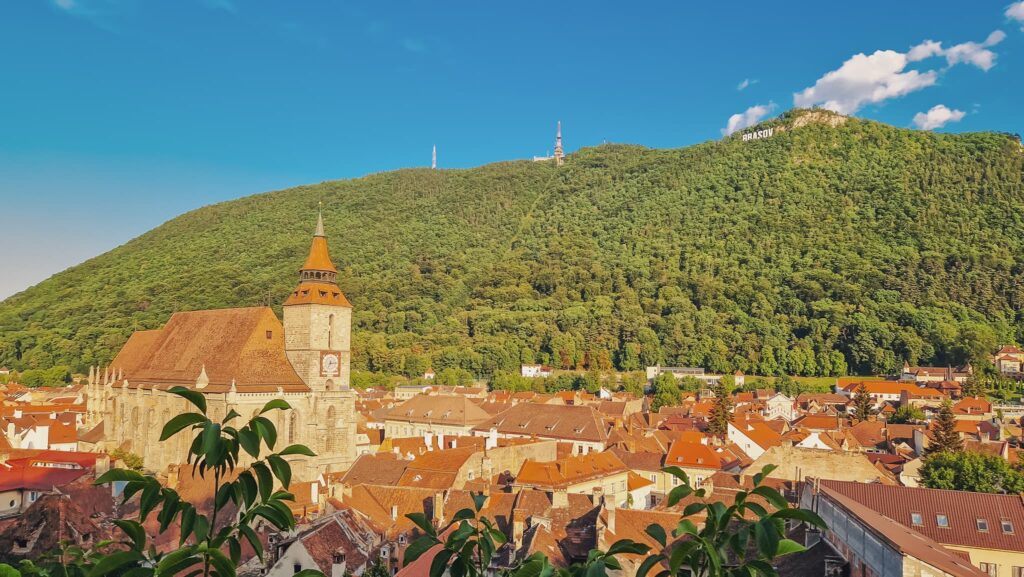
My favorite place is near the Black Tower (Turnul Negru), not far from the old town and Şchei neighborhood. The location on top of the Warthe hill offers a great view of the Black church, the Council’s square, and the surrounding old town. A little bit up from the tower, you will find a belvedere, close to the road that leads to Poiana Brașov. From there, it’s a ten-minute walk to the White Tower, another medieval watchtower.
Both towers are located outside the walls of the old citadel, immersed in nature. It’s a nice walk to enjoy the fresh air and great views of the city. If you visit Brașov, be sure to explore this area.
14. Rasnov Citadel and its legend
Just outside the city, in the town of Râșnov, Brașov County, you can visit a medieval fortress dating back to the 13th century. It was built as a defense system for the surrounding Transylvanian villages since all invaders would pass by Râșnov on their way to Brașov.
In the citadel, there is a well with an interesting history. It was built during a long siege when inhabitants were worried about the lack of water. The legend says the inhabitants forced two Turkish prisoners to dig the well for 17 years, in return for their freedom. They never actually gained their freedom, as they were killed after the well was completed. Also, according to the legend, there is a secret tunnel in the well, leading outside the town.
Visit the museum inside the citadel to learn more about its history and legend.
15. Amazing yet cheap food
I love food from all over the world, but Romanian food brings me back to my happiest memories. Unfortunately, Romanian cuisine is not so popular in other countries, so I can usually only enjoy it when I go back or visit relatives.
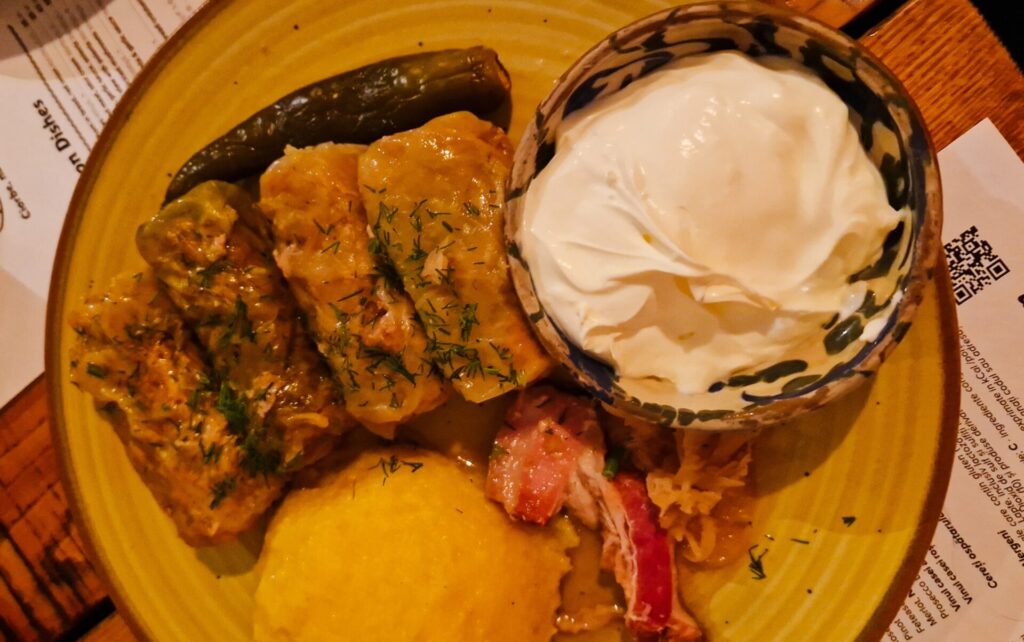
Don’t expect anything fancy or light. Romanian food is rustic and fills you right up. And most importantly, it’s cheap to eat out. You can easily get a full meal for somewhere between 5 and 10 euros. And the best thing is that it’s authentic. There’s no such thing as fast food in our culture. Though, of course, you can find plenty of fast food restaurants all over the city.
You might want to try sarmale (cabbage or vine leaf rolls filled with meat, rice, and vegetables) or ardei umpluți (stuffed peppers filled with the same ingredients). There is a huge variety of soups (most of them sour), the most typical being ciorba de burtă, made with tripe. A typical dish for summer is grilled mititei (or mici), a type of sausage made of a variety of minced meat and spices. There are also many types of stew, with or without meat, and different salads. Instead of bread, try the Romanian-style polenta.
For dessert, try papanași (a kind of doughnut) with jam and sour cream. And if you’re a fan of alcoholic drinks, you can try pălincă, țuică, or rachiu. They are all different types of brandy-like drinks.
16. Stunning hiking locations right outside the city
Visiting Brașov will not take long, so if you are planning on staying more than just a couple of days, you can go for a hike. There are plenty of beautiful spots for hiking close to the city. The most famous ones are the Piatra Mare Mountains with the Seven Ladders Canyon, Postăvarul Massif, and Solomon’s Rocks.
The Piatra Mare Mountains are a small mountain range near Predeal, south of Brașov. There are plenty of beautiful spots for a hike, including an ice cave (Peștera de Gheață). Here you can find the Seven Ladders Canyon, about 15 kilometers from Brașov. The place gets its name from the seven waterfalls that you can find in the nearby surroundings. Enjoy beautiful mountain views and rich green forests. You can also join a guided Half-Day trip to the Seven Ladders Canyon.
Tâmpa Mountain is actually an extension of the Postăvarul Massif, part of the Carpathian mountain range. Outside of the city, it reaches up to 1799 meters at the Postăvarul peak.
Solomon’s Rocks is a popular hiking location, only 7 kilometers from Brașov’s old town. The name is due to yet another legend narrating that the Hungarian king Solomon was running away from his enemies and jumped with his horse from one rock to the other, while his followers fell into the valley in between.
More info for your visit to Brașov
I could find even more reasons to visit this beautiful city, and I might be biased, but I’ll let you decide for yourself. If you’re planning on visiting and want more advice, feel free to contact me here. I’ll be happy to give you some tips, help with translations, or advise on where to stay.
While you’re in Brașov, you may also want to look into visiting Sibiu, another wonderful city in Transylvania.
Travel Resources
Lastly, here is an overview of my favorite apps and websites to plan a trip to Brașov or anywhere in the world.
| Website/App | Category | Description | Book Here |
|---|---|---|---|
| Booking.com | Accommodation | My favorite website for great accommodations for different budgets. | Find a Place |
| Kiwi.com | Flights | My new favorite platform for finding affordable flights. | Find Flights |
| Omio | Transportation | You can book everything from buses and trains to ferry rides. | Transportation |
| SafetyWing | Insurance | One of the best travel medical insurances for frequent travelers. | Get Insured |
| Manawa | Activities | A great platform to book activities and adventures with local hosts. | Find Activities |
| GetYourGuide | Activities | My go-to platform for tours and experiences with lots of options. | Experiences |
| Viator | Activities | A great alternative for activities all over the world. | Experiences |
| GuruWalk | Free tours | A great platform for free walking tours (tipping is recommended). | Book a tour |
| DiscoverCars | Car rental | My go-to platform for car rental anywhere in the world. | Rent a Car |
| Airalo | eSIM | My favorite app for buying digital SIM cards when traveling abroad. | Get an eSIM |
| Saily | eSIM | A great alternative to Airalo, with cheaper plans in some destinations. | Get an eSIM |
| Xe | Currency | A currency converter showing real-time rates. Website or app. | Get Xe App |
| Maps.me | Navigation | My favorite navigation app for hiking trails and remote areas. | Get Maps |
Pin this so you can get back to it later!